
Reviewed · HISTORICAL TOURS
Oslo: Historic Myths & Legends Evening Walking Tour
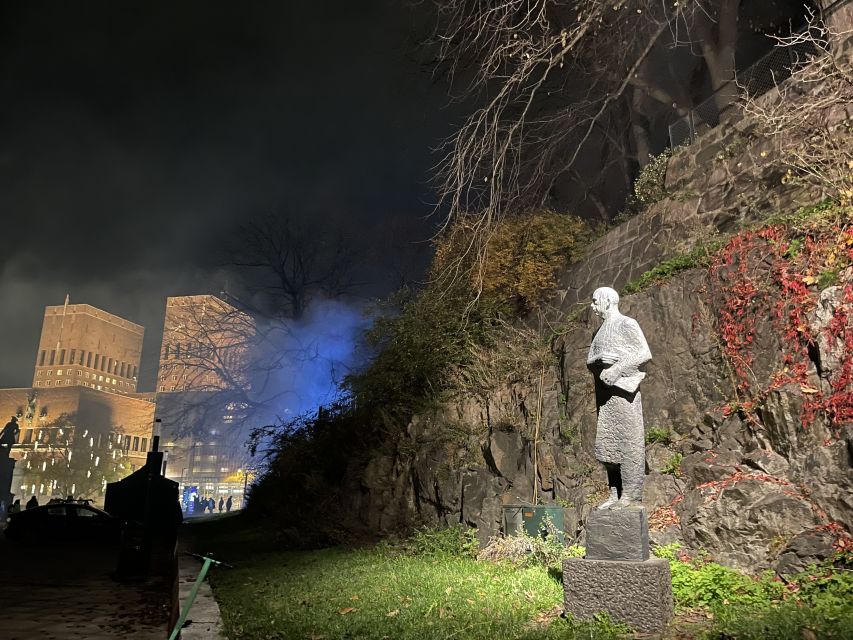
Oslo’s Historic Myths & Legends evening walking tour is interesting because it turns well-known landmarks into story clues, from old Norse belief to crimes and punishments in medieval Oslo. I love the way the guide connects Norwegian folklore characters like trolls, nisse, and huldra to what you see outside, and I love the wooden friezes at Oslo City Hall that link Viking-era ideas to real architecture.
The only catch: this is still a 2-hour outdoor walk. In cold months, wind can get sharp, so plan for winter layers and bring comfortable shoes. It is also not suitable for children under 13, people with mobility impairments, or wheelchair users.
Key highlights you will feel fast
- Oslo City Hall’s wooden friezes tied to Viking belief and everyday superstition
- Norse folklore cast like trolls, nisse, and huldra, explained in context
- Akershus Fortress engineering and the way medieval designers thought about protection
- Bankplassen stories of audacious thefts and how justice worked back then
- A relaxed evening pace, with no underground ghost-hunting detours
Reading Oslo Like a Storybook, One Landmark at a Time
This is the kind of walking tour that helps you stop seeing Oslo as a list of places and start seeing it as a place with memory. The guide does not treat myths as random fun. Instead, they use legends to explain why certain buildings look the way they do, and why certain locations became important in local life.
You also get a strong mix of tones. One moment you are hearing folklore, the next you are standing near a medieval fortress and learning how design choices were about defense. Then the story shifts again into justice, theft, and punishment. It sounds like a lot, but the flow stays easy because the walk is paced for evening attention spans.
More Historical Tours in Oslo
- Oslo: Small Group History, Art & Secrets Tour
★ 4.6 · 127 reviews - Oslo City Walks – Historic River Walk
★ 5.0 · 31 reviews - A Well Balanced History and Food Tour with Focus on the Scandinavian Kitchen
★ 4.5 · 29 reviews
Where You Start: Oslo City Hall and the Swans Fountain Meeting Spot
Your meetup is near the Swans fountain at the entrance of Oslo City Hall on Fridtjof Nansen’s square. This is a smart starting point, because City Hall is not just a landmark. It is also one of the best places in central Oslo to connect history to art on the street.
From the first minutes, the tour’s method becomes clear. Instead of pointing and moving on, the guide uses the building as a reading surface. You learn what to look for, what symbols mean, and how folklore and belief can show up in public art. That matters, because later in the walk, you will spot details more confidently.
And if you end up with Maria, or Anastasia, you should expect a storytelling style that stays funny without turning silly. Several guides are praised for making the route feel conversational, and for handling questions well, even when it is dark outside.
Oslo City Hall’s Wooden Friezes: Viking Belief in Plain Sight
One of the most praised moments is the City Hall stop, specifically the wooden friezes on the walls. The tour frames them as more than decoration. You get a connection between Viking-era belief and the way that belief got expressed through visual storytelling.
Here’s why this matters for you: Oslo can feel tidy and modern, and that sometimes makes older belief systems seem distant. The wooden carvings bring those ideas down to earth. You are not just hearing myths. You are looking at physical things the city chose to keep visible.
At City Hall, the stories also set up the tour’s biggest theme. Legends are treated as part of the culture’s logic. That means you get explanations for why people feared certain beings, why they protected spaces with specific practices, and why superstitions could shape behavior. The result is a tour that works even if you only half care about myths at the start. You end up caring because you understand what the legends were doing for people.
Norwegian Folklore on the Streets: Trolls, Nisse, and Huldra
A big reason this tour earns high ratings is that the folklore characters are not tossed in as name drops. You get a sense of how these stories functioned, and how they show up in everyday thinking.
During the walk, the guide mentions trolls, nisse, and huldra. They are used as a way to talk about fear, respect, and the boundaries people imagined between the safe human world and the unknown.
This is a good time to listen closely, because the guide’s goal is not to make you memorize myth facts. The goal is to help you see patterns. Once you grasp that pattern, Oslo starts to feel less like an unfamiliar capital and more like a place where local imagination shaped real spaces.
If you like learning through stories, this is the part you will remember later when you walk past a landmark on your own. It becomes a memory hook. That is the practical value here.
More Walking Tours in Oslo
- Oslo: Guided Walking Tour of Central Oslo with Local Guide
★ 4.7 · 936 reviews - Oslo: Best of Oslo Walking Tour
★ 4.5 · 458 reviews - Taste of Oslo Walking Tour
★ 4.5 · 282 reviews - Central Oslo Guided Walking Tour with Local Guide
★ 4.5 · 278 reviews
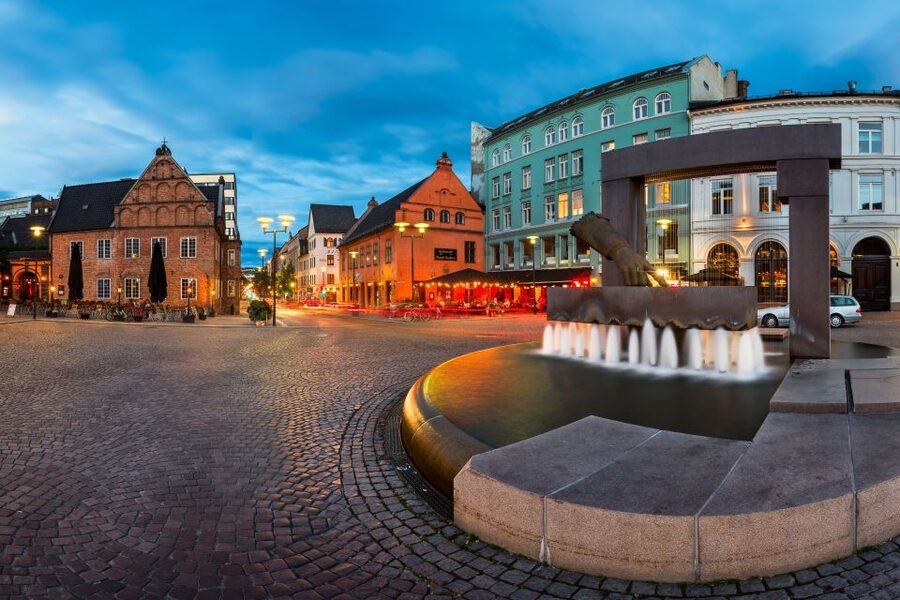
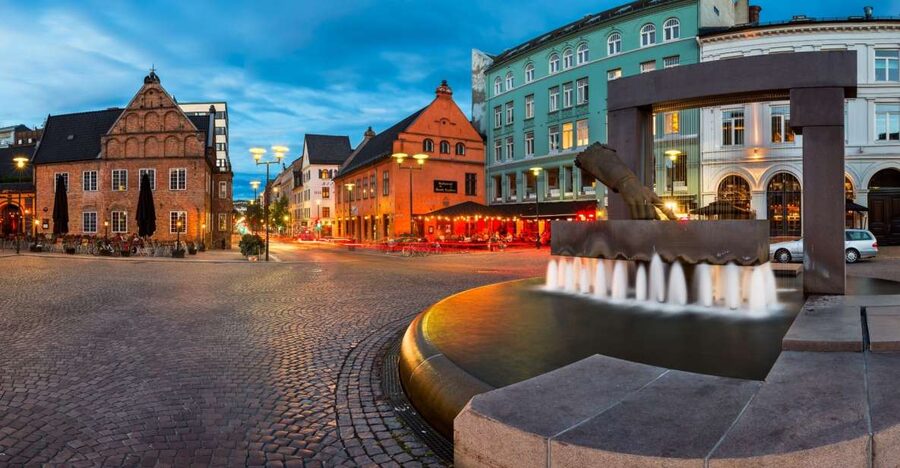
Christiania Torv Square: History You Can Walk Through
Next up is Christiania Torv, a historic square that has seen Oslo change over time. Squares like this matter because they were meeting points. They were the stage for daily life and public events, and that is where stories naturally gather.
On this stop, the guide weaves in background and context about how events left marks on the landscape. Even if you do not catch every detail, you will get something useful: a sense of continuity. Oslo’s history is not stuck in one museum room. It shows up in the street grid and the places people used for gathering.
This is also a moment to pay attention to how the guide shifts from myth to lived history. It keeps the tour from becoming only fantasy. You learn how old belief systems and old politics lived side by side, and how the city’s identity formed from both.
Akershus Fortress: Medieval Engineering That Still Makes Sense
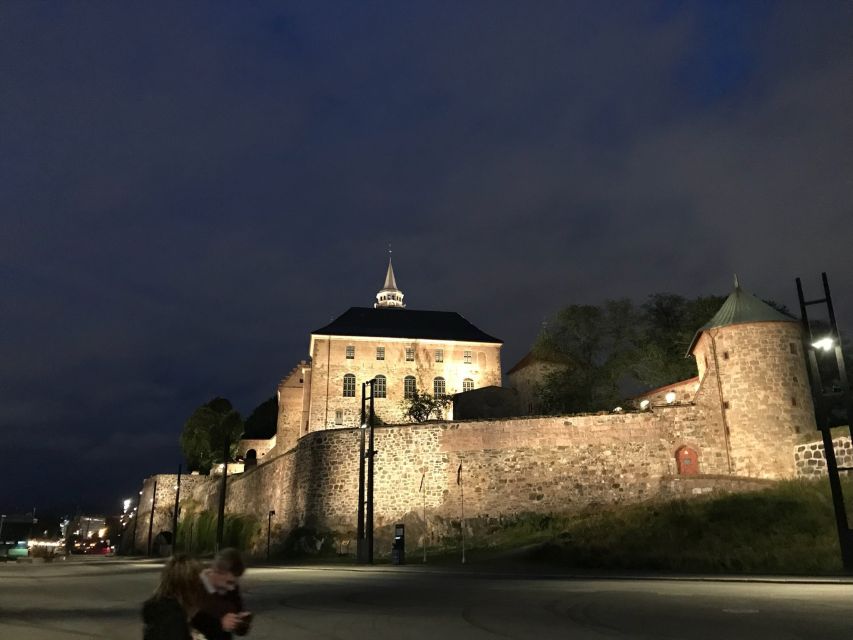
Akershus Fortress is one of those places where the stones feel serious, even when you do not know any history yet. The tour leans into that feeling by focusing on medieval engineering and design.
You learn how the fortress represents protection through the ages. The guide also shares stories connected to prisoners and what happened inside those formidable walls. Even if you are not a history buff, the fortress layout gives you immediate intuition. You can see why it was defensible, why access points mattered, and why medieval builders cared about control of movement.
Here is what you get from this stop that you will not get from a quick photo stop. The guide helps you connect the engineering choices to the stories. So when you hear about prisoners, it is not a generic grim tale. It becomes a human scale explanation of a structure built to hold people, secure areas, and limit escape.
Bankplassen and Medieval Justice: Theft Stories With Real Consequences
After Akershus, you walk toward Bankplassen, where the tour turns toward justice and the darker side of city life. This is where you hear episodes of audacious thefts and get a look at how the justice system worked in medieval Oslo.
You do not just hear that people committed crimes. You hear how punishments were tied to social order. The guide’s approach makes it feel connected to the city’s layout, not like a separate lecture.
This stop is especially valuable if you like stories that have cause and effect. In modern life, we think of law as a system. In medieval times, the system was slower, harsher, and often public. Learning this helps you understand why people feared certain spaces and why power showed itself physically.
If you are the type who likes a little danger in your history, this is your moment. It is the tour’s edge, without turning into gore or scare tactics.
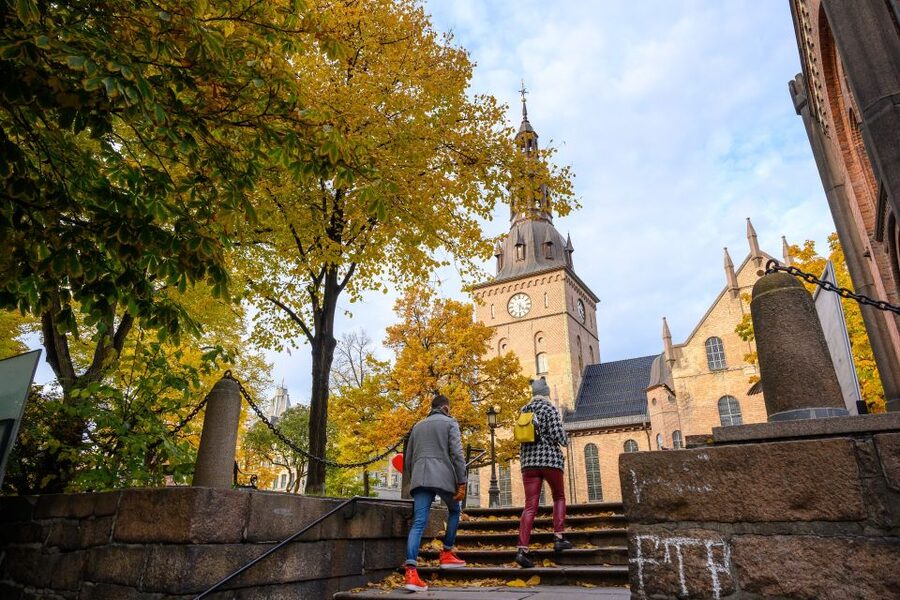
Oslo Cathedral on the Route: Historic Landmark, Story Context

The tour includes Oslo Cathedral as one of the key landmarks. Even with limited details on how long you spend there, the value is in the story framing. The guide uses the cathedral to keep the route grounded in real Oslo identity, not only fortress and folklore.
In a tour like this, a stop like the cathedral works as a counterweight. You get myth, justice, and medieval defense, then you come back to a place that represents long-term religious and civic meaning. You start to see how Oslo’s important buildings supported community life over centuries.
If you have time before or after the tour, you can come back to the cathedral area on your own. Having the guide’s context first makes that second visit much more rewarding.
The Guide Experience: Humor, Clear English, and Questions in the Dark
A consistent theme in the feedback is how well the guide delivers the material. Many bookings name guides such as Maria and Anastasia, and the common thread is a blend of humor, clear English, and a willingness to answer questions.
This matters because evening tours can be tough. It is dark, your brain is cold, and you want the story to stay understandable. When a guide is effective, you forget you are walking in the cold and start paying attention to details you would normally ignore.
I also like that the tour is described as relaxed. That means you are not being rushed every thirty seconds. You can ask something, take a photo, and still stay on pace.
And yes, the wind can be intense in Oslo. If you have ever done an outdoor tour in snow and strong gusts, you know how quickly that can steal your attention. The guides are praised for keeping things moving and keeping the experience comfortable and engaging, so you do not feel stranded in the elements.
No Ghost Hunting Underground, Just Legends With Context
This is worth saying clearly. The tour is not a ghost-hunting expedition, and you will not be venturing underground. You might hear stories involving ghosts or underground kingdoms, but the focus stays on historical and cultural significance.
That is actually a good fit for many visitors. You still get the spooky vibe people want, but you are learning why the stories existed and how they shaped local thinking. It becomes education with a little chill, not a gimmick.
So if you are looking for a myths and legends tour that stays grounded in place-based history, this one fits.
How the 2 Hours Work for Your First Evening in Oslo
The duration is 2 hours, designed as a relaxed evening walk. That length is ideal for people who want to get oriented without committing a full half day.
Here’s why that matters for you: Oslo rewards walking, but it also rewards knowing what you are looking at. After two hours with this kind of story guide, you will have mental anchors. You will know where City Hall sits in the story of the city. You will understand why Akershus Fortress feels like a seat of authority. You will remember why a square like Christiania Torv matters.
It is also a smart first-day activity. Several people describe it as an early intro to Oslo, and that tracks. The route gives you a framework you can use later, whether you come back to landmarks for photos or you wander side streets on your own.
Price and Value for a 2-Hour Oslo Story Tour at $42
The price is $42 per person for a 2-hour guided walking tour. For Oslo, that is a reasonable amount when you factor in the live English guide and the fact that taxes are included.
What makes it feel like good value is the blend of stops and storytelling depth. You cover multiple central landmarks tied to both myth and real city history, from City Hall and its carved symbols to Akershus Fortress and Bankplassen’s justice stories. You are not paying just for a seat on a walk. You are paying for a guide who links each location to meaning.
One more practical point: food and drinks are not included. That keeps the tour focused and keeps your evening flexible. I suggest you plan on grabbing something nearby afterward, so you do not end up trying to eat while your brain is still listening to folklore.
What to Bring: Shoes, Layers, and a Listening Mindset
This tour is simple in what it asks from you. Bring comfortable shoes and dress for an evening outdoors in Oslo.
In winter, conditions can be harsh. Wind shows up. Cold bites. The good news is that the experience is still enjoyable, and guides are praised for making the walk workable even in cold snaps.
So I would pack like this:
- Warm layers you can breathe in, not just a single heavy coat
- Gloves if you get cold hands fast
- A small bag that lets you keep your hands free for photos
- Comfortable shoes with grip, especially if the pavement is icy
Who Should Book This Tour (and Who Might Skip It)
This is a strong choice if:
- You want a myths and legends experience tied to real buildings
- You like hearing stories with a sense of place and history
- You want a first introduction to central Oslo without spending half the day on logistics
- You enjoy a mix of folklore, architecture, and medieval justice
You might skip it if:
- You do not like walking in the dark, or cold evenings drain you fast
- You need wheelchair access or mobility-friendly routes, because this one is not suitable for wheelchair users
- You are traveling with children under 13, since it is not for that age group
Should You Book This Oslo Historic Myths & Legends Evening Walking Tour?
Yes, if you want Oslo to feel like a living place, not just a set of photos. This tour’s best quality is how it connects folklore to actual landmarks, especially the City Hall wooden friezes and the story-driven stops at Akershus and Bankplassen.
I would book it if you enjoy learning through stories and you want an easy two-hour plan that leaves you with context for the rest of your stay. Just show up ready for weather, wear good shoes, and come with a listening mindset. If you do, you will walk away with the kind of Oslo understanding that follows you into your next street turn.
FAQ
Where do I meet the guide?
Meet your guide near the Swans fountain at the entrance of Oslo City Hall on Fridtjof Nansen’s square.
How long is the tour?
The tour runs for 2 hours.
Is the tour in English?
Yes, the tour includes a live English speaking guide.
What landmarks will we visit?
The tour includes stops such as Oslo City Hall, Christiania Torv, Akershus Fortress, and Oslo Cathedral, plus additional locations relevant to the stories.
Does the tour include food or drinks?
No. Food and drinks are not included.
Is this tour a ghost-hunting expedition?
No. It is not a ghost-hunting expedition and you will not go underground.
Is it suitable for children?
No. It is not suitable for children under 13.
Is it wheelchair accessible?
No. It is not suitable for wheelchair users or people with mobility impairments.
What should I bring?
Bring comfortable shoes, since you will be walking.
How much does it cost?
It costs $42 per person.
More Evening Experiences in Oslo
- Oslo: Fjord Evening Cruise with Shrimp Buffet
★ 4.5 · 1,956 reviews - Oslo Fjord Evening Cruise with Shrimp Buffet on a Sailing Ship
★ 4.0 · 170 reviews - Tromsø: Evening Aurora Cruise (dinner optional)
★ 4.4 · 1,570 reviews - From Tromsø: Evening Snowmobiling Tour at Camp Tamok
★ 4.7 · 520 reviews
Freshly reviewed in Oslo
- Oslo City Highlights with Fjord Cruise★ 4.5 · 128 reviews
- Oslo: Oslo Fjord Cruise with Live Jazz Music & Shrimp Buffet★ 4.4 · 143 reviews
- From Oslo: Oslomarka Forest Guided Snowshoeing Tour★ 4.8 · 161 reviews
- Oslo Fjord Evening Cruise with Shrimp Buffet on a Sailing Ship★ 4.0 · 170 reviews
- Oslofjord Sightseeing★ 4.0 · 170 reviews
- Oslo: City Highlights Walking Tour★ 4.8 · 197 reviews
- Oslo: Snowy Forest Torchlight Walk with Campfire★ 4.6 · 254 reviews
- Oslo: Private Walking Tour with a Local★ 4.5 · 263 reviews
Historical Tours, compared.

Reindeer Camp and Sami Cultural Tour with Lunch
Read our review →
Sámi Reindeer Sledding and Sami Cultural Tour
Read our review →




A Well Balanced History and Food Tour with Focus on the Scandinavian Kitchen
Read our review →Browse the lists this tour appears in