
Reviewed · WALKING TOURS
Oslo: Best of Oslo Walking Tour
Oslo can feel like a city of separate zones, but this tour works because it knits them together fast. You get a focused 2-hour walk where the guide turns famous buildings into a storyline, and you also finish with an audio route on your phone to keep exploring after.
Two parts I really like: first, the live commentary in English or German, with guides such as Minji, Olaf, and Anastasia being singled out for clear explanations and good pacing. Second, the variety of stops, from big institutions like the Norwegian Parliament to everyday-cool areas like Aker Brygge and the harbor edge.
One drawback to plan for: it is an outdoor walking tour, and in winter the sidewalks may not be cleared of snow. One reviewer noted that a wheelchair user cut the tour short due to difficulty, so if mobility is limited, you should think carefully about weather and your own stamina.
Key things that make this Oslo walk worth your time
- A tight 2-hour loop that helps you understand where Oslo’s sights actually sit in relation to each other
- Nobel Peace Award and Nobel-related stories, including why it is linked to Oslo in a way most people do not expect
- Christiania, the old city center, plus the idea that Oslo changed names over centuries
- Tiger City details, including the Tiger sculpture and the nickname story woven into the walk
- Harbor and old-town vibes, from places like Kvadraturen to Aker Brygge
- An included app route, so you do not lose momentum when the tour ends
A 2-hour Oslo loop that helps you read the city fast
If this is your first time in Oslo, you want orientation more than a checklist. This tour is built for that. In about two hours, you move through the central grid near the waterfront and the government core, and the guide ties it together with stories about how the city became what it is today.
I like that the walk is not only about monuments. It also covers how the city works: who runs it, what Norway uses as public symbols, and why Oslo feels designed for both daily life and major events. Even if you skip museums during the walk, you still leave knowing where they are and why they matter.
The pacing is also a selling point. Multiple guides are described as finishing on time, keeping a steady tempo, and explaining history in a way you can actually follow while walking. That matters because Oslo is spread out, and you do not want your first impressions to feel rushed or confusing.
More Walking Tours in Oslo
- Oslo: Guided Walking Tour of Central Oslo with Local Guide
★ 4.7 · 936 reviews - Oslo: Historic Myths & Legends Evening Walking Tour
★ 4.8 · 408 reviews - Taste of Oslo Walking Tour
★ 4.5 · 282 reviews
Starting near P.A. Munch or the Nobel Peace Center, then moving like locals
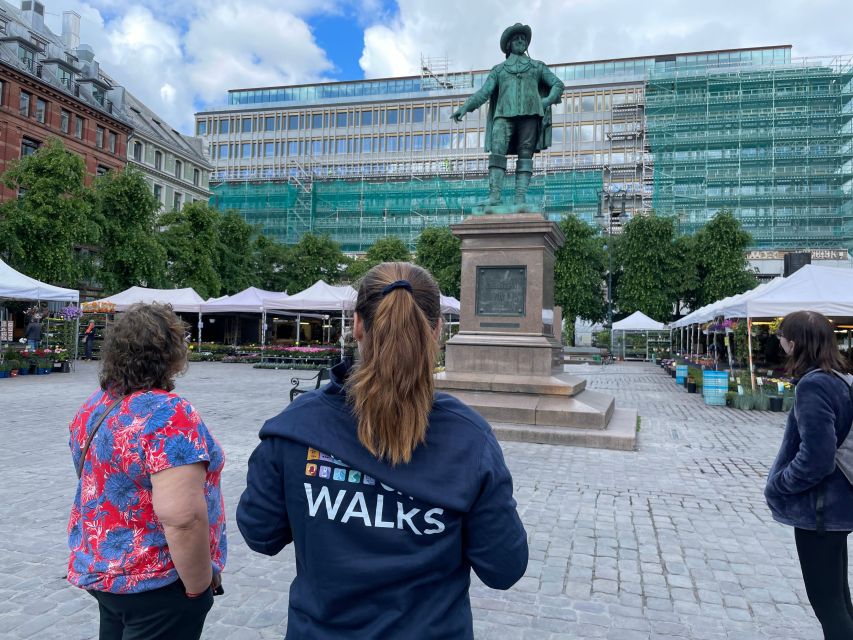
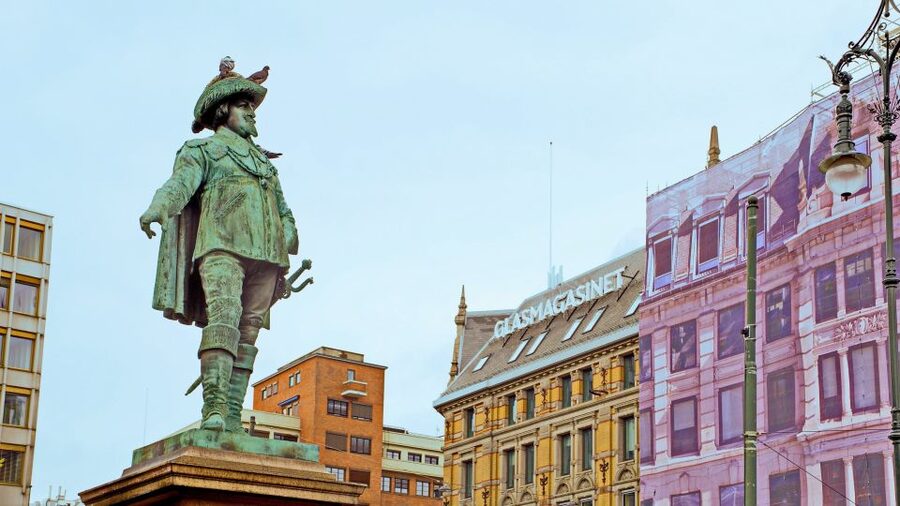
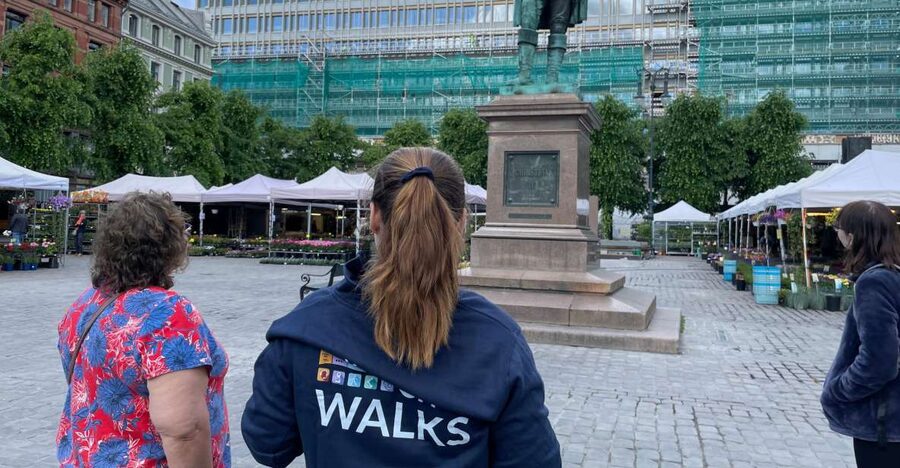
You choose one of two start points. If you book the English tour, you meet near the statue of P.A. Munch at the Faculty of Law building entrance by University Aula on Karl Johan Street. For the German tour, the meeting point is the Nobel Peace Center at Brynjulf Bulls plass 1.
This sounds small, but it changes the feel of your morning. Starting by Nobel Peace Center puts you immediately in the “Oslo as international stage” mood. Starting by the Karl Johan area begins with the city’s main promenade energy, where you can later see how the government buildings and old streets connect back into that axis.
From there, the route keeps you moving through the downtown core, then bends toward the harbor and older districts. In other words, you get both the political center and the city’s “walkable life” side, without needing tickets or transfers.
From Paleet into government Oslo on Karl Johan Street
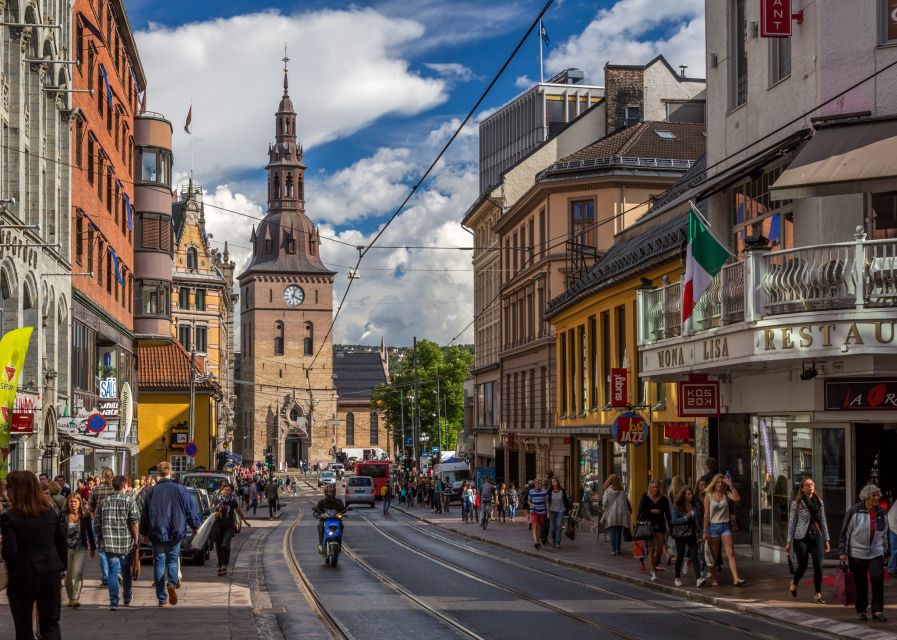
A big early payoff is how the tour walks you into the heart of the city where you can recognize landmarks without a map. Stops around places like Paleet, the Norwegian Parliament, and major hotel fronts help you learn Oslo’s “center spine.”
Karl Johan Street is especially useful on a first day because it is the main artery linking major sights. You do not just see it, you learn what it represents in how Norway organizes public space and civic life. The guide also points out symbols tied to Norwegian identity, which makes the buildings feel less like random big facades.
If you care about how countries show themselves to the world, this is where it clicks. You see the machinery of government, but you also hear how Norway wants those spaces understood, not just photographed.
Nobel Peace Award stories, the Tiger City nickname, and why it all feels intentional
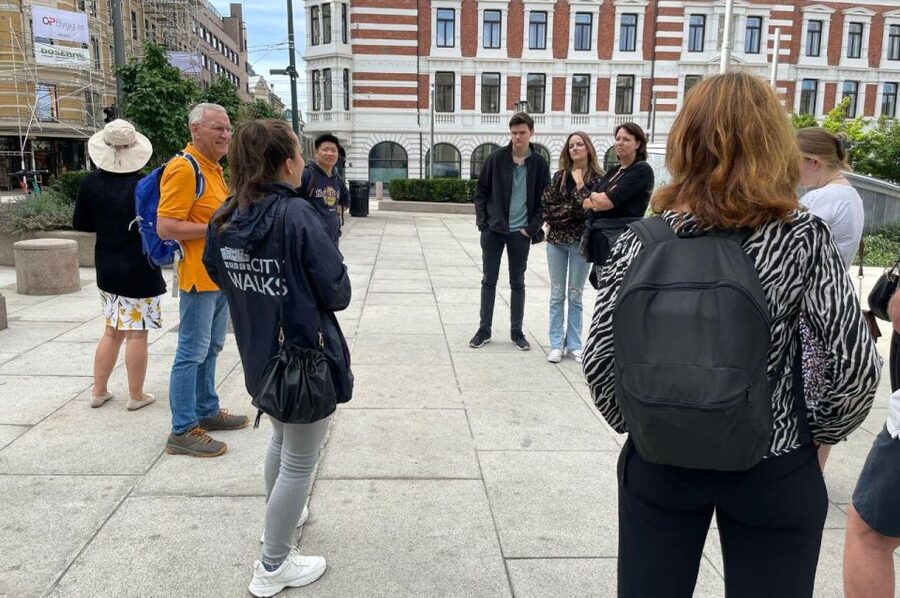
The tour’s Nobel Peace Award thread is one of its more specific hooks. You learn the story about the Nobel Peace Prize and why Oslo is tied to it in a way that is unique. Even if you already know the Nobel connection in general terms, the walk helps you place it geographically and politically, not just academically.
Then comes the fun part: Oslo’s nickname as the Tiger City. The guide brings the nickname into the walk with stops connected to the Tiger sculpture, so it does not feel like a trivia fact. It feels like a symbol that belongs in the city’s layout.
This is a tour strength I always look for in Scandinavia. You can read about a place later, but you want to feel what the city is trying to say while you are still in the streets.
Different weather, different plan? Oslo also runs these:
- Oslo: Oslo Fjord Sightseeing Cruise by Sailing Ship
★ 4.5 · 5,790 reviews - Oslo: Scenic Fjord Cruise with Audio Guide Commentary
★ 4.5 · 5,375 reviews - Oslo Nature Walks: Island Hopping Tour
★ 4.8 · 2,713 reviews - Oslo: 24 or 48-Hour Hop-On Hop-Off Sightseeing Bus GrayLine
★ 4.0 · 2,088 reviews
Oslo’s classics, from Grand Hotel fronts to the Opera House by the water
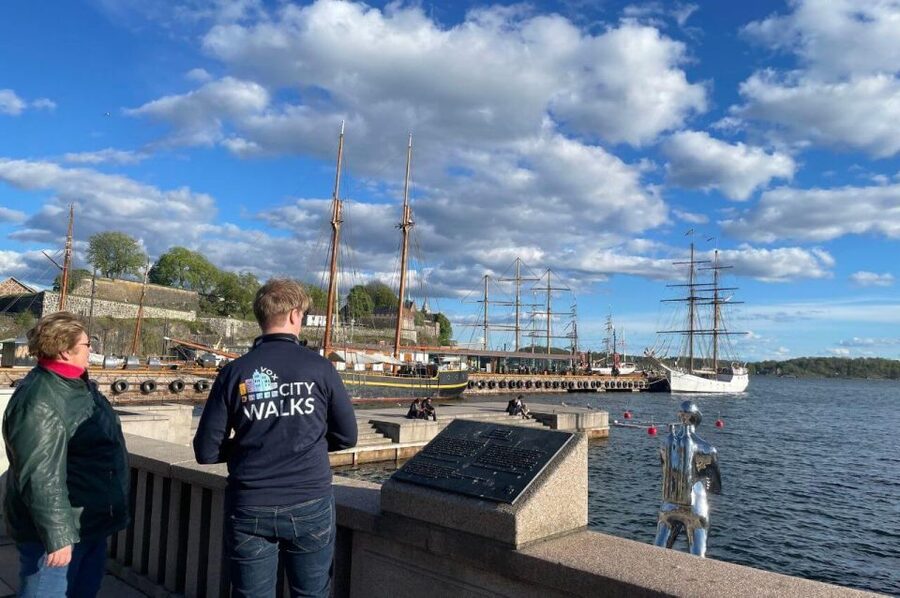
You pass the Grand Hotel Oslo and other central landmarks early on, which helps you clock the “official Oslo” zone. It sets the tone before you head toward the waterfront.
The Oslo Opera House stop is where the tour earns its postcard value. You get a guided moment around the building’s signature presence, described as being seen like a recognizable form from the water. Even if you do not go inside (entry is not included), you still get the context that makes the architecture feel meaningful rather than just dramatic.
I also like how the guide connects this modern landmark to older parts of the city. That contrast is key in Oslo: you are seeing a city that respects its past, but also wants a clear present-day face.
Christiania Torv and the old city center called back to life
One of the most historically grounded segments is the walk through Christiania Torv, the old center area. You learn about Christiania as the earlier name for Oslo’s city core, and you get the explanation for why Oslo has changed names multiple times over the last few hundred years.
That might sound dry, but it helps you stop thinking of the city as a single thing. Oslo, like many European capitals, is a layered project. The tour makes those layers feel visible because you are walking through the places tied to them.
When the guide points out how today’s city layout relates to older eras, you start to see the street shapes differently. You notice where a plaza sits, how a passage leads, and why certain institutions ended up where they did.
Kvadraturen, GlasMagasinet, Stortorvet, and Oslo Cathedral
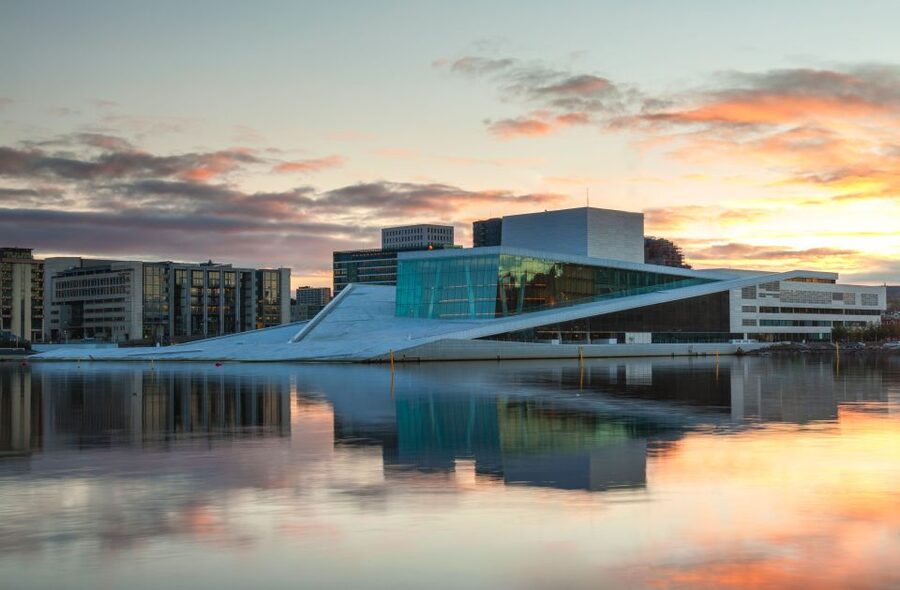
After the central promenade energy, you move into areas that feel more like an older, finer-grain city fabric. The tour includes Kvadraturen and key stops around the GlasMagasinet Stortorvet area.
GlasMagasinet is one of those Oslo stops that helps you understand how the city blends new uses into recognizable downtown spaces. You get stories, and you also get the practical advantage of knowing where it is if you want to return later.
Then there is Oslo Cathedral. Even without going inside, the stop gives you a sense of the religious and cultural role older institutions still play in city identity. The guide’s commentary is what turns it into a meaningful stop, not just a photo corner.
If you are the kind of person who hates dead time on tours, this middle stretch is a good one. It keeps you moving through different textures of the city rather than repeating the same vibe for the full duration.
Akershus Fortress, Langkaia, and the harbor edge at Aker Brygge
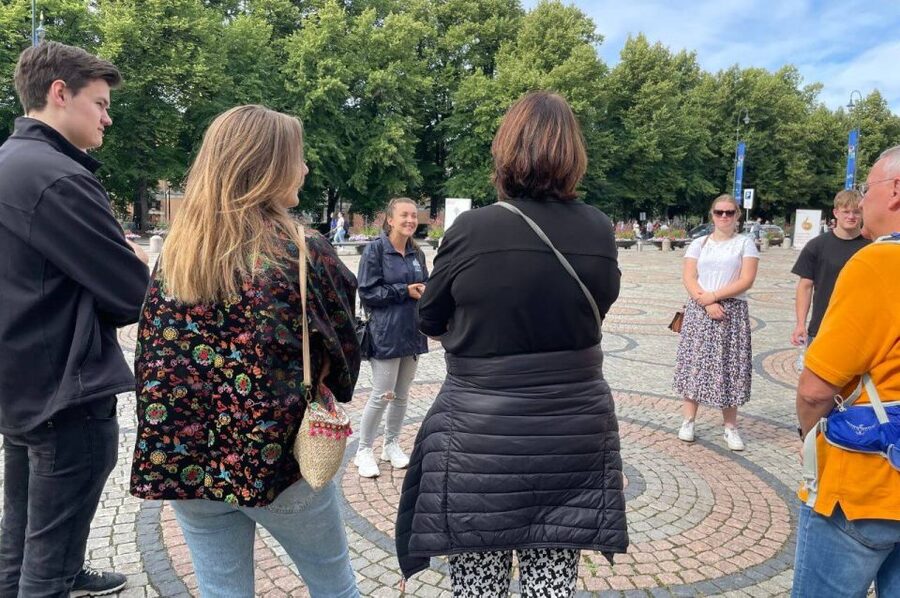
Oslo does not do one-note waterfronts. The tour leans into this with stops like Langkaia, KOK Oslo Sauna, and Akershus Fortress as you work toward Aker Brygge.
Even if you do not plan to linger for long, you get the big idea: the harbor is not only scenery, it is part of how Oslo defines itself. Seeing Akershus Fortress in the context of the walk helps you understand why the city’s “edge” feels like it has history baked into it.
Then you arrive at Aker Brygge, which the tour frames as an alternative quarter. This is one of the best places to use the included app after the tour ends, because you can slow down and explore at your own speed. The area is easy to return to, and it feels good for wandering.
Royal Palace, National Theater, and what the city does with public culture
The second half of the walk keeps layering meaning. You pass by the Royal Palace and reach the Norwegian National Theater, which gives you another side of Oslo: public culture and national presentation.
This section is valuable because it explains how civic buildings and cultural institutions share the same city language. You are learning where the stories Norway tells about itself show up in stone, steps, and street corners.
And you get walking-level context. When you later plan a museum visit or a concert, you will already know why the area feels like it belongs to that kind of activity.
How the app route extends your day after the tour ends
This is one of those details that feels small until you use it. You download the sightseeing app during or after your tour (the QR code on your voucher starts the app), and you get an audio-guided path to keep exploring.
The app route includes additional stops such as Frogner Stadion, Trinity Church, the Karl Johan monument, Grensen, and Aamodt Bridge, plus more. That list matters because it fills in gaps that a 2-hour walk cannot cover.
I like using an audio route right away because you remember the guide’s storyline. When the phone starts explaining something new, it connects to what you saw earlier that day. It also helps if you want to grab a late lunch or browse shops without feeling lost.
Is $38 a fair price for a guided Oslo highlight walk?
At $38 per person for a 2-hour guided walking tour, you are paying for three things: human storytelling, a route that makes sense, and the included app.
If you try to do this kind of orientation on your own, you can save money but you lose time. Oslo’s central sights are not too hard to reach, yet it is easy to wander without understanding what you are looking at. This tour gives you structure plus explanation, so you can spend your limited vacation time deciding where to go next instead of researching on the spot.
Also, entry tickets are not included, which is normal for a walking overview. But the tour still covers major landmarks such as the Norwegian Parliament, Oslo Cathedral, the Opera House, Akershus Fortress, and City Hall, with enough context to make a return visit feel targeted rather than random.
My take: if you are in Oslo for a short trip, this price feels like good insurance against spending your first day in the wrong places.
Who this tour suits best, and who should consider another plan
This tour is ideal for you if:
- You want a fast orientation to central Oslo on day one or day two
- You enjoy walking and hearing how symbols and institutions connect
- You like finishing with a plan for independent exploring using audio
You might want to choose something else if:
- You have limited ability to handle outdoor winter conditions, since sidewalks may not be reliably cleared
- You prefer long museum time over street orientation
Also, if you like getting local food pointers, the guide style here can be helpful. One example from the tour experience includes recommendations for W.B. Samson, including cinnamon buns, which is exactly the kind of practical advice that makes a city feel lived-in.
Practical tips to get the most out of your 2-hour walk
Do these and the tour feels smoother:
- Arrive about 5 minutes early so you do not miss the group start
- Wear shoes you can trust on wet pavement or packed snow
- Bring a charged phone for the app portion after the walk
- If you are in a large group, ask the guide about how audio is handled in your session, since some guides use small hearing aids in bigger groups
And mentally, go in expecting orientation plus stories. This is not a deep lecture. It is the type of walk that gives you a map in your head, so you can enjoy Oslo without constantly checking your phone.
Should you book Best of Oslo Walking Tour
I would book this if you want an organized first look at Oslo’s center, with a guide who explains the point of the places instead of listing facts. The combination of a tight 2-hour guided walk and the included app route is the real value, especially when you can use the audio guidance to extend your day.
Skip it only if you know you will struggle with outdoor walking in your travel season, or if you do not care about city structure and government culture at all. If you are even slightly curious about how Oslo presents itself, this one is a smart use of time.
FAQ
How long is the Oslo walking tour?
The tour lasts about 2 hours.
What languages are available for the guided commentary?
The live commentary is offered in English or German. You select the language at checkout.
Where do I meet my guide for the English and German tours?
For the English tour, meet near the statue of P.A. Munch by the Faculty of Law building entrance at University Aula, Karl Johan Str. 47. For the German tour, meet at the Nobel Peace Center at Brynjulf Bulls plass 1.
What is included in the price?
Included are the guided walking tour, live commentary in English or German, and a sightseeing mobile app.
Are museum or attraction entry fees included?
No. Entry to attractions is not included.
Is it easy to cancel if plans change?
Cancellation is free up to 24 hours in advance for a full refund.
Freshly reviewed in Oslo
- Oslo City Highlights with Fjord Cruise★ 4.5 · 128 reviews
- Oslo: Oslo Fjord Cruise with Live Jazz Music & Shrimp Buffet★ 4.4 · 143 reviews
- From Oslo: Oslomarka Forest Guided Snowshoeing Tour★ 4.8 · 161 reviews
- Oslofjord Sightseeing★ 4.0 · 170 reviews
- Oslo Fjord Evening Cruise with Shrimp Buffet on a Sailing Ship★ 4.0 · 170 reviews
- Oslo: City Highlights Walking Tour★ 4.8 · 197 reviews
- Oslo: Snowy Forest Torchlight Walk with Campfire★ 4.6 · 254 reviews
- Oslo: Private Walking Tour with a Local★ 4.5 · 263 reviews
Walking Tours, compared.
Past & Present Small Group Guided Walking Tour
Read our review →
Walking Tour in Bergen of the Past and Present
Read our review →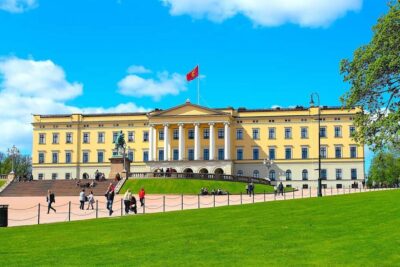
Guided Walking Tour of Central Oslo with Local Guide
Read our review →


Central Oslo Guided Walking Tour with Local Guide
Read our review →Browse the lists this tour appears in