
Reviewed · WALKING TOURS
Oslo: City Center Walking Tour
Oslo can feel big at first. This city-center walking tour turns the map into a story, with a tight route through the places that shape daily life and national identity. It is designed for small groups, so you are not just herded between landmarks.
I love the way the walk links big symbols to real-world purpose. For me, the best pairing is the Royal Palace area and the Nobel-minded stop at the Nobel Peace Center, because both tell you what Norway wants to project to the world. I also like that the guides keep things moving at a friendly pace, and guides such as Nicola, Jess, and Jessie stand out for being upbeat and ready with clear answers.
One thing to consider is the timing. The tour starts on time, rain or snow, and it is about 90 minutes, so you will not have long sit-down moments inside stops. If you want extra time for photos or to linger on facades, plan to come back on your own later.
Key things you should know before you go
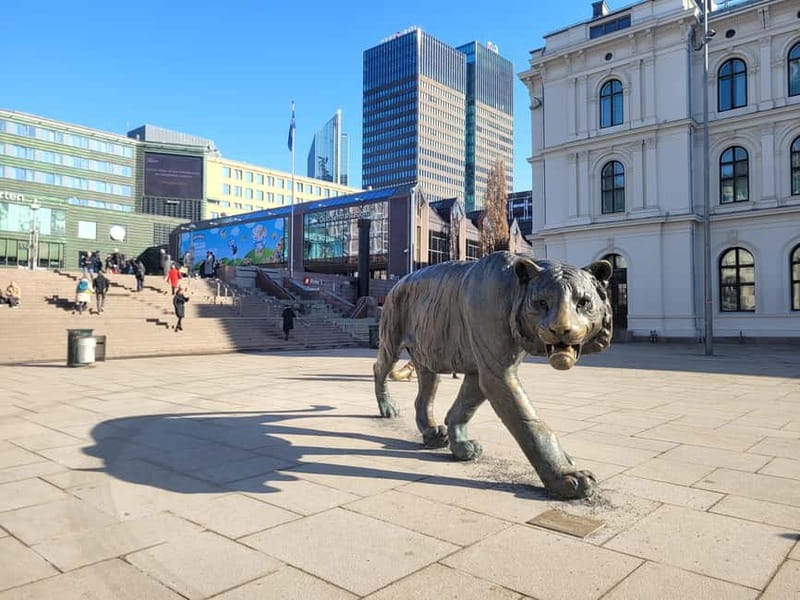
- Meeting point is easy to spot: meet by the Tiger statue in front of Oslo Central Train Station, look for the sign City Walking Tour Oslo.
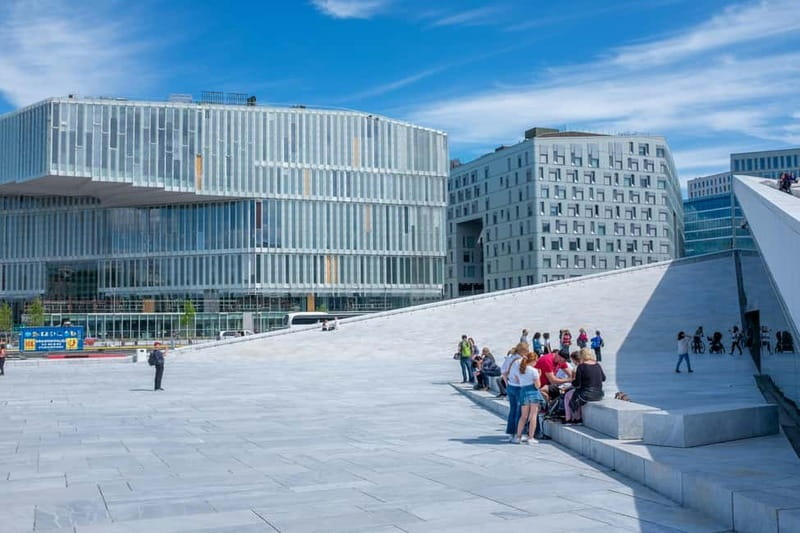
- Opera House is the first major wow moment: you head to the Norwegian National Opera and Ballet building early, and it is the kind of modern landmark you will notice even from far away.
- You get Norway’s “power places” in one loop: Akershus Fortress and the Parliament area are both built into the same walking arc.
- Akershus Fortress comes with strong context: it was used to protect the city, served as a military base and prison, and now it is a temporary office for the Prime Minister.
- Nobel Peace Center ties place to ideas: the stop is tied to the Nobel Peace Prize and what the ideals stand for.
- Guides can make or break a walking tour: expect a lively, relaxed experience, with people in the guide line such as Nicola and Jess/Jessie mentioned as especially engaging.
Why this Oslo city-center walk works (and what it is best for)
This is one of those tours that helps you stop staring at your phone and start reading the city. Oslo’s center can be a mix of modern buildings, historic layers, and waterfront energy, and this route connects the dots in a way that makes later sightseeing easier.
You will get value fast because the tour focuses on the heart of Oslo, not far-out neighborhoods. In roughly 90 minutes, you cover the Opera House area, the stock exchange district, a fortress with national-level importance, the Nobel Peace Center, and the Parliament zone. Even if you only have one afternoon free, this is a solid way to get oriented.
This tour is also a good fit if you like asking questions. The guides are presented as enthusiastic and responsive, and that matters on a walking tour. When you can stop for a moment and get a clear answer, you start noticing details you would otherwise miss.
More Walking Tours in Oslo
- Oslo: Guided Walking Tour of Central Oslo with Local Guide
★ 4.7 · 936 reviews - Oslo: Best of Oslo Walking Tour
★ 4.5 · 458 reviews - Oslo: Historic Myths & Legends Evening Walking Tour
★ 4.8 · 408 reviews
Getting started at the Tiger statue, then moving with confidence
The whole experience kicks off in front of Oslo Central Train Station, at the Tiger statue. The practical detail that makes this smooth is the guide identification: you are looking for a person standing by the Tiger holding the sign City Walking Tour Oslo.
Once everyone is together, you head out immediately. That means you do not burn your time figuring out where to start, and you can settle in right away. The tour keeps a walking rhythm and is described as relaxed, so you should feel comfortable even if you are not a super frequent “tour person.”
Weather is part of the deal here. The tour runs rain or snow, and it starts on time. Bring a warm layer and a waterproof outer shell if you are visiting in winter. You want to stay comfortable, because the whole point is to keep moving and see a lot without stressful delays.
Opera House and Oslo Børs: modern Oslo, then the world of trading
Your route begins with the Norwegian Opera House area, home to the Norwegian National Opera and Ballet. The building is modern, and you are encouraged to take it in as a landmark, not just a backdrop. Even from a sidewalk viewpoint, it gives you a strong sense of how Oslo balances culture with contemporary design.
What I like about starting here is that it sets the tone for the rest of the walk. You get a sense of Norway as outward-facing and present-day focused, before you move into older institutions and political spaces. It is a good contrast, and it makes later stops feel like they belong in one bigger story.
Next you move toward Oslo Børs, the stock exchange within the Nordic countries. The key idea you should remember is that Norway’s only regulated securities trading market is tied to this setting. That alone turns a quick stop into something more than sightseeing, because you start to understand how economic life is organized right in the city center.
If you are the type who likes to know why a place exists, this is a stop worth paying attention to. You are not going deep into finance, but you do get the basic context that makes the location feel purposeful.
Christiania Square and the Christian IV glove: learn without spoilers, then spot the meaning
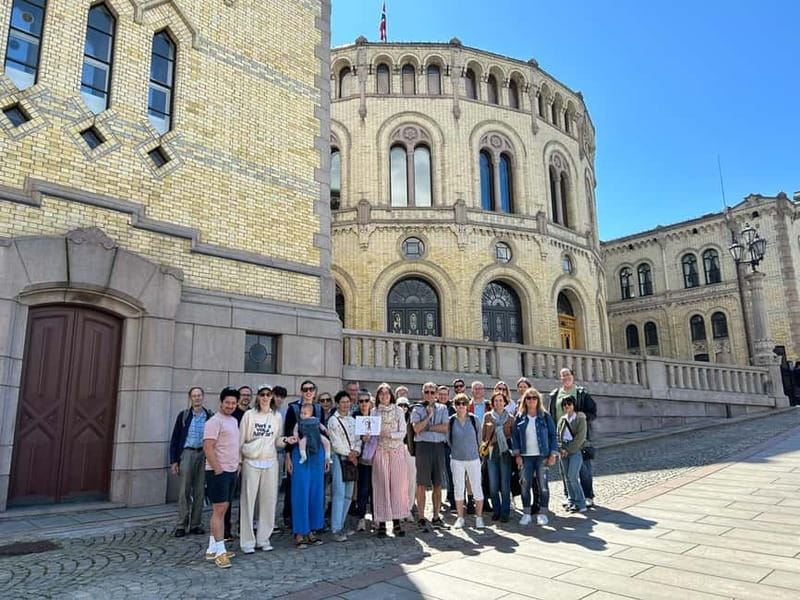
As you walk, you reach Christiania Square, where the tour includes a sight tied to Christian IV and a famous glove monument. The exact significance is intentionally left as a surprise for the day, which is a clever way to keep your attention during the walk.
This is a good moment to slow down a bit mentally. A symbol like that becomes easy to overlook if you treat it like generic street art. With a guide pointing you to what matters, you are more likely to remember the story later, when you see other royal or historical references in the city.
Even if you are not obsessed with medieval or royal trivia, this stop helps you practice the habit that makes cities feel real. You start asking, why is this here, and what is it meant to communicate?
Different weather, different plan? Oslo also runs these:
- Oslo: Oslo Fjord Sightseeing Cruise by Sailing Ship
★ 4.5 · 5,790 reviews - Oslo: Scenic Fjord Cruise with Audio Guide Commentary
★ 4.5 · 5,375 reviews - Oslo Nature Walks: Island Hopping Tour
★ 4.8 · 2,713 reviews - Oslo: 24 or 48-Hour Hop-On Hop-Off Sightseeing Bus GrayLine
★ 4.0 · 2,088 reviews
Akershus Fortress: medieval defense, prison history, and the Prime Minister’s temporary office
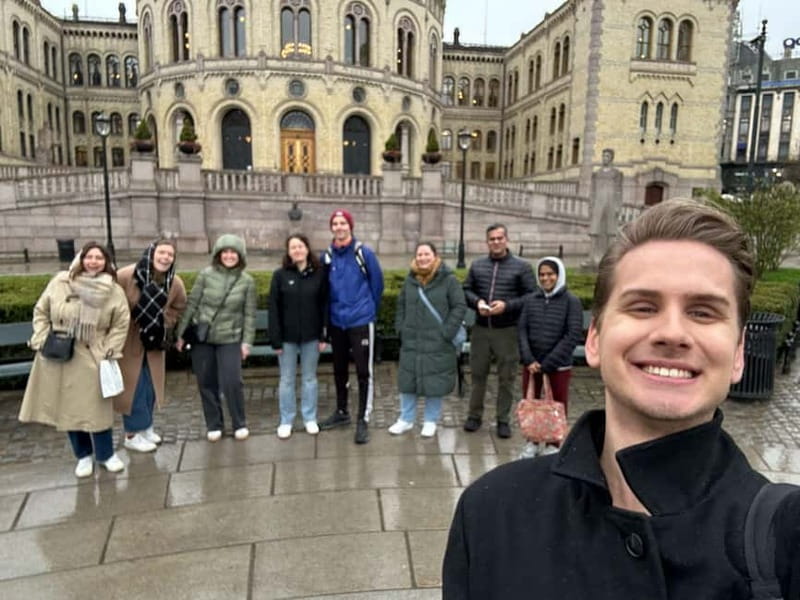
Akershus Fortress is one of the biggest reasons this tour is worth it. You go from the “idea” of Oslo in modern landmarks to a physical reminder of how the city protected itself and how power changed over time.
The fortress is described as a 13th-century medieval castle built to protect the city and serve as a royal residence. Then the story keeps evolving. Over the years it was used as a military base and even a prison, and today it functions as a temporary office for Norway’s Prime Minister.
This is the stop where you will probably feel the biggest shift in scale. A walking tour can sometimes feel like a string of photos. Akershus Fortress breaks that pattern because it forces you to connect geography with history and current governance.
A practical tip: plan to look around with your body, not just your eyes. As you approach, keep your attention on sight lines and the way the fortress sits relative to the surrounding city. That helps you understand why this was a natural place to control access in the first place.
Aker Brygge and the Nobel Peace Center: a calm stop with big world purpose
After Akershus Fortress, the walk heads toward Aker Brygge, where the Nobel Peace Center is located. This is a softer, more thoughtful part of the route. You are not just moving through a neighborhood, you are stepping into a place tied to the Nobel Peace Prize and the ideals it represents.
The tour includes passing by the Nobel Peace Center and learning what it showcases. Even if you do not go inside on this specific walk, having the context makes the building feel more meaningful. You understand it as an intentional space for ideas about peace, not just another prominent address near the waterfront.
This stop works well if you want your walking tour to include a mix of civic pride and reflection. It also gives you variety in scenery. You go from fortress tones to waterfront vibes, without having to reorganize your day.
Oslo City Hall, the National Theatre, and Royal Palace facades: architecture you can read
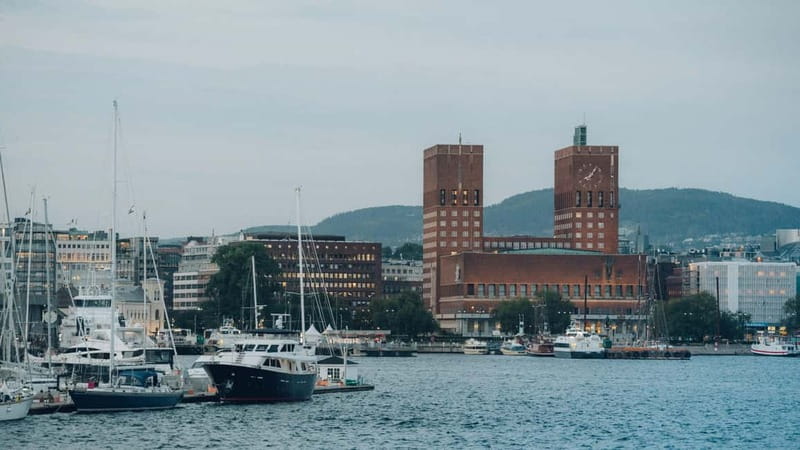
The middle-late part of the tour leans into iconic buildings. You pass Oslo City Hall and the National Theatre, and later you see the Royal Palace. The emphasis is on looking at the elegant facades and learning their history along the way.
This portion is where the guide’s energy really helps. Facade details can feel abstract if you do not have a narrative thread. With a guide giving context, you start noticing the difference between decorative surfaces and statements about status, culture, and national identity.
I also like that this section keeps you outdoors and moving. You are not trapped waiting in lines. You get the satisfaction of seeing the big names while staying in a relaxed flow.
University Aula, Karl Johan’s gate, and the Storting building: the finish that feels like the heart of politics
As the tour nears the end, you move toward the University Aula on the university’s old campus. Even though this is a shorter stop, it helps anchor the walk in the education side of national life, not just government and culture.
Then you reach Karl Johan’s gate, Oslo’s main street. It is a natural transition. This is where you feel Oslo as a lived-in city, not just a collection of landmark backdrops. The main street setting also makes it easier to visualize where you might want to wander later on your own.
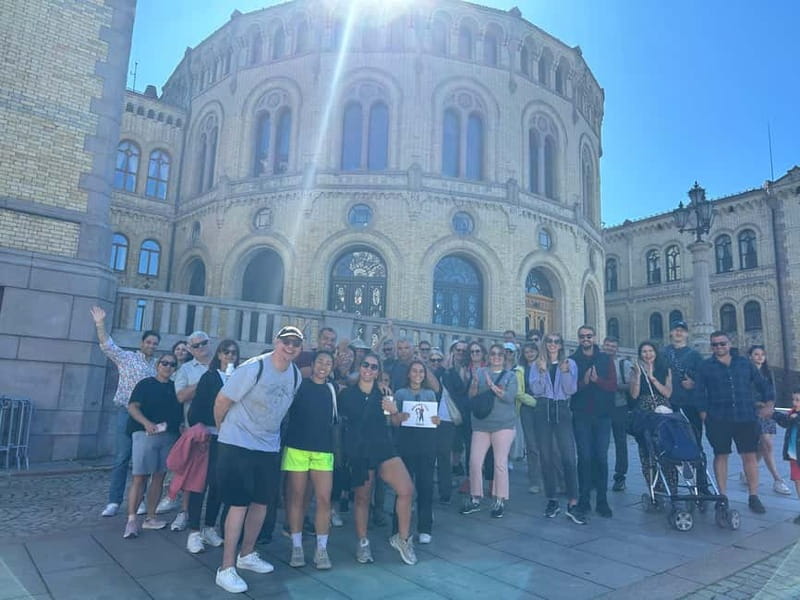
The finale is the Storting building, Norway’s Parliament. The tour includes admiring the architecture, and then it finishes right there at the Norwegian Parliament zone. Ending here is smart. By this point, you have already seen royal power at the Palace area and civic power at Akershus Fortress, so the Parliament finish makes emotional and logical sense.
If you are the kind of person who likes a clean ending, this is it. You are done with your structured walk, and you are dropped in the middle of central Oslo where it is easy to continue exploring.
Price and time value: is $22 worth 90 minutes of Oslo?
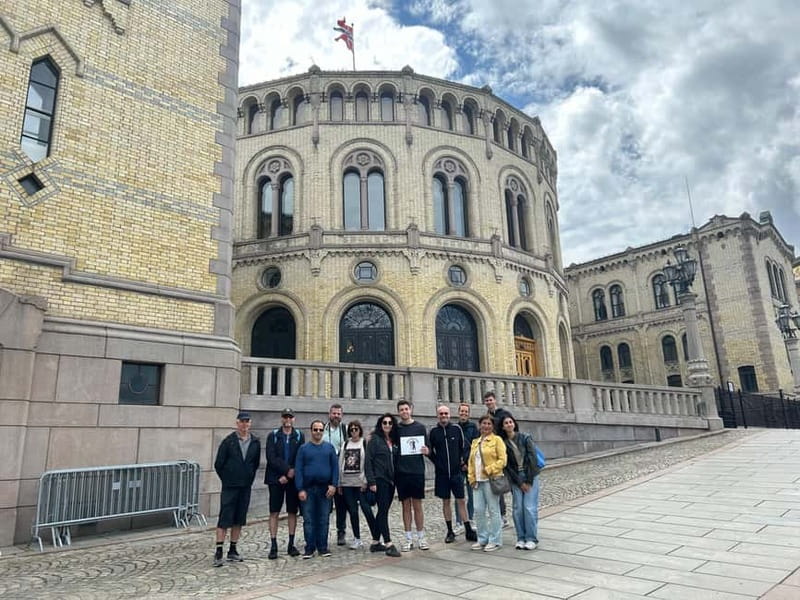
At $22 per person for a guided walk of about 90 minutes, the value is mainly in three areas.
First, you are paying for a local guide who can connect buildings to meaning. Without that, you would still see the Opera House, fortress, and Parliament, but you would miss the “why.” Guides such as Nicola and Jess/Jessie were highlighted as enthusiastic and engaging, which is exactly what you want for this kind of format.
Second, the route is compact. You hit a lot of central Oslo without needing to plan transport or stitch together multiple tickets. If this is your first day, it gives you a mental map, so the rest of your time feels easier.
Third, it is a small-group experience. Small groups tend to mean better interaction, and the walk is paced to feel relaxed rather than rushed.
One fair consideration: a past participant raised a concern about how some people might access the same type of walk through a free route booking, while others paid. I cannot confirm how that works from the outside, but if you care about pricing fairness or transparency, it is worth asking upfront how the tour is structured in practice.
Who should book this walk, and who might want a different plan?
This tour is a great match if you:
- want orientation fast in Oslo’s city center
- like learning the story behind major landmarks
- enjoy walking with a guide and asking questions
- want a manageable outing that lasts about 90 minutes
You might want a different option if you:
- want lots of time at one stop for longer interior visits
- prefer self-guided sightseeing with no scheduled route
- get restless on any rainy-day outdoor walking
For most people, though, this is a strong “first day in Oslo” style activity. You will leave with a clearer sense of where things are and why they matter, and you will know what to revisit later.
Should you book the Oslo City Center Walking Tour?
Yes, I would book it if your goal is to get to the big Oslo highlights in a single, organized loop. The mix of stops, from the Opera House and Oslo Børs to Akershus Fortress, the Nobel Peace Center, and the Parliament finish, is a practical way to understand the city in a short time.
I would especially consider it if you want a guide who keeps the pace friendly and the explanations clear, since guides like Nicola and Jess/Jessie have been singled out for that kind of energy. Just plan for the main tradeoff: about 90 minutes means you will see and learn a lot, but you will not linger for long at every stop.
If you like your sightseeing guided, structured, and easy to follow, this is a smart use of a half-day slot.
FAQ
Where do I meet the guide?
Meet in front of Oslo Central Train Station by the Tiger statue. Look for the guide standing next to the statue holding the sign City Walking Tour Oslo.
How long is the walking tour?
It lasts about 90 minutes, starting on time. The activity is listed as 105 minutes, but the experience itself runs roughly in the 90-minute range.
What sights will we see on the tour?
You will pass or stop at major central locations including the Oslo Opera House, Oslo Børs, Christiania Square, Akershus Fortress, the Nobel Peace Center (in Aker Brygge), Oslo City Hall, the National Theatre, the University Aula, the Royal Palace, Karl Johan’s gate, and the Storting building.
What language is the tour in?
The live tour guide speaks English.
Where does the tour finish?
The tour ends at the Norwegian Parliament, at the Storting building area.
How much does it cost?
The price is $22 per person.
Does the tour run in bad weather?
Yes. The tour starts on time rain or snow.
Is the tour wheelchair accessible?
Yes, it is wheelchair accessible.
Freshly reviewed in Oslo
- Oslo City Highlights with Fjord Cruise★ 4.5 · 128 reviews
- Oslo: Oslo Fjord Cruise with Live Jazz Music & Shrimp Buffet★ 4.4 · 143 reviews
- From Oslo: Oslomarka Forest Guided Snowshoeing Tour★ 4.8 · 161 reviews
- Oslo Fjord Evening Cruise with Shrimp Buffet on a Sailing Ship★ 4.0 · 170 reviews
- Oslofjord Sightseeing★ 4.0 · 170 reviews
- Oslo: City Highlights Walking Tour★ 4.8 · 197 reviews
- Oslo: Snowy Forest Torchlight Walk with Campfire★ 4.6 · 254 reviews
- Oslo: Private Walking Tour with a Local★ 4.5 · 263 reviews
Walking Tours, compared.
Past & Present Small Group Guided Walking Tour
Read our review →
Walking Tour in Bergen of the Past and Present
Read our review →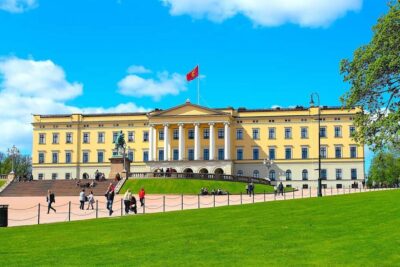
Guided Walking Tour of Central Oslo with Local Guide
Read our review →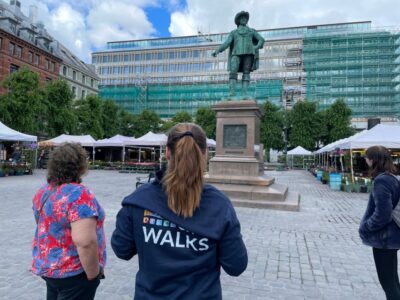

Browse the lists this tour appears in