
Reviewed · CITY TOURS
Oslo City Walks – The City of Contrasts
Oslo has a talent for mixing bold new design with old-city texture, and this walking tour is a tidy way to see how that contrast actually works on the ground. You start in the central rail area, then glide toward Bjørvika and back into the older core of town.
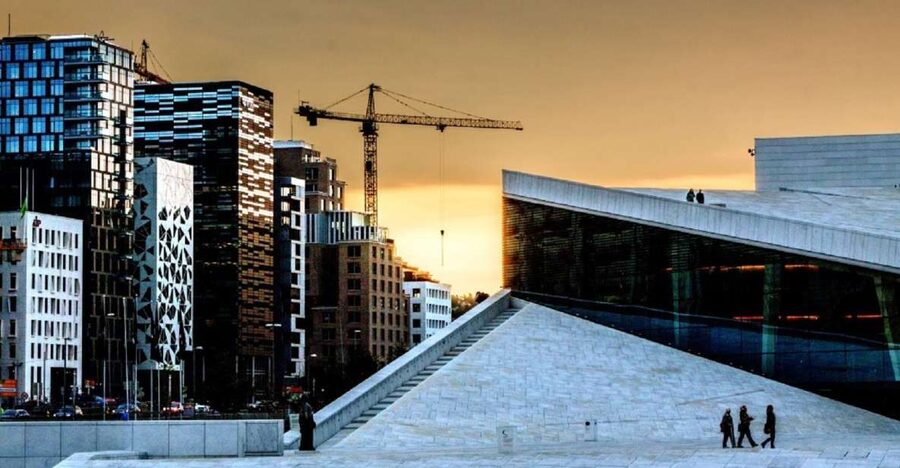
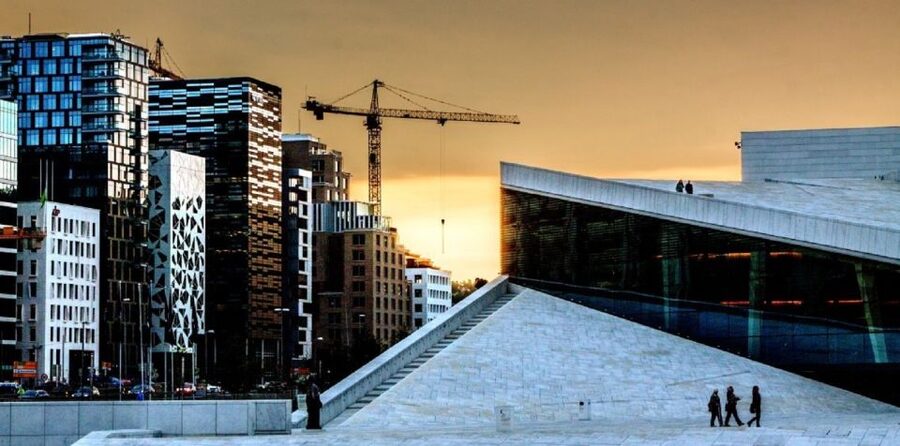
I love the chance to step onto the Norwegian National Opera & Ballet roof for free when time allows. I also like how the walk frames Bjørvika’s transformation as more than construction talk, it is a real neighborhood shift with culture moving in.
One possible drawback: the Munch museum stop does not include admission, so you should budget extra if you plan to go inside during the allotted time.
Key highlights to look for
- Opera House roof time for free, if your schedule allows
- Bjørvika’s port-to-culture story, explained as you walk the edges of the new district
- Akrobaten Pedestrian Bridge, a quick walk that links Grønland and Bjørvika
- Kvadraturen area context, including Oslo’s oldest restaurant area and the site that was the original town hall
- Small group size with a local guide, capped at 20 travelers
- All-weather operation, so dress for Oslo rain and wind rather than hoping for perfect skies
Why Oslo’s City of Contrasts makes sense as a walk

This tour works because it does not treat Oslo like a museum. It treats the city like a living thing, where new districts grow next to older ones and you can spot the change with your own eyes.
You get a concentrated route that connects the modern waterfront area around Bjørvika to the older streets of Kvadraturen. That “before and after” feeling is the whole point of the City of Contrasts theme, and a walking pace is the fastest way to pick it up.
Also, the timing helps. A 5:00 pm start gives you an easier rhythm for the day, and a roughly 2-hour duration keeps things moving without turning into a long slog.
Other ways to spend a day around Oslo
- Oslo: Oslo Fjord Sightseeing Cruise by Sailing Ship
★ 4.5 · 5,790 reviews - Oslo: Scenic Fjord Cruise with Audio Guide Commentary
★ 4.5 · 5,375 reviews - Oslo Nature Walks: Island Hopping Tour
★ 4.8 · 2,713 reviews
Getting there from Oslo Visitor Center (and staying oriented)
Your tour starts at Oslo Visitor Center, Jernbanetorget 1, 0154 Oslo. It ends at Deichman Bjørvika, Anne-Cath, Vestlys plass 1, 0150 Oslo, which is handy if you are planning to continue exploring after the walk.
You do not need hotel pickup, which often makes these tours simpler. With a mobile ticket and a meeting point near public transportation, you can focus on showing up and letting the guide handle the flow.
One more practical tip: since this is a walking tour with a moderate physical fitness level requirement, wear shoes you trust. Oslo sidewalks can be slick, and you will appreciate cushioning once you add up the small stretches between stops.
The Norwegian National Opera & Ballet stop, and what to do with 15 minutes
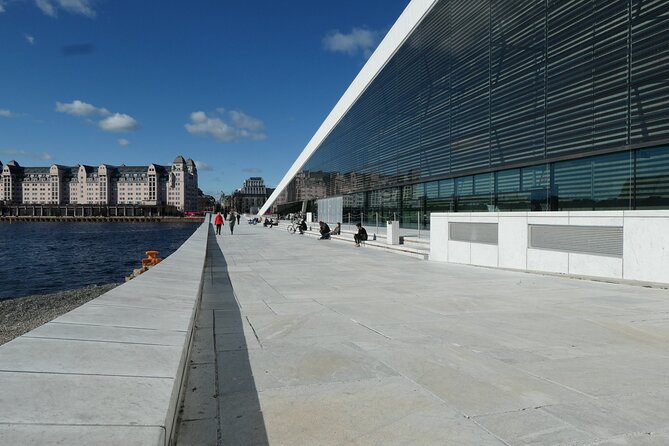
The first stop is the Norwegian National Opera & Ballet, where you get about 15 minutes. Even in a short time, this building gives you a lot to see because it is design-forward and meant to be experienced from outside.
If timing works out, you can stroll on the Opera House roof. Admission is listed as free for this stop, so if you want a memorable view without paying again, this is the one to prioritize.
The practical payoff here is orientation. Before you move into Bjørvika and its redevelopment story, this stop tells you what “modern Oslo” looks like when it is built to be public, not tucked away.
Bjørvika and Munch: the newest piece of the story
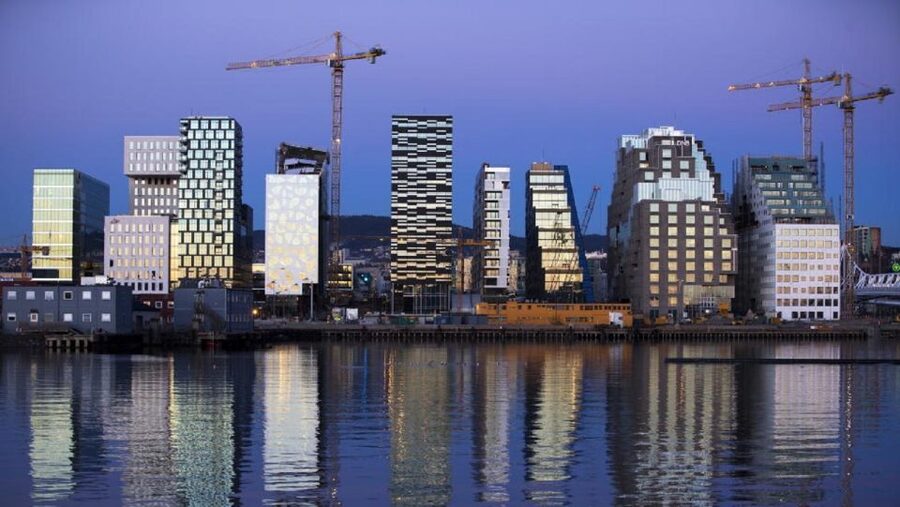
Next you head into Bjørvika, the district that has been transforming from a container port into a cultural hub. The tour frames this shift as a neighborhood-level change, not just a headline.
The Munch museum stop is set for about 20 minutes, and this is where you need to think about cost. Admission for Munch is not included, so your “value math” changes depending on whether you plan to enter the museum or use the time for a more outside-focused look.
Since the Munch museum opened in October 2021, this area reads as current and evolving. That matters because you are not just seeing Oslo’s past in one direction, you are watching the city build new anchors right now.
If you do plan to go in, keep your time goal simple. Aim to see what you came for and let the building and location do some of the work. In a tour like this, the guide’s job is to keep you from getting stuck, and the time limit nudges you to be efficient.
Different weather, different plan? Oslo also runs these:
- Oslo: 24 or 48-Hour Hop-On Hop-Off Sightseeing Bus GrayLine
★ 4.0 · 2,088 reviews - Oslo: 100% Electric Oslofjord Sightseeing Cruise
★ 4.4 · 2,041 reviews - Oslo: Fjord Evening Cruise with Shrimp Buffet
★ 4.5 · 1,956 reviews - Oslo: Guided Sightseeing Fjord Cruise on Premium Silent Boat
★ 4.7 · 1,826 reviews
Akrobaten Pedestrian Bridge, the quick link that changes the walk
The third named stop is the Akrobaten Pedestrian Bridge, with about 10 minutes here. It connects Grønland and Bjørvika, and that connection is exactly why this bridge belongs in a “city of contrasts” tour.
A short bridge stop might sound small, but it is a powerful transition moment. You cross from one neighborhood feel to another, and you can see how the urban layout supports the idea of old city and new district working side by side.
It is also free, and the time allotment is tight enough that you do not have to worry about the tour dragging. This is the kind of stop that helps your photos look like a story, not random stops.
Kvadraturen: older Oslo’s anchor points in the last stretch
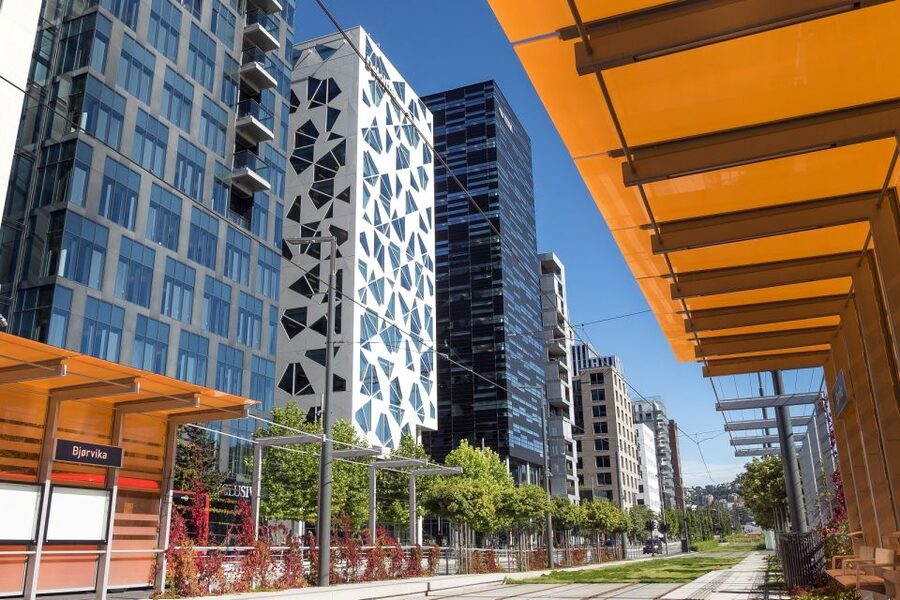
Near the end of the walk, you move into the Kvadraturen area. This is one of the city’s most useful places to understand if you want the contrast to feel real, not just theoretical.
The tour focuses on key historical anchors here, including an area tied to Oslo’s oldest restaurant and what was the original town hall. Even without a long lecture, these names give context to the “old core” idea, and they help you connect street-level sightseeing with how the city governed itself and lived.
I like this portion because it turns the route into a loop. You start with modern architecture, you pass through a redevelopment district, you cross a link between neighborhoods, and then you land back in an older area where you can sense how Oslo’s identity formed before Bjørvika’s recent boom.
What the guide adds, beyond the buildings
The biggest advantage here is the guide. The tour is run by Oslo Guidebureau, and the top feedback repeatedly highlights a guide who is energetic and well-informed in a way that keeps the walk fun instead of dry.
Because the group size is capped at 20 travelers, you are less likely to feel like a number. On a city walk, small-group energy matters, it is how you get answers to the questions that pop up when you are standing in front of something new.
What you should expect from the guide is context that connects the stops. For example, the Opera House roof visit makes more sense once you understand why Bjørvika redevelopment is happening, and why Kvadraturen’s older civic roots are still part of the conversation.
Price and value: $53.31 for a focused 2-hour route
At $53.31 per person for about 2 hours, this tour is priced like a “guided orientation” experience. That means you are paying for a local guide and a structured route, not for museum-style entry fees.
Here is where you should pay attention to the value equation. The Opera House stop lists admission as free, and the Akrobaten Bridge stop is also free. The one obvious extra cost is the Munch museum, where admission is not included.
So, the tour is a good deal if you are:
- interested in seeing Bjørvika and the Opera House area efficiently
- happy to pay for Munch admission only if you genuinely want museum time
- looking for a guided walk that gives meaning to modern Oslo, not just photos
It is also worth noting that this experience is often booked about 13 days in advance. If you want a specific day, especially in better weather windows, booking ahead helps you avoid last-minute disappointment.
Timing, weather, and the pace you should plan for
The tour operates in all weather conditions, so you should dress like Oslo can switch from mild to windy fast. Bring a rain layer or a jacket you trust, and keep your plans flexible.
The physical requirement is described as moderate fitness. That usually means you should assume normal walking stamina, and not a couch-to-giant-staircase situation. Still, if you have mobility limits, you will want to think through your comfort with a steady walking pace for the full route.
Because the tour duration is close to 2 hours and the named stops are only minutes each, it tends to feel like a series of short “look and learn” moments. That is a strength if you like momentum, and a downside if you prefer long museum hangs.
Who this tour is best for
This tour is a smart fit if you want an Oslo overview that connects modern architecture to older city structure. It is also a great match for people who like walking as a way to understand a neighborhood, not just tick off landmarks.
You will probably enjoy it most if you:
- want a compact route with a clear theme, City of Contrasts
- are curious about Bjørvika’s shift into a cultural hub
- like architecture and public design, especially the Opera House roof option
- prefer a small group guided experience capped at 20
If you are the type who wants deep museum time, you may find the schedule a bit tight, since Munch has a set window and admission costs extra. But for a balanced introduction, it is well put together.
Should you book Oslo City Walks, The City of Contrasts?
I would book it if your goal is to understand Oslo quickly and correctly, without bouncing between far-apart sites. The route makes sense, the Opera House roof option is a nice value win, and the Bjørvika and Kvadraturen contrast is exactly the kind of lesson you can feel in a walking tour.
Skip it if you know you want lots of museum time and you will resent paying separately for Munch. Also skip it if you dislike weather-dependent outdoor walking, since this runs in all conditions.
If you want a guided evening walk with strong feedback on the guide, and you like the idea of modern Oslo meeting older streets, this one is a strong choice.
FAQ
How long is the Oslo, The City of Contrasts walking tour?
The tour lasts about 2 hours.
What is the price per person?
The price is $53.31 per person.
Where does the tour start and what time does it begin?
It starts at Oslo Visitor Center, Jernbanetorget 1, 0154 Oslo, Norway, with a start time of 5:00 pm.
Where does the tour end?
The tour ends at Deichman Bjørvika, Anne-Cath, Vestlys plass 1, 0150 Oslo, Norway.
What is included in the tour price?
A local guide is included. Mobile ticket is also provided.
Is admission included for the Munch museum stop?
No. Admission for the Munch stop is not included.
Does the tour run in bad weather?
Yes. The tour operates in all weather conditions, so you should dress appropriately.
What is the group size and fitness level?
The tour has a maximum of 20 travelers, and it requires a moderate physical fitness level.
FAQ
What is the cancellation policy?
You can cancel for a full refund up to 24 hours before the experience’s start time. If you cancel less than 24 hours before, the amount you paid will not be refunded.
Freshly reviewed in Oslo
- Oslo Munch Museum Admission Ticket★ 4.0 · 29 reviews
- Oslo Sea Kayak Tour: Explore The Incredible Oslofjord★ 4.5 · 31 reviews
- 3 Hours Walking Tour for Great Food in Oslo★ 5.0 · 32 reviews
- Private Bike Tour (3 hours)★ 5.0 · 33 reviews
- Oslo city center Tour★ 5.0 · 34 reviews
- Oslo: City Tour & Traditional Norwegian Lunch or Dinner★ 4.6 · 34 reviews
- Oslo’s Secret Forest Gastronomy: Private Chef & Local Feast★ 5.0 · 35 reviews
- Oslo: Private City Center Highlights Guided Walking Tour★ 4.9 · 35 reviews
City Tours, compared.
Grand City Sightseeing Tour by Bus with Fjord Cruise
Read our review →
Oslo Combo Tour: Grand City Tour and Oslo Fjord Cruise
Read our review →
Browse the lists this tour appears in