

Reviewed · OSLO TOURS
Unknown war. Oslo and Norway during 1940-45
Oslo during 1940 to 1945 is not a distant concept when you walk it. This tour turns the city’s historical core into a timeline, using still-standing landmarks to explain how German occupation shaped daily life and how Norwegians pushed back.
I like two things most. First, Rami brings the story to life with a private photo collection, often showing what the streets looked like from the exact spot you’re standing in. Second, I like the customizable private format, so you spend your time where your curiosity actually is, not where a canned group script says you should.
One thing to plan for: this is a walking tour that depends on the weather. Norway can be rainy, and you will want layers and a rain plan.
Key highlights that make this tour worth your time
- A WWII-focused route through Oslo’s royal, civic, and fortress heart
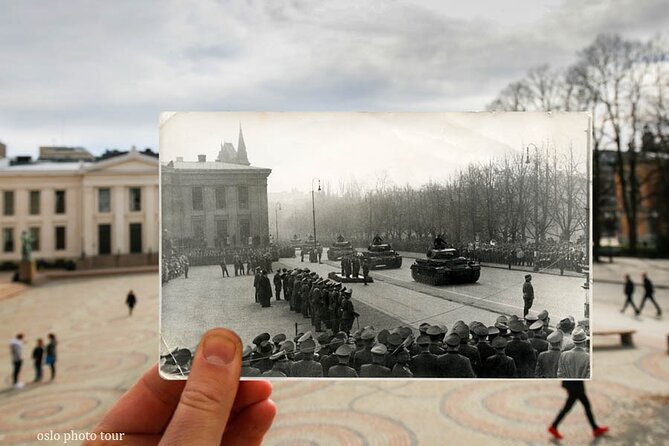
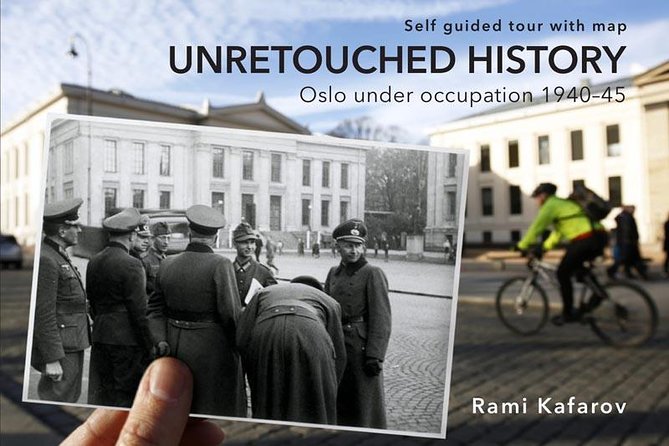
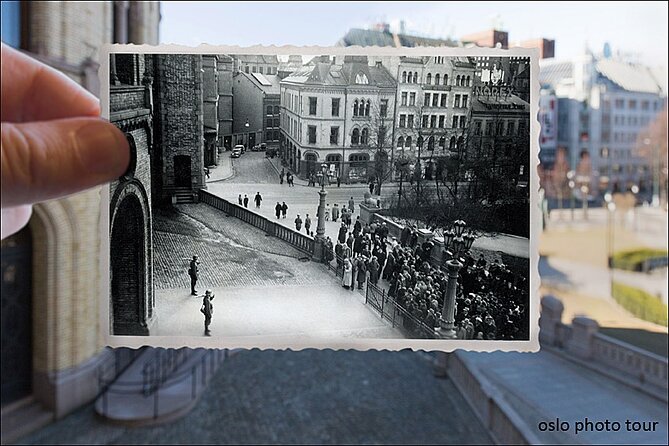
- Historic photos in context, matched to the precise places you visit
- Private, customizable pacing for your group of up to 5
- Easy follow-up at the end near Norway’s Resistance Museum at Akershus
- Balanced storytelling, with facts aimed at helping you understand the nuances
A wartime walk through Oslo’s royal, civic, and fortress core
This is a city walk, but it is also a map. You start in central Oslo and work toward Akershus Fortress, and along the way you connect the dots between major public buildings and the lived reality of occupation.
You’ll spend the 2.5 hours thinking about how power shows up in architecture and streets. The German occupation was not only about soldiers. It also reshaped public life, institutions, and the way ordinary people navigated everyday choices. Then resistance work becomes part of the picture too, not as a distant legend, but as something that grew out of Oslo itself.
I also like that the story is tied to landmarks you can still see today. That matters because it stops WWII from feeling like a textbook chapter and makes it feel grounded in place.
Other ways to spend a day around Oslo
- Oslo: Oslo Fjord Sightseeing Cruise by Sailing Ship
★ 4.5 · 5,790 reviews - Oslo: Scenic Fjord Cruise with Audio Guide Commentary
★ 4.5 · 5,375 reviews - Oslo Nature Walks: Island Hopping Tour
★ 4.8 · 2,713 reviews
Meet Rami and the flexible private format
This is private, just your group, and it runs about 2 hours 30 minutes. Price is $307.50 per group for up to 5 people, which is important value math if you are traveling with family or a small friend group.
The guide, Rami, is the kind of person who turns facts into scenes. The standout pattern in the experience is how he uses photographs to anchor what he’s saying. You do not just hear about the occupation. You look at the same type of building and street line, then see what it looked like during the war, which helps your brain keep the details straight.
That photo approach also helps if you are the sort of traveler who likes your history visual. And if you are more into the human side, Rami also explains what daily life could feel like under occupation, plus what resistance efforts meant on the ground.
This is a customizable itinerary. So if you want more time on certain themes, or you want to slow down because you are taking notes and photos, you should be able to shape the flow around your interests.
Royal Palace stop: where power and symbolism meet
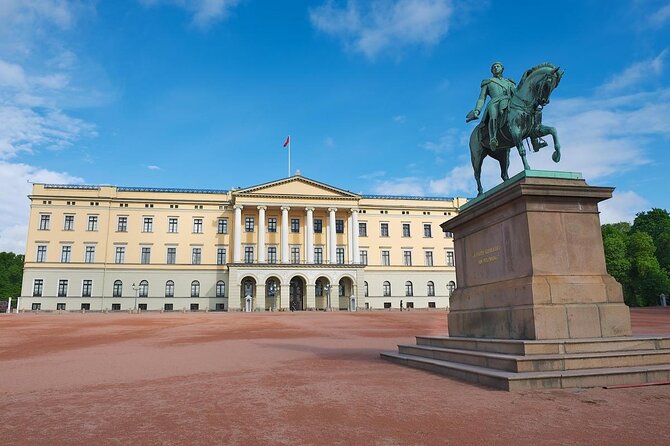
Your first major stop is the Royal Palace area. Even if you are not going inside, it’s a useful starting point because royal spaces are loaded with meaning in any era.
In a wartime context, you can learn how public authority is displayed and how institutions gain and lose influence under occupation. You’ll also get a sense of how German forces interacted with the Norwegian public sphere, because these are the kinds of places where national identity shows up.
Practical note: the Royal Palace admission ticket is not included. So if you want to enter, bring the separate ticket. If you do not, the area around it still gives you plenty to work with.
Karl Johans Gate and the pull of central Oslo’s WWII story
Next you move into Karl Johans Gate, the grand central boulevard that many people already know from casual sightseeing. Here, it becomes more than a pretty street.
Rami uses this stretch to point out many different locations tied to WWII history. That’s a smart way to do this part of the city, because Karl Johans Gate is where it’s easy to imagine Oslo as a normal European capital, then suddenly reframe it through occupation realities. You’ll learn how the wartime story threads through the same streets you might otherwise treat as just a view corridor.
The time investment here is modest, but it’s efficient. You’re walking between key nodes in the city center and learning to read the streets like evidence.
Different weather, different plan? Oslo also runs these:
- Oslo: 24 or 48-Hour Hop-On Hop-Off Sightseeing Bus GrayLine
★ 4.0 · 2,088 reviews - Oslo: 100% Electric Oslofjord Sightseeing Cruise
★ 4.4 · 2,041 reviews - Oslo: Fjord Evening Cruise with Shrimp Buffet
★ 4.5 · 1,956 reviews - Oslo: Guided Sightseeing Fjord Cruise on Premium Silent Boat
★ 4.7 · 1,826 reviews
Norway’s Parliament and the occupation pressure on institutions
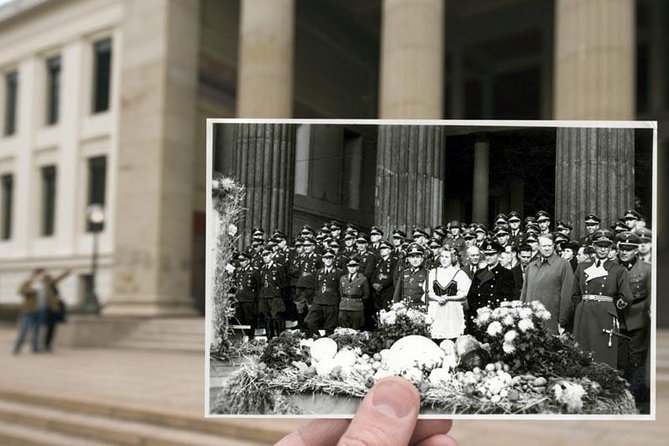
After Karl Johans Gate, the route reaches the Norwegian Parliament building. This stop is where the tour naturally shifts from street-level context to institutional impact.
Parliament is a symbol of Norwegian governance. In occupation years, institutions and civic life face new constraints, new risks, and new forms of control. The tour helps you connect those ideas to what you’re seeing, instead of treating politics as abstract.
Admission tickets are not part of your tour price for this stop, so plan on looking from the outside and focusing on the historical context provided as you stand there.
Stortorvet Kebab and the University of Oslo square: everyday life in focus
Then the tour does something I really appreciate. It puts history into regular city-life settings.
You’ll stop at Stortorvet Kebab, at Stortorvet market square. That sounds casual, but the point is serious. Occupation did not only happen in dramatic moments. It happened in daily rhythms, crowded squares, and places where people crossed paths. Market areas are where you can think about what normal life could look like, even under pressure.
Next is the University of Oslo, Faculty of Law area near the university square. This is another smart pairing, because universities and legal institutions sit at the intersection of ideas, rules, and society. Even if you have no special academic interest, this stop helps you understand the occupation era as something that touched how people lived, studied, and worked.
These two stops have free admission listed in the tour details. That makes them easy wins if you want to keep your budget tight while still covering major landmarks.
Nationaltheatret and the Gunnar Sønsteby monument
You’ll also reach Nationaltheatret, the national theater area, and a key connection point tied to WWII heroism via the Gunnar Sønsteby monument.
This is one of those stops where the city’s cultural identity meets wartime memory. The theater district gives you a chance to reflect on what gets preserved in public space and how remembrance is built into Oslo’s physical layout.
National Theater admission is not included, so treat this as a look-around moment unless you decide to add entry separately. Even from outside, the area works well for the story because you’re not just moving between buildings, you’re moving between kinds of meaning: governance, public life, education, and memory.
Akershus Fortress finish: the resistance connection
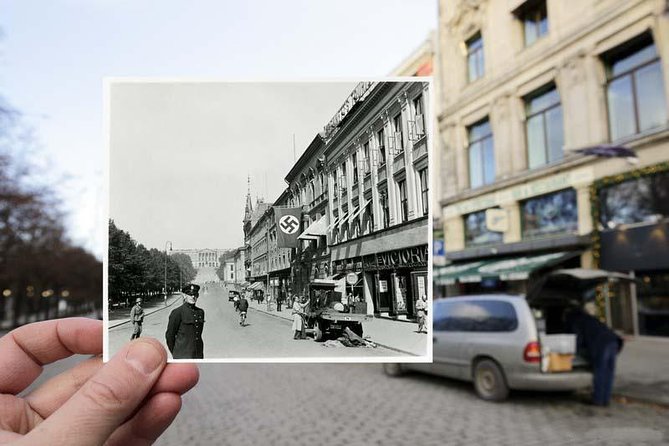
The tour ends at Akershus Fortress near Norway’s Resistance Museum. This finish line is practical and thematically perfect: you end at a place that already feels like a story setting, so your last 15 to 20 minutes land with impact.
Akershus is more than a nice viewpoint. Fortress spaces help you understand how occupation eras used geography and control, and how resistance narratives gained urgency as the war progressed.
If you want to keep going after the tour, you can. The Resistance Museum opening hours provided are Monday through Thursday, 9:00 AM to 4:00 PM. (So if you’re visiting on a different day, plan to check hours before you commit.)
For this stop, admission is not included as part of the tour.
Tickets, timing, and what to bring for Norway rain
This experience is built for walking, so plan accordingly. The route is compact, and you’ll get about 10 minutes at each stop listed, but the real time shifts based on how long you want to talk, look at photos, or ask questions.
A few practical points that matter:
- Admission tickets are not included for several big stops like the Royal Palace, Nationaltheatret, and Akershus Fortress. The tour includes free admission stops at places like Stortorvet Kebab and the University of Oslo Faculty of Law area, based on the details provided.
- You should wear shoes you can handle on city pavement. In Oslo, that usually means solid walking support.
- Bring a rain plan. The tour requires good weather, and at least one family experience noted rain and the value of bringing an umbrella. Layer up so you can stay comfortable even if the weather flips.
Also, it’s offered in English, and you’ll get a mobile ticket. That’s helpful for last-minute schedule management and reduces hassle if you are moving quickly between sights.
Price and value: $307.50 per group can be a smart buy
Let’s do the math in plain terms. The tour costs $307.50 per group, up to 5 people. That means the real question is not the total price, it’s how many people share it.
If you are traveling as two, it’s $153.75 each. If you are four, it drops to about $77 per person. If you are five, it comes out around $61.50 per person. Private tours get expensive fast, so the group cap is a big part of the value story here.
And you’re paying for a specific format: a private, guided WWII route plus historic photos that match the street locations. That combination is what turns a generic walking tour into something more memorable. The strongest reviews show the same pattern, photos tied to the exact places, plus the guide shaping the experience with flexibility.
If you are the type who likes to connect major events to real streets and buildings, this is the kind of tour where your money goes toward understanding, not toward a bus ride.
Should you book this Oslo WWII walking tour?
I think you should book if you want WWII in Oslo to feel concrete. You’ll walk through central landmarks, learn how the occupation era affected public life and institutions, and then land your story at Akershus Fortress near the resistance museum. The photo-based, place-matched storytelling is the main reason this tour rises above a basic highlights walk.
I would hold off or switch your plan if weather might be a deal-breaker. Since the experience requires good weather, bring a rain-ready mindset. Also, if you want only hands-on museum time, this is not that. This is a guided streets-and-landmarks tour, with admission for some stops left to you.
If your group size is up to five and you want history with context you can actually see, this is a strong fit.
FAQ
How long is the Oslo WWII walking tour?
The tour lasts about 2 hours 30 minutes.
Is this a private tour or a group tour?
It is a private tour. Only your group participates, up to 5 people.
Where do we meet and where does the tour end?
You meet at the Karl Johan-monumentet in Sentrum, Oslo (0010). The tour ends at Akershus Fortress (0150) near Norway’s Resistance Museum.
Are admission tickets included?
Admission tickets are not included for some stops such as the Royal Palace, Norwegian Parliament, Nationaltheatret, and Akershus Castle and Fortress. Other stops are listed as free (including Stortorvet Kebab and the University of Oslo Faculty of Law area).
What language is the tour offered in?
The tour is offered in English.
Does the tour run in bad weather?
The tour requires good weather. If it is canceled due to poor weather, you’ll be offered a different date or a full refund.
What is the cancellation policy?
Free cancellation is available. You can cancel up to 24 hours in advance for a full refund, and changes within 24 hours of the start time are not accepted. The cutoff is based on the experience’s local time.
Freshly reviewed in Oslo
- Oslo Munch Museum Admission Ticket★ 4.0 · 29 reviews
- Oslo Sea Kayak Tour: Explore The Incredible Oslofjord★ 4.5 · 31 reviews
- 3 Hours Walking Tour for Great Food in Oslo★ 5.0 · 32 reviews
- Private Bike Tour (3 hours)★ 5.0 · 33 reviews
- Oslo city center Tour★ 5.0 · 34 reviews
- Oslo: City Tour & Traditional Norwegian Lunch or Dinner★ 4.6 · 34 reviews
- Oslo: Private City Center Highlights Guided Walking Tour★ 4.9 · 35 reviews
- Oslo’s Secret Forest Gastronomy: Private Chef & Local Feast★ 5.0 · 35 reviews
Oslo Tours, compared.
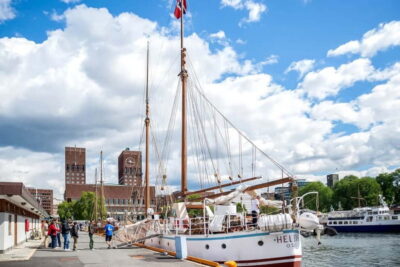
Oslo Fjord Sightseeing Cruise by Sailing Ship
Read our review →
Scenic Fjord Cruise with Audio Guide Commentary
Read our review →
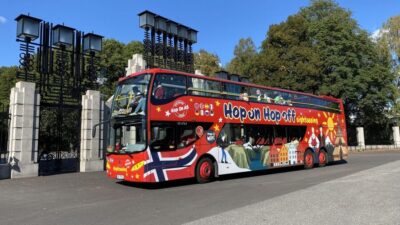
24 or 48-Hour Hop-On Hop-Off Sightseeing Bus GrayLine
Read our review →

Guided Sightseeing Fjord Cruise on Premium Silent Boat
Read our review →
Browse the lists this tour appears in