
Reviewed · PULPIT ROCK
Stavanger: Hiking to world famous Pulpit Rock
Running to Pulpit Rock is interesting because it mixes two things Norway does best, a serious view payoff and a physical challenge that feels personal the whole way up. You start at Preikestolen basecamp and work toward the world-famous cliff-top plateau above the Lysefjord.
I love how the experience keeps you moving without turning it into a slog. You get strong pacing support from guides like John, who stayed patient with slower climbers and even adjusted the timing by about 30 minutes when rain threatened, so the group finished right before it hit. I also like that you are not just pointed at a viewpoint, you are guided through the route so you know where the hard parts are and how to handle them.
One consideration: the trail is rocky and steep in key sections, so if you are not comfortable on uneven ground, plan to hike more than run. Come with trail shoes and a plan for shifting weather, because the hike builds in unpredictable mountain conditions.
Key things I’d mark on your mental map
- Less crowded trail, so you can actually enjoy the hike instead of walling up in a crowd
- English live guide, with local context and a steady pace approach
- A real climb, then a real viewpoint, with the cliff up to the summit as the payoff moment
- Stone stairs and well-marked path sections that make footing easier on some parts
- 4.2 km downhill return that is faster, but still needs careful attention
Why this Preikestolen run feels like more than a viewpoint
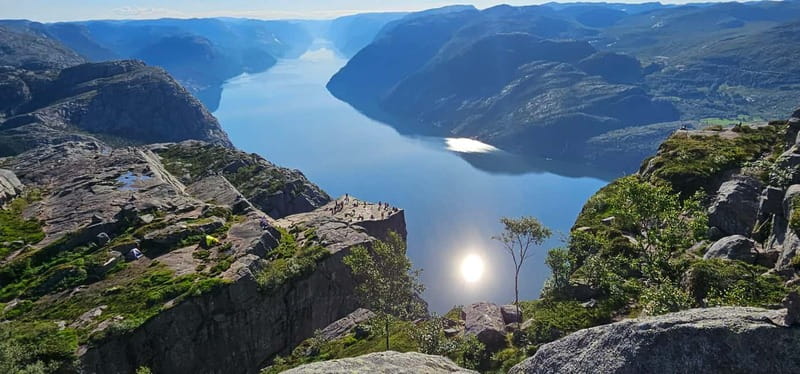
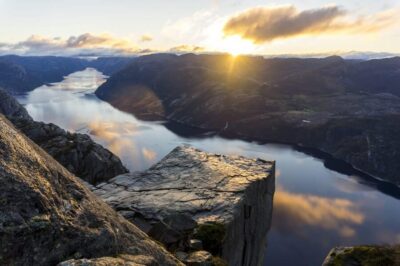
Pulpit Rock, also called Preikestolen, is famous for a reason: it juts out over the Lysefjord, and from the top you get that dramatic “how is that safe” feeling. What makes this experience different is the way the day is built. You are not just doing a casual walk to a photo spot, you are on a guided push that expects you to move, adjust your effort, and keep your footing on a rocky route.
The best part is how the day is paced. The start is the hardest, then you get stretches where you can find rhythm. Near the end, the path brings you up toward the cliff and the summit area. That structure matters because it helps you manage energy, instead of spending the whole route either too slow or too pumped.
Starting at Preikestolen BaseCamp, and why that first step matters
You meet at Preikestolen basecamp, with a welcome map at the Hiking cafe area. This is a smart place to start because you are set up with the basics right away, and it helps you feel oriented before the real work begins.
From Stavanger, you are transported to the basecamp as part of the experience. That matters if you are traveling on a tight schedule, or if you do not want to burn your day figuring out local transit and parking. It also keeps your focus on the hike, not on logistics.
Then you line up, gear up, and settle in for the run or hike approach. The guide’s role starts early: you get a plan for the uneven terrain and guidance on what to do when the trail turns steep and slippery. If you take that seriously, the whole day feels easier.
The first climb: where the “run” part really becomes smart hiking
Expect the first portion to be steep and rocky. This is the section that tests your legs first, and it also tests your attention. The guide’s pacing advice is key here. The goal is not to power uphill, it is to move steadily without wasting energy.
This is where good trail shoes with grip earn their keep. If your soles slip on loose rock, you will spend energy “catching yourself” instead of climbing forward. Plan for slow steps, especially if you are not used to uneven footing.
If the first stretch feels brutal, treat it like a warm-up for the real view. After the initial climb, the route changes. You hit a more even rhythm and the effort becomes easier to sustain.
Middle section: finding stride on stairs, forests, and small streams
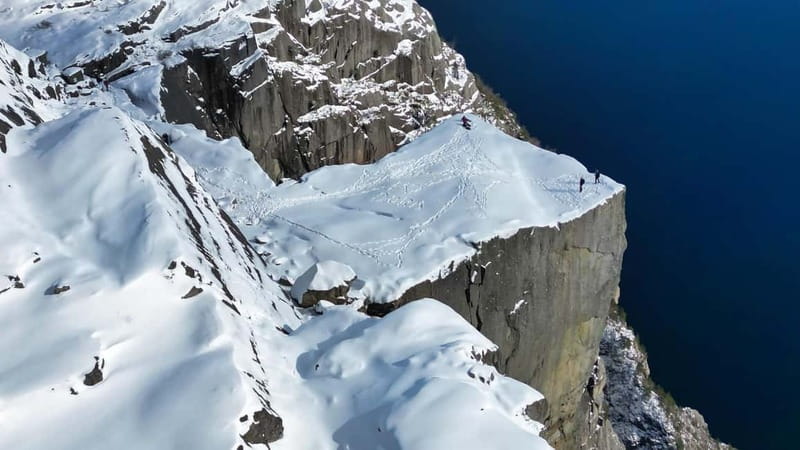
Once you clear that steep start, the middle part is where you can breathe a little and settle into your tempo. The path is described as well maintained, and there are stone stairs built by Sherpas in certain sections. That detail matters because stairs, when they are solid and structured, give your body a more predictable cadence.
This is also where you tend to notice the environment. You move through lush forests and past small streams. Even if you are focused on your legs, these softer parts break up the hike mentally.
A practical tip: use this section to practice your effort control. If you go too hard here, you will feel it later near the cliff approach. If you treat it as “steady and smooth,” you will arrive at the second climb with enough energy to enjoy it instead of just surviving it.
The second climb and the rugged bits near the cliff
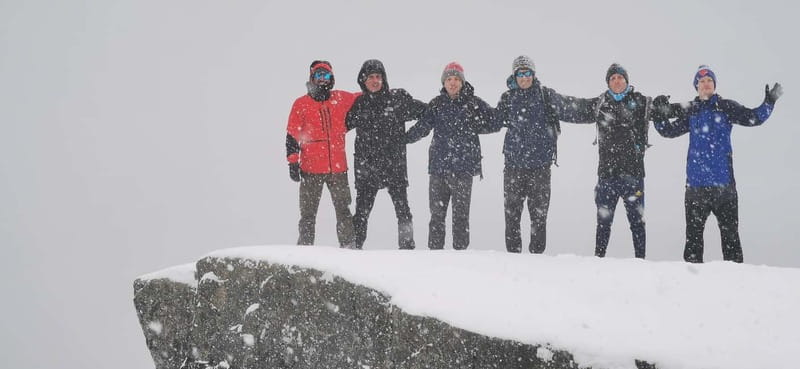
The next section is less steep than the first climb, but it still demands effort. The trail becomes more rugged, so you need to watch your footing. This is not the time for careless speed, even if your confidence feels high.
In places where the surface is rougher, you will often find that your pace naturally slows. That is fine. What matters is staying balanced. Your goal is to keep your steps controlled so you do not end up tense and awkward for the final push.
As you work onward, you transition toward the final climb. The route brings you into the cliff area up to the summit. This is the moment the whole effort starts to feel worth it.
Arriving at Pulpit Rock: the plateau moment over the Lysefjord
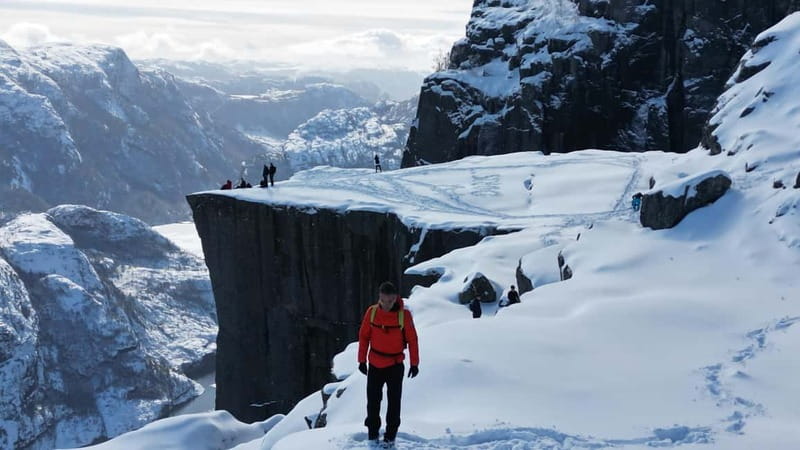
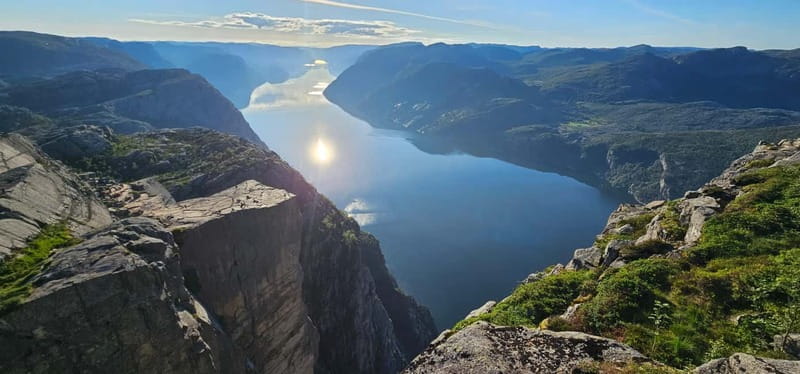
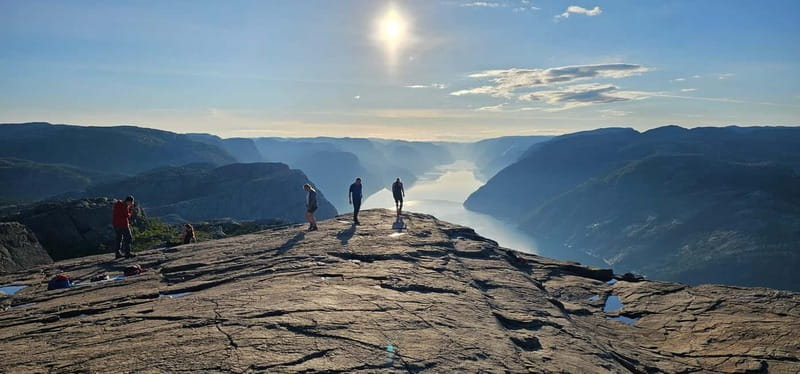
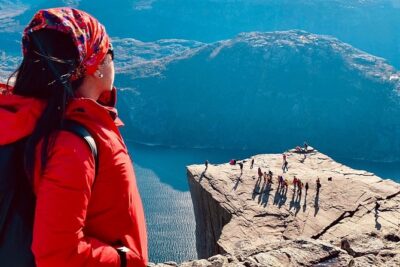
Reaching the summit and Pulpit Rock is the reward. The top is an expansive rock plateau that juts out over the fjord. When you get there, you get a wide view that makes the whole climb feel dramatic in a good way.
This is when you should slow down, hydrate, and take photos. The photos are great, but the real win is how the view changes as you walk a little around the plateau edge. If you rush straight to one “perfect spot,” you miss the chance to see the fjord perspective shift.
The guide’s job here is less about pushing and more about helping you make the most of time at the top. You are on a guided day of around five hours total, with about four hours described as the guided tour. That gives you a chance to enjoy the summit without feeling yanked along.
The return down is faster, but it is not automatically easier
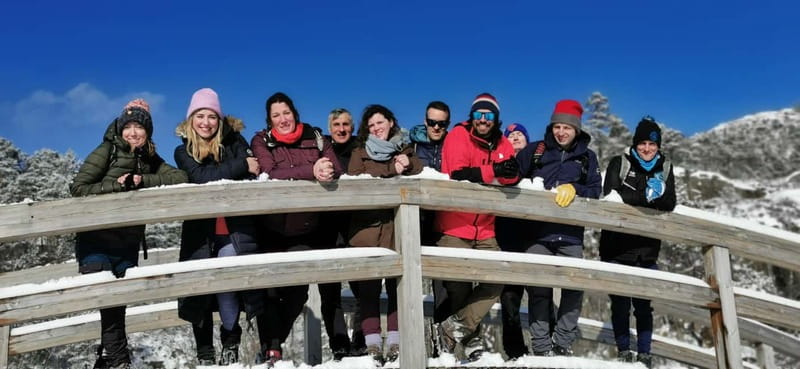
The return is a downhill trek of about 4.2 km back to Preikestolen basecamp. Downhill can be deceptively tricky because your speed increases while your control can drop. Your quads work in a different way, and your attention has to stay on footing.
Plan on a steady pace. On steeper sections, careful navigation matters, and you also share space with other hikers. If you keep your steps short and controlled, downhill becomes the part of the day where you feel relief instead of regret.
This is also where dry clothes matter. Mountain weather can change, so if you brought a change, you will appreciate it after you finish.
Why the guide can make or break the day
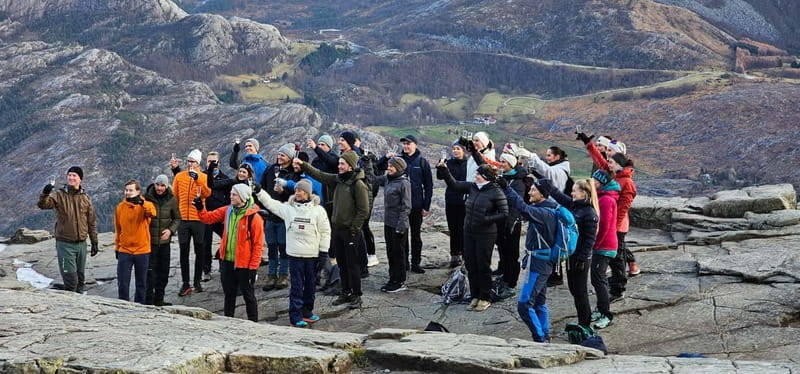
This experience is built around a live English tour guide. That is the basic value. But what elevates it is the guide’s behavior on the trail: pacing, patience, and weather sense.
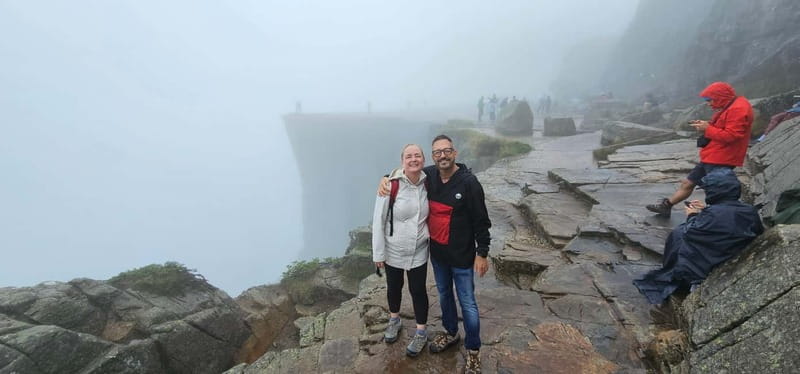
John, for example, was described as knowledgeable, funny, and patient. He also encouraged taking your time on the many stairs, and he adjusted timing by about 30 minutes when rain looked likely. That kind of judgment changes how you feel during the hike, because you stop worrying about whether you will get stuck in weather.
Tore also stood out as strong company and very knowledgeable about the area. That matters because when you understand what you are seeing, the climb feels more meaningful. You are not just moving uphill, you are learning what the route offers and why this viewpoint earned its global reputation.
What’s included, what’s not, and what to bring
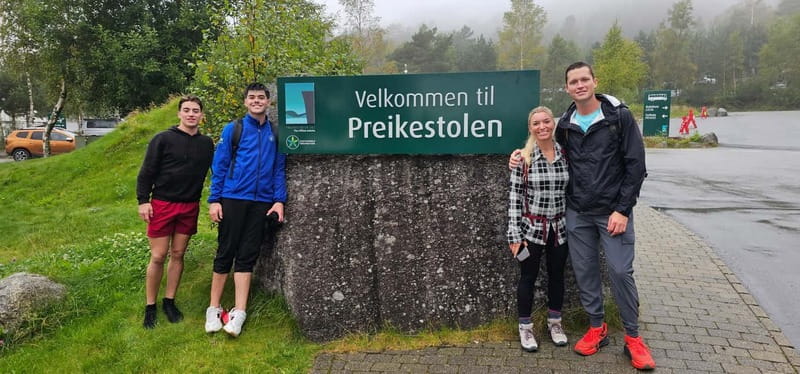
Included:
- Light snacks and water
- A wonderful hike or guided tour to Preikestolen
- A less crowded trail feel, so you can enjoy the route
Not included:
- Dinner
For what to bring, the route guidance is practical: wear trail shoes, bring dry clothes, and consider packing a windproof jacket. Mountain weather can shift fast, and having dry layers after the hike improves your day in Stavanger after you return.
Also, even though you get light snacks and water, I still recommend you carry your own small essentials if you tend to run low on energy. The hike is scenic, but it is still a physical effort.
Price and value: is $156 per person worth it?
At $156 per person for about five hours, you are paying for a guided experience plus transportation from Stavanger to the basecamp, along with light snacks and water. That is not cheap, but it is also not just paying for a viewpoint.
You are buying:
- A guided route with support for uneven terrain
- Time on the summit so you actually enjoy the payoff
- A less crowded trail approach, which makes the experience feel calmer
- English interpretation throughout the hike
If you are traveling independently and you already know how to hike and manage rocky trails, you could attempt this on your own. But the value here is that the guide helps you pace the climb and stay comfortable, and that can be especially helpful if you are not an expert hiker.
In other words, if you want the viewpoint with less stress, and you like having a local guide handle the route, the price starts to make sense fast.
Who should book this run to Pulpit Rock, and who should hesitate
I think this fits best if you:
- Want the famous Pulpit Rock experience without dealing with route decisions alone
- Are comfortable on rocky terrain, or at least willing to hike portions slowly
- Appreciate guides who manage pacing and adjust to weather timing
- Like the idea of a less crowded trail experience
I would hesitate if you:
- Have trouble walking on uneven ground and steep stair-like sections
- Want a fully relaxed stroll where you never feel winded
- Are sensitive to unpredictable mountain weather and do not plan to bring dry layers and a windproof jacket
This is a “work for the view” kind of day, even when you are running parts of it.
Should you book it?
If you want a guided day that mixes a real climb with big Lysefjord payoff, and you like having someone else set the pace, I’d book this. The combination of a patient, practical guide style (John and Tore are good examples), light snacks and water, and a less crowded route makes it feel like time spent well.
If you are unsure about your footing or stamina, do not assume the word run means all-out speed. You can take it as guided hiking with an energized feel. Just bring the right shoes, plan for changing weather, and treat the first steep rocky section with respect.
FAQ
How long is this experience?
The total duration is about 5 hours.
Where do I meet the guide?
You start at Preikestolen BaseCamp, where you get a welcome map and you are at the Hiking cafe meeting area.
Is the tour in English?
Yes, the live tour guide speaks English.
How much time do you spend at Pulpit Rock?
The guided tour to Pulpit Rock is about 4 hours.
Are light snacks and water included?
Yes, light snacks and water are included.
Is dinner included?
No, dinner is not included.
What is the return distance back to basecamp?
The return includes a 4.2 km downhill back to Preikestolen BaseCamp.
Do I get transported from Stavanger?
Yes, the experience includes transport to the starting point at Preikestolen Base Camp.
What should I bring for the hike?
Bring trail shoes with good grip, dry clothes, and plan for mountain weather. A windproof jacket is recommended.
Can I cancel and get a refund?
Yes, you can cancel up to 24 hours in advance for a full refund.
More Hiking & Trekking in Rogaland
- From Tromsø: Snowshoeing Hike with Picnic Lunch and Photos
★ 4.9 · 840 reviews - From Tromsø: Guided Husky Snowshoe Hike and Husky Camp Visit
★ 4.9 · 715 reviews - From Tromsø: Snowshoe Hike in the Arctic
★ 4.9 · 467 reviews - Trolltunga Classic Overnight Hike
★ 5.0 · 336 reviews
More Ways up Pulpit Rock
- Stavanger: Electric Fjord Cruise to Lysefjord & Preikestolen
★ 4.6 · 8,385 reviews - Stavanger: Fjord Cruise to Lysefjord and Pulpit Rock
★ 4.8 · 1,357 reviews - From Stavanger: Lysefjorden & Pulpit Rock RIB Boat Tour
★ 4.8 · 1,156 reviews - Guided hike to Pulpit Rock Preikestolen
★ 5.0 · 390 reviews
Pulpit Rock, compared.
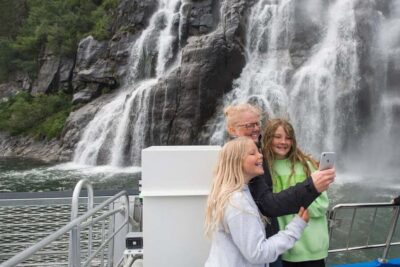
Electric Fjord Cruise to Lysefjord & Preikestolen
Read our review →
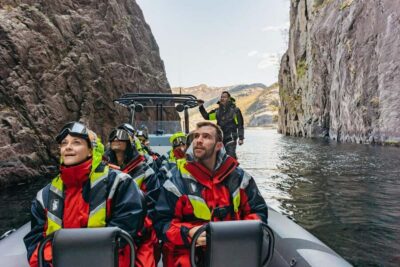
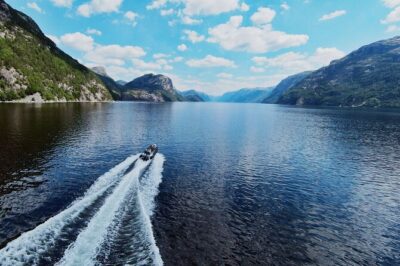
Lysefjorden & Pulpit Rock RIB-Safari from Stavanger
Read our review →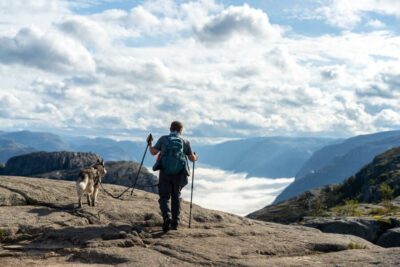
Preikestolen (Pulpit Rock) Hike with Local Guide
Read our review →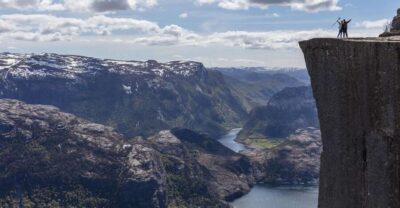
Browse the lists this tour appears in