
Reviewed · WINTER ACTIVITIES
Oslo: Best View of the Oslofjord Winter Edition
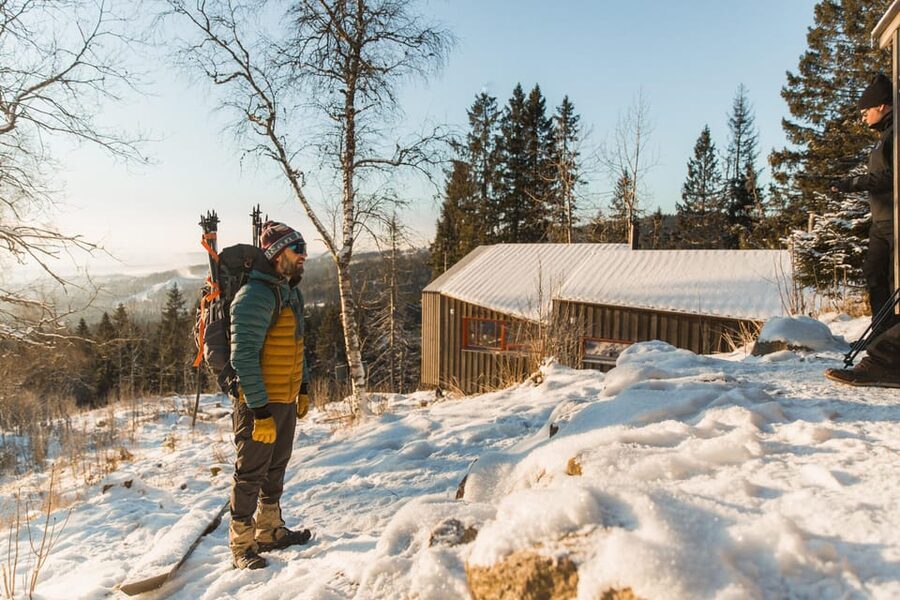
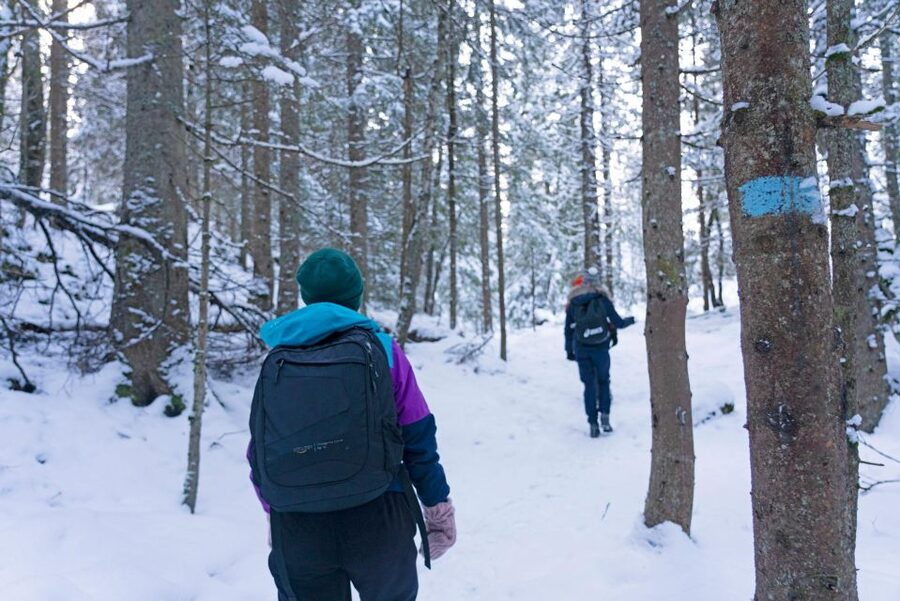
Winter in Oslo has a way of feeling quiet and close to nature, and this hike takes you above the city for serious Oslofjord views. You ride up by metro, then walk through a snow-covered forest that feels like it belongs in a movie. The big payoff is the summit at Vettakollen, where you look down on Oslo and the fjord in winter light.
What I like most is the mix of practical and magical. You get spikes and poles so the snowy footing feels more controlled, and the route is built around photo stops and breaks at viewpoints that actually earn their hype. I also enjoy the story stops, like the Huldra-linked ponds and the cabin pause that teaches why Norwegians talk about hygge so much.
One thing to consider is weather. In fog or heavy cloud cover, the views can be muted, though you still hike through a beautiful winter forest and the guide can adjust the plan if conditions are better for snow travel.
Key Things You Should Know Before You Go
- Vettakollen summit views: Oslo and the Oslofjord from high above, with real time for photos.
- Spikes and poles are included: a big help when the snow is slick.
- Metro takes the guesswork out: you ride up on the Frognerseteren line and don’t fight winter traffic.
- Fuglemyrhytta cabin stop: a warm pause with context for Norwegian cabin culture and hygge.
- Huldra pond sightings (myth included): frozen ponds tied to local folklore, plus a fun moment to slow down.
- English guide, steady pacing: guides like Miles, Patricia, Josh, and Linn are repeatedly praised for keeping the hike flowing and informative.
Vettakollen and the Oslofjord View That Actually Feels Worth the Effort
The best thing about this tour is that it solves a common Oslo winter problem: how do you see the fjord when it is cold, dark, and hard to access by foot? This route sends you above the city, so the cold air feels like part of the experience, not a barrier. In good weather, you get that big “wait, that is Oslo down there” moment.
I also like the way the hike is paced for winter. You do not just power-walk for four hours and hope the top is worth it. You get breaks, photo stops, and a cabin pause, which makes the cold feel manageable.
Finally, the guide angle matters here. Several guides have been highlighted for being friendly and talkative, including Miles, Patricia, and Tom, and that is useful on a winter hike. When you are surrounded by snow and trees, you want context, not just “walk this way.” The stories about local life and folklore turn the route into something you remember, not just something you pass through.
More Winter Activities in Oslo
- Oslo: Day Pass for Downhill Skiing at SNØ Ski Dome
★ 4.4 · 88 reviews - Oslo: Winter Wonderland Forest Hike and Campfire with a Dog
★ 5.0 · 48 reviews - Oslo: Wilderness Skiing Tour with Lunch by the Fire
★ 5.0 · 21 reviews
Where You Start: Backstube Opera and the Metro Lift Off
You meet outside Backstube Opera, near Oslo Central Station, in front of the café. Your guide will be holding a When In Norway sign, so it is pretty easy to spot the group.
From there, you board the Frognerseteren metro line for about 40 minutes. I love this part because the train ride gives you a gentle transition from city streets to winter terrain. You start moving upward without having to figure out bus routes, taxis, or parking in snow.
You also get that first taste of the view as the city fades behind you. The tour is built so you feel progress in stages, not all at once.
Frognerseteren Photo Stop: First Look at Oslo and the Fjord
Once you reach Frognerseteren station, you get your first panoramic photo stop for about 10 minutes. This is not a quick glimpse you miss if you are fumbling for your camera. It is timed for you to look around and get your bearings.
In clear conditions, this early viewpoint helps you understand what you will see later from Vettakollen. You can compare the angle of the fjord and the spread of neighborhoods below, so the summit does not feel random. Even when the weather is not perfect, this stop is still useful because it sets the mood for the hike through the snowy forest.
If the forecast is uncertain, this is where you learn whether you are in a high-visibility day or a “fog and mood” day. Either way, you are not stuck wondering if the effort will pay off.
Snowy Forest Hike With Spikes and Poles (Where the Tour Becomes Fun)
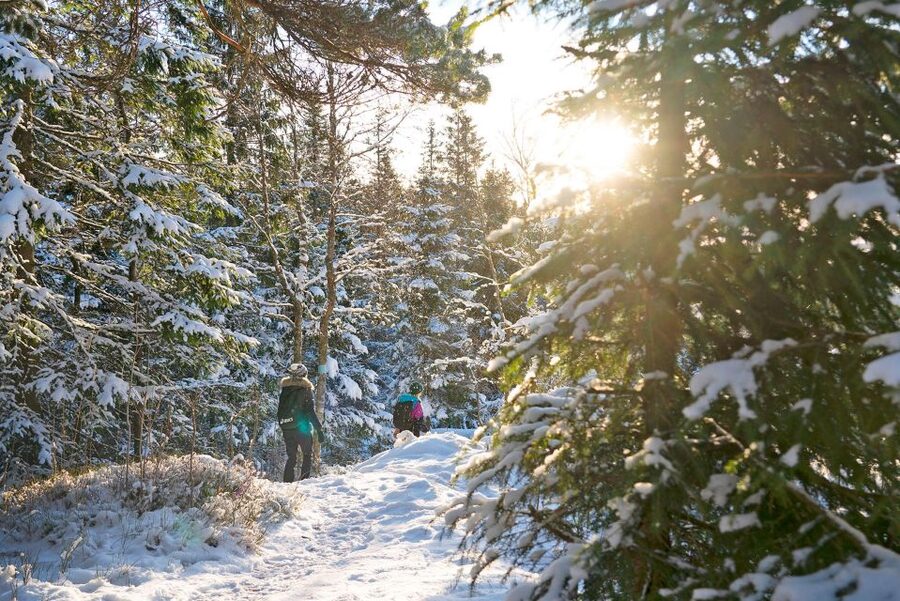
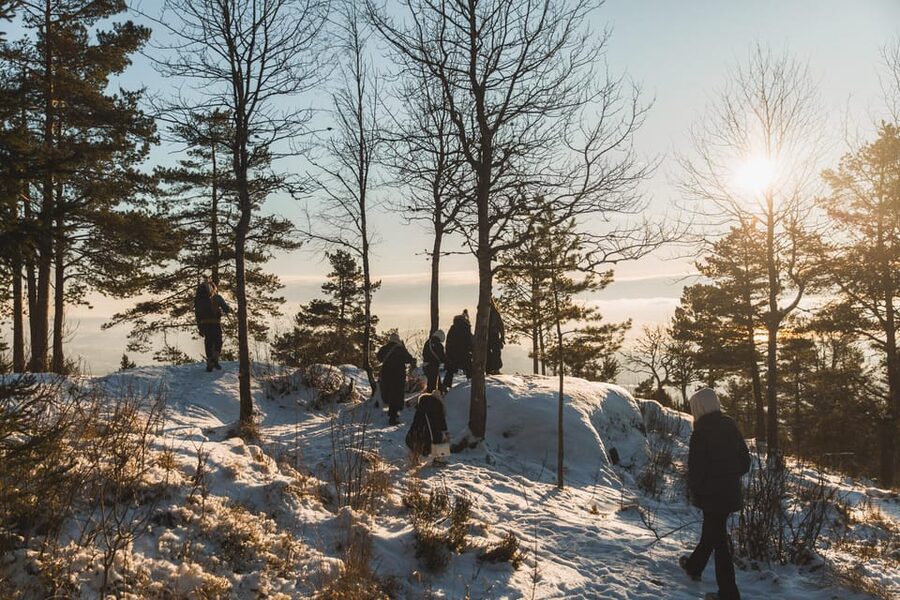
After that first photo stop, the real walking begins. You hike from Frognerseteren for about 50 minutes, then you take another photo stop and continue with a shorter hike segment of about 30 minutes.
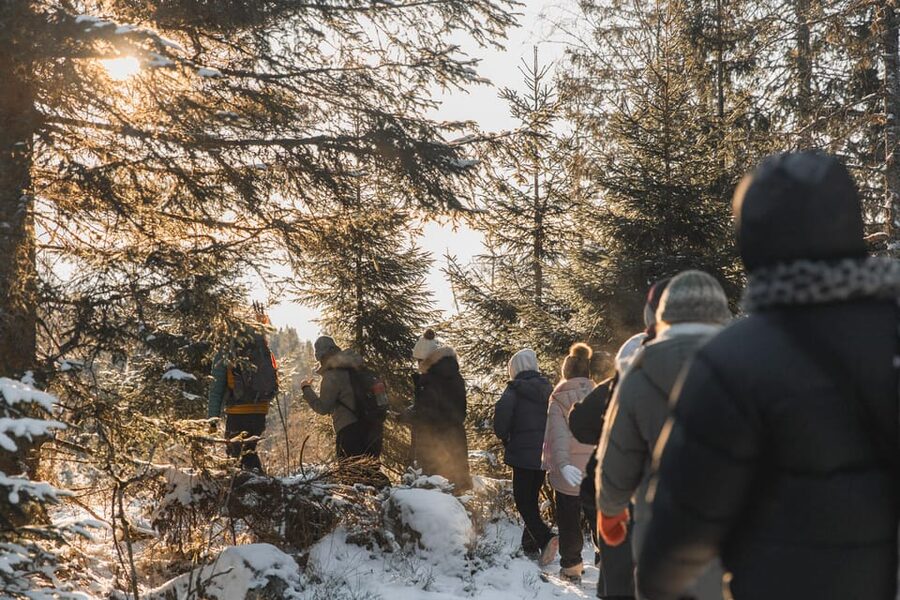
What makes this part work in winter is the included gear. You get spikes and poles, which changes everything when the ground is icy. Without them, winter trails can feel like a careful shuffle. With them, you can focus on the forest, not every step.
The guide also keeps the route interesting. You pass small frozen ponds tied to the folklore of Huldra, a mystical creature said to live near these waters. Whether you believe the myth or just enjoy it as culture, those pond stops give you natural checkpoints to slow down, look around, and warm up a little through motion.
One winter advantage: the forest is close enough to the city that you still feel like you are doing something outdoors, not disappearing into wilderness for the whole day. It is a winter hike that fits into a half-day format.
More winter days out in Oslo:
- Tromso Aurora Hunt with Bonfire, Soup, Winter Gear & Transfers
★ 5.0 · 2,290 reviews - From Tromsø: Ice Domes Snow Park and Wilderness Experience
★ 4.6 · 1,255 reviews - From Tromsø: Guided Husky Snowshoe Hike and Husky Camp Visit
★ 4.9 · 715 reviews - Tromsø: Winter Sea Kayaking Tour with Wildlife Sightings
★ 4.9 · 591 reviews
Frozen Ponds and the Huldra Story Break
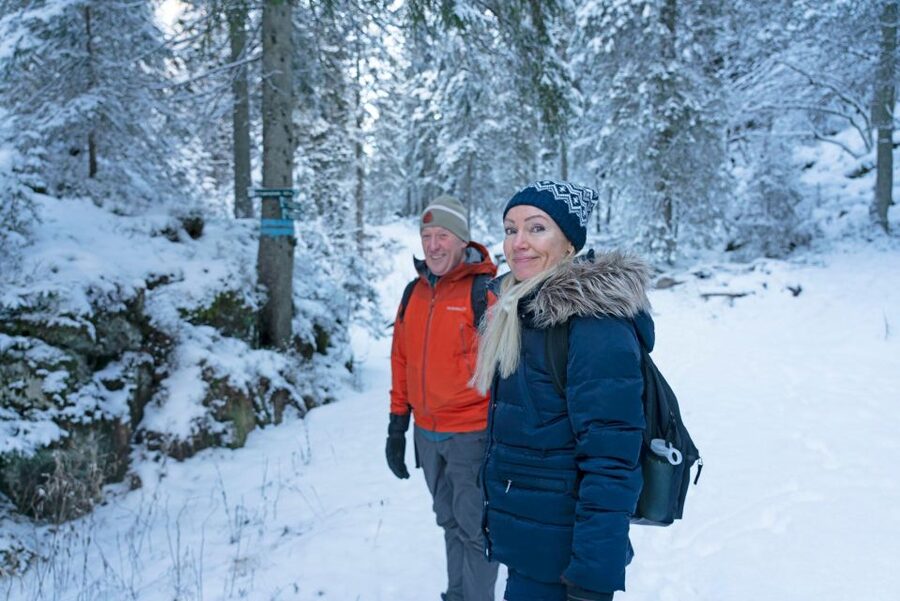
The Huldra element is one of those details that makes the hike feel local. Oslo winters can be beautiful, but snow plus trees can also feel repetitive if you are just watching the ground. The myth-linked ponds give your eyes a reason to lift up.
The ponds are small, frozen, and scenic, and the guide uses the moment to talk about the stories people tell in Norway about nature, water, and hidden beings. It is not just “look at the pond.” It becomes a cultural pause.
If you travel with people who do not usually like myths, I still think this part can work. You are outside, it is cold, and you have a reason to stop that is not only “the guide says so.” It adds rhythm to the hike.
Fuglemyrhytta Cabin Stop and the Real Meaning of Hygge
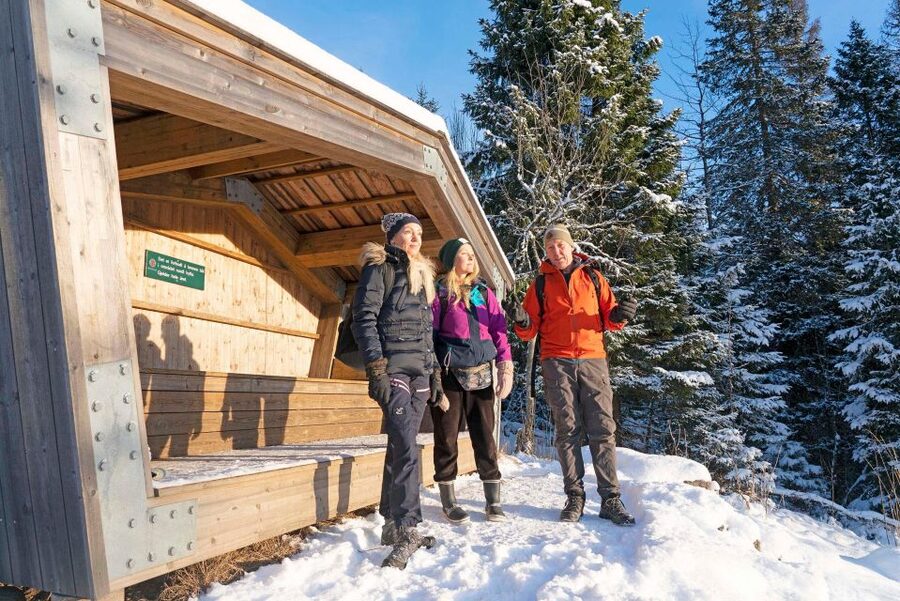
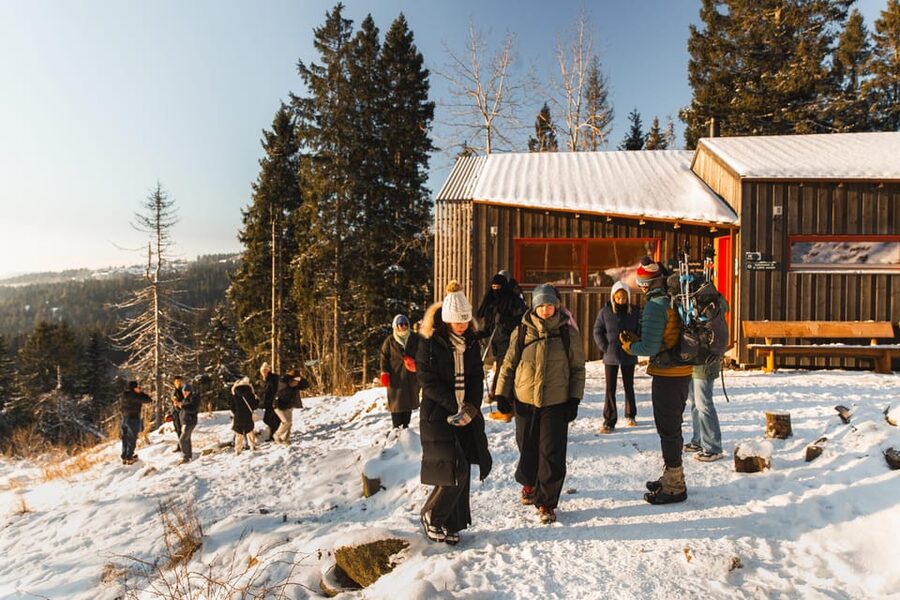
Your first major pause is at a charming Norwegian cabin called Fuglemyrhytta. This is where the tour leans into the idea of a small, comfortable shelter in winter.
The guide shares why these cabins matter in Norwegian culture, and it makes sense once you are outside in snow. A cabin is not just scenery, it is a tool for winter life. It is a place to reset, warm your hands a bit, and share time without rushing.
This is also the moment for photos and a relaxed break. The tour describes it as a chance to enjoy a moment of hygge with good company in the middle of nature. I like that it is not treated as a buzzword. It is taught as something you can actually feel in the structure of the walk.
For many people, this is the emotional highlight. The summit is the view, but the cabin stop is the reason the hike feels human.
Vettakollen Summit Break: Where You Get the Big Payoff
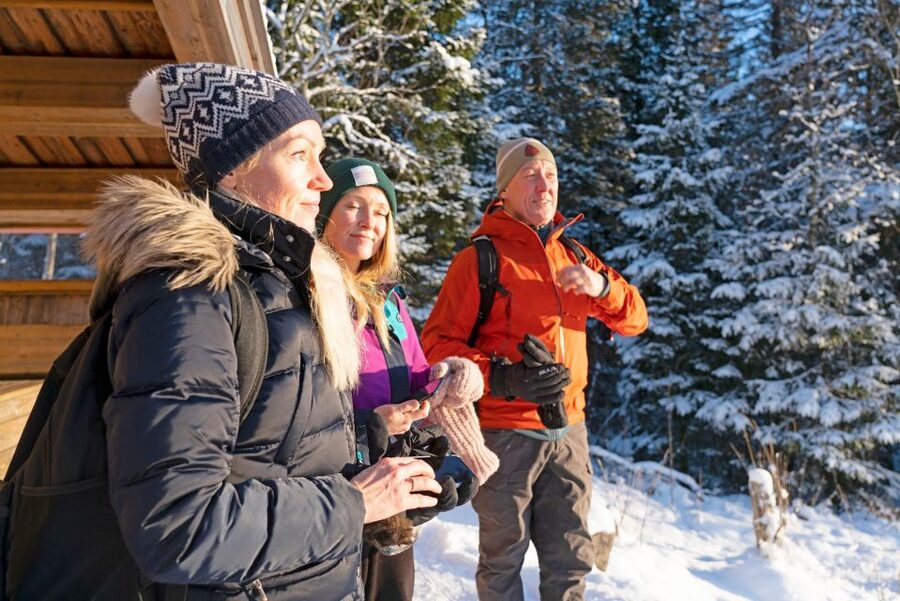
Then you head to the summit of Vettakollen, which is where the tour earns its name.
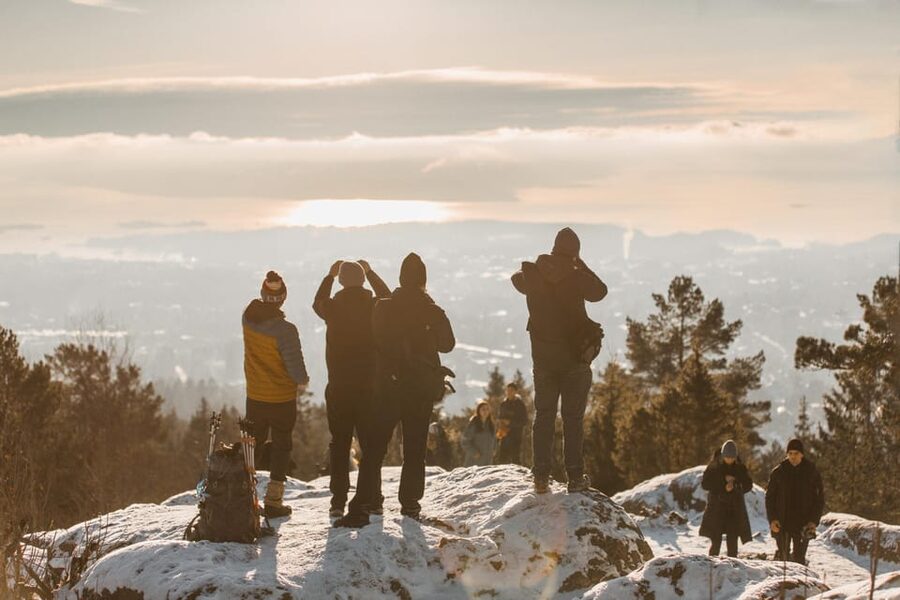
You get a break and photo time of about 20 minutes at the top, followed by about 30 minutes of hiking to finish the route back down toward the metro. That top time is important. Winter views look best when you have time to adjust your eyes, spot landmarks, and take photos without rushing.
In clear conditions, you look down over Oslo and the vast Oslofjord. The scale feels dramatic, especially in winter when the color palette is muted. In fog, the view may soften or disappear into white, but the summit still feels like a meaningful goal. Even when visibility is limited, the experience does not collapse into disappointment, because the day already delivered the snowy forest hike and the cabin pause.
Guides like Miles have been praised for thoughtful touches such as offering hot chocolate in cold weather. Even if you bring your own warm drink mindset, it is a nice reminder that comfort is part of the design.
The Descent Back to Jernbanetorget (And How the Timing Feels)
After the summit, you go back down and return to the metro. The itinerary has you back at the station area around the Jernbanetorget stop, then you finish the day close to where you started.
The overall tour duration is 4 hours, which is a smart length for winter. It is long enough to feel like you did something real outdoors, but short enough that you are not stuck fighting cold fatigue all evening.
The total walking distance is 3.4 miles (5.4 km). That number helps you judge the effort. You are not hiking a marathon, but you are on snow, so it will feel more work than the distance suggests.
Pace, Fitness, and Winter-Smart Expectations
This is not an extreme hike, but it is also not a stroll. People with low fitness might find the uphill and the cold pace challenging. The tour also is not suitable for mobility impairments, and children under 5 years are not allowed.
In practice, think of it as a guided winter hike for people who can comfortably walk on uneven snow. You will be moving most of the time. The stops keep the day enjoyable, but you should expect your legs to work.
Group size also seems to affect the vibe. Some past experiences were described as small-group, especially in winter, which usually makes it easier to ask questions and stay together. Even when the group is larger, the guide-led pacing helps keep everyone from freezing at the same place too long.
If you get cold easily, plan to dress in layers and move steadily. This is where spikes and poles earn their keep too.
Price and Value: Why $105 Can Make Sense in Oslo Winter
The tour costs $105 per person, and you should judge value based on what you are not paying for. In the included items, you get:
- A live tour guide
- Spikes and poles
- A public transportation ticket
So you are paying for gear access, interpretation, and a structured winter route that starts near Oslo Central Station and uses the metro. If you tried to DIY this in winter, you would likely spend time figuring out routes and you might still have to source traction devices or risk slipping in icy terrain.
Also, winter hikes go wrong without planning. Bad timing and poor footwear can ruin the experience fast. Here, the route is managed with stops, viewpoint timing, and gear designed for snow walking.
Food is not included, so you will either eat before you go or plan a meal after. That is a fair trade. A half-day hike plus a viewpoint summit is the kind of outing where you want control over what you eat.
What to Bring: Simple Gear That Actually Helps
You do not need an expedition kit, but you do need winter-appropriate shoes and comfort. The tour asks for comfortable shoes and hiking shoes.
My practical advice:
- Wear shoes you trust on slippery ground.
- Dress in layers so you can regulate heat on the climb.
- Bring gloves you can handle with, since you will likely be taking photos and adjusting gear.
- Bring warm socks, because winter snow walking makes foot comfort a deal-breaker.
Since the tour includes spikes and poles, you do not need to bring traction devices. That lowers the hassle and the travel weight.
And yes, bring your camera or phone, because the summit photo time is part of the payoff. If you care about photos, you will thank yourself for dressing for both looking and walking.
Should You Book the Oslofjord Winter Edition?
Book it if you want a winter activity that feels outdoors without turning into a full-day survival test. You get the metro ride up, a guided hike through snowy forest, myth-linked pond stops, a cabin pause with hygge, and a summit viewpoint at Vettakollen over the Oslofjord.
Skip it if you cannot handle walking on snow for several segments, or if the idea of icy footing makes you nervous. This is not marketed for mobility impairments, and the walking distance plus conditions make that a real consideration.
If weather looks iffy, you can still enjoy the day because the route includes enough nature time, storytelling, and cabin warmth that the experience does not rely only on perfect visibility. The best way to decide is simple: do you want a structured winter hike above Oslo, with gear provided and time built into the views? If yes, this is a strong choice.
Freshly reviewed in Oslo
- Oslo City Highlights with Fjord Cruise★ 4.5 · 128 reviews
- Oslo: Oslo Fjord Cruise with Live Jazz Music & Shrimp Buffet★ 4.4 · 143 reviews
- From Oslo: Oslomarka Forest Guided Snowshoeing Tour★ 4.8 · 161 reviews
- Oslo Fjord Evening Cruise with Shrimp Buffet on a Sailing Ship★ 4.0 · 170 reviews
- Oslofjord Sightseeing★ 4.0 · 170 reviews
- Oslo: City Highlights Walking Tour★ 4.8 · 197 reviews
- Oslo: Snowy Forest Torchlight Walk with Campfire★ 4.6 · 254 reviews
- Oslo: Private Walking Tour with a Local★ 4.5 · 263 reviews
Winter Activities, compared.
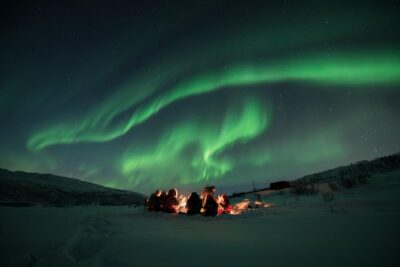
Tromso Aurora Hunt with Bonfire, Soup, Winter Gear & Transfers
Read our review →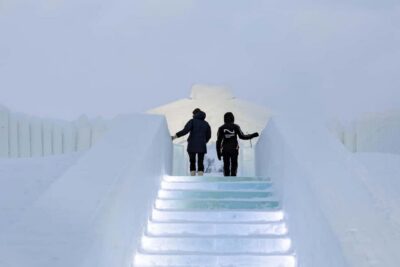
Ice Domes Snow Park and Wilderness Experience
Read our review →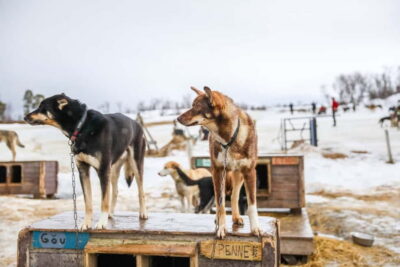
Guided Husky Snowshoe Hike and Husky Camp Visit
Read our review →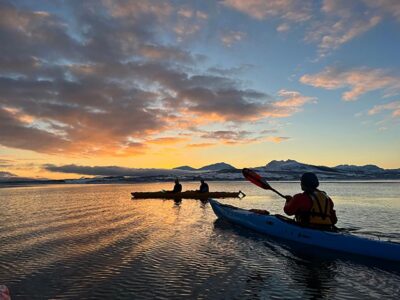
Winter Sea Kayaking Tour with Wildlife Sightings
Read our review →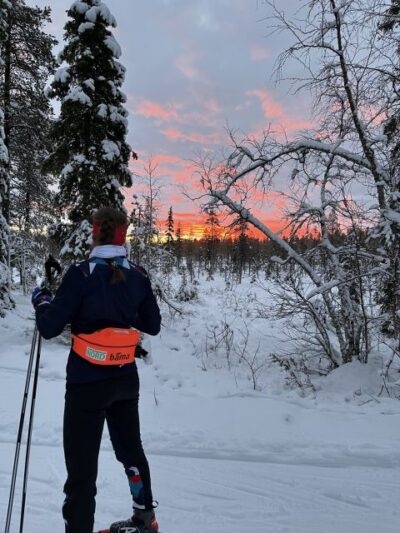
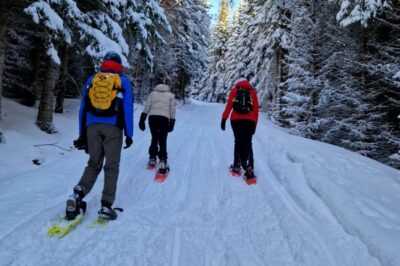
Breivikeidet: Cross-Country Skiing & Husky Visit
Read our review →Browse the lists this tour appears in