
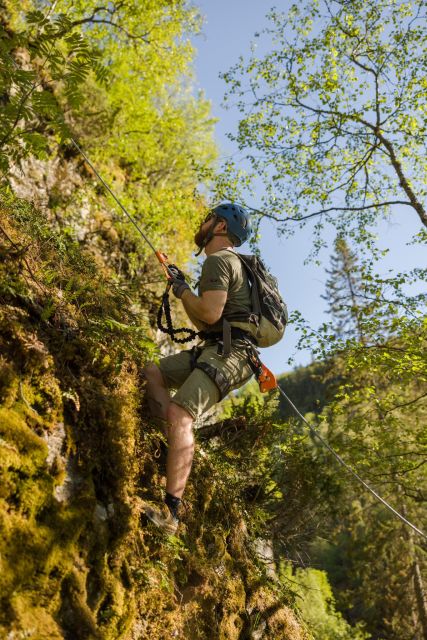
Reviewed · GEIRANGERFJORD
Geiranger: Rappelling tour with epic view
Geiranger is famous for views, but this tour adds the best ingredient: doing the view with ropes, clamps, and controlled rappels. You’ll work your way up to the Flydalsjuvet viewpoint, then come back down by rappelling into the forested canyon area, with the sea-to-mountains panorama always in your peripheral vision.
I love the way the tour teaches movement step by step. The jumar aid climbing and rope-clamp sections turn a scary steep hike into a clear, doable route, and guides like Phillip and Simona are known for patient, practical coaching that keeps you focused on your next step. I also love the payoff at the top, because you’re routed so you can enjoy the viewpoint and a guided photo location without battling the usual summer crowds.
One thing to consider: your body matters here. The climb is steep and you need arm strength to progress on the rope system, and rappelling is safe but exposed, so you should feel comfortable with heights. This isn’t a sit-and-snap tour, and it’s not for children under 12 or anyone with heart problems.
Key Highlights You’ll Actually Feel
- Jumar aid climbing with rope clamps to get you up steep terrain, safely, one controlled move at a time
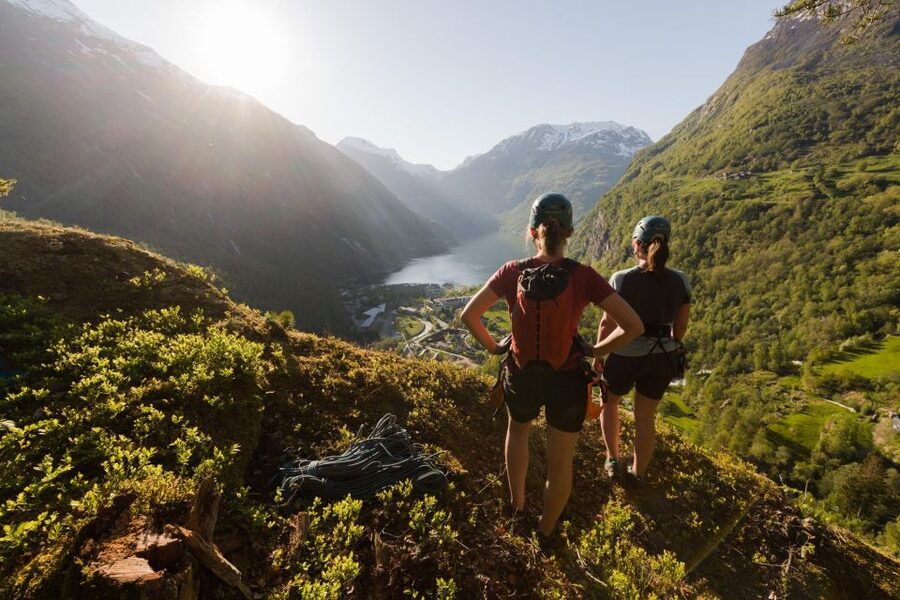
- Flydalsjuvet viewpoint with a chance to enjoy the view away from the big summer crowds
- A guide-led photo path so you get a unique edge-of-the-cliff perspective without wandering around
- Two 50-meter rappels after a short equipment practice on a “soft” wall
- Small group size (max 6) with a personal pace and clear instruction in English
From Dynamite Waterfall to the First Climb: Rope-Secured Geiranger
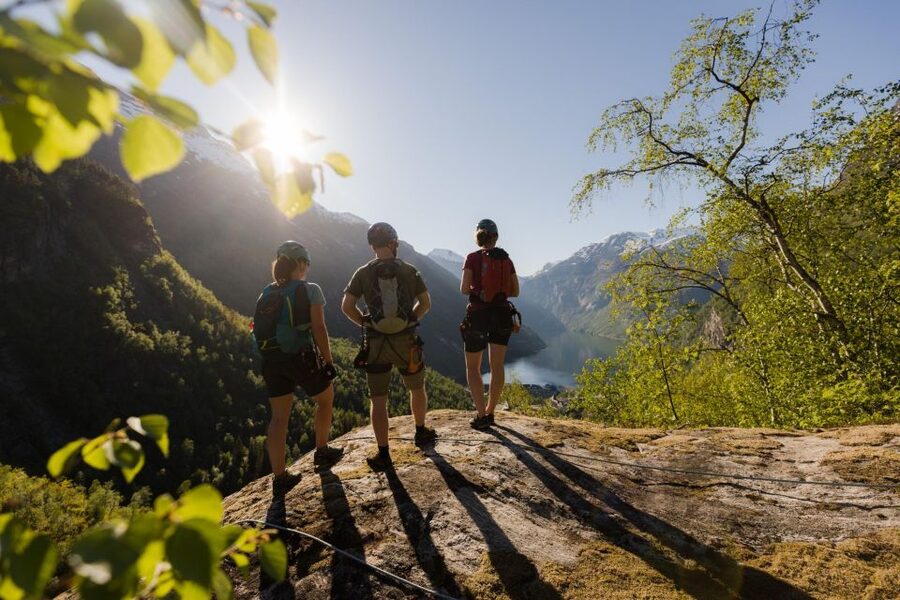
The day starts at the Explore Geiranger guide office beside the Dynamite Waterfall. Plan on a simple walk in from the harbor, about 15 minutes, because there’s no transport provided from the dock area.
Before you touch any gear, everyone does a safety brief. After that, equipment is handed out inside the office, which is a nice touch because you’re not fumbling with straps in windy weather.
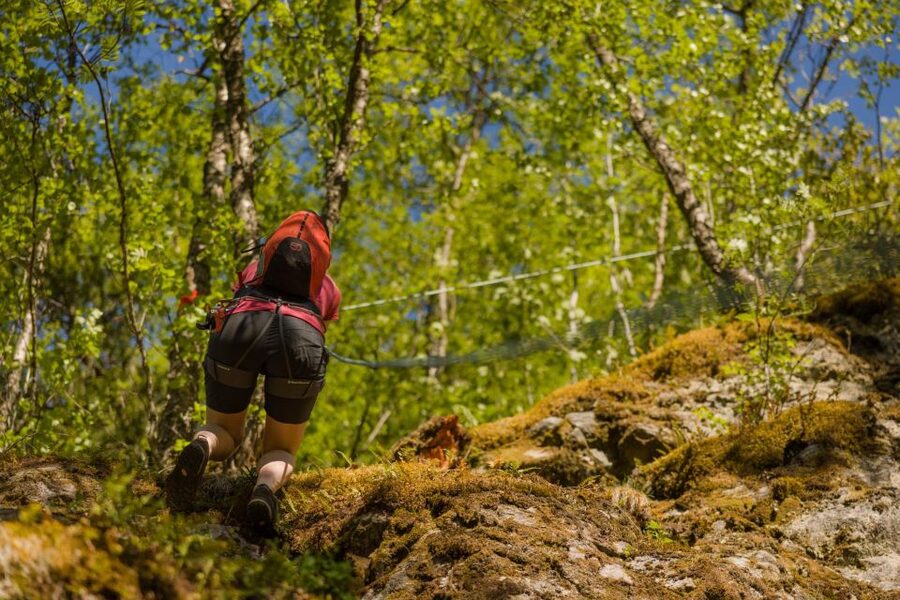
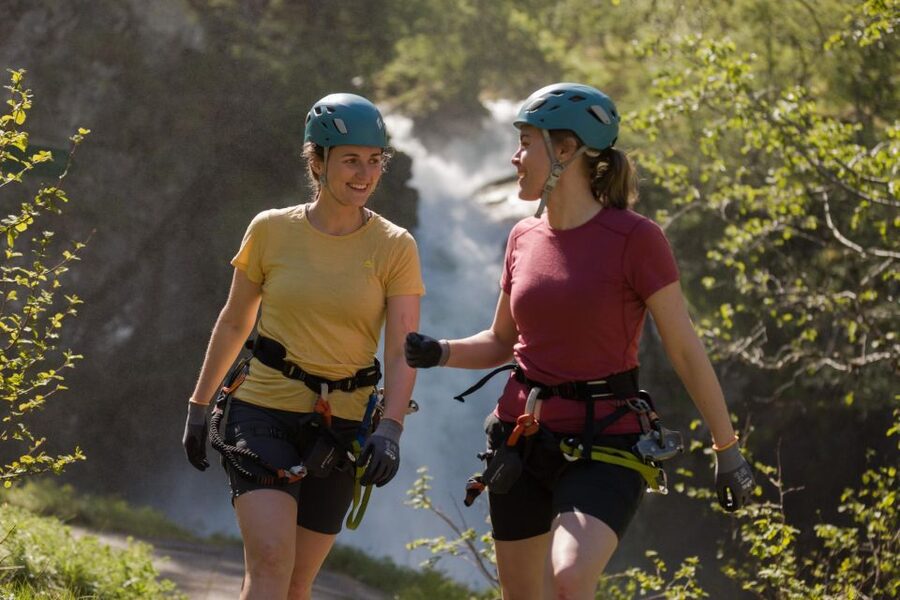
Then the real story begins: most of the route is rope-secured, and you’ll use that system to push up a steep section toward the canyon viewpoint. This is where the tour feels different from a normal hike. You’re not just walking, you’re climbing and positioning your body with help from ropes and clamps.
You’ll climb through a deciduous forest, and as you gain height the view starts to open up. The guide will keep things organized so you always know what your next action is, whether that’s moving hand-over-hand, repositioning, or using the rope clamps.
The key detail here is strength and technique, not athletic swagger. The rope system keeps you safe, but you still have to pull and hold your body in control, and you need enough upper-body effort to make the climb feel smooth rather than exhausting.
If you’re a bit nervous about heights, don’t treat that as a deal-breaker. Instead, treat it as a signal to slow down mentally, follow instructions closely, and trust the rope setup. The tour is designed so you’re secured the whole way up.
More of the Geirangerfjord:
- Geiranger: Dalsnibba, Flydalsjuvet, Eagle Bend & Fjords Tour
★ 4.6 · 2,329 reviews - Geiranger: Fjord and Waterfalls Sightseeing Boat Trip
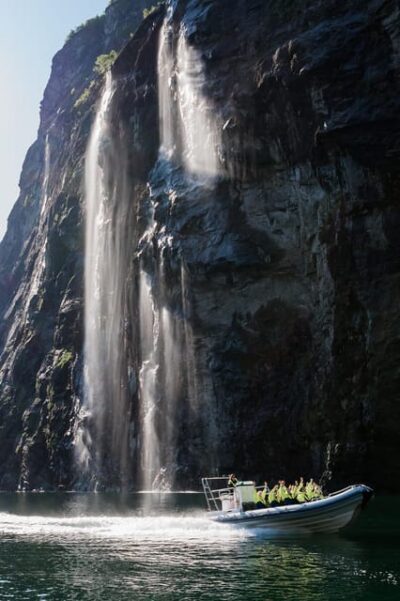
★ 4.4 · 879 reviews - RIB Geiranger – Fjordsafari
★ 4.8 · 807 reviews
Jumar Aid Climbing That Turns Steep Into Doable
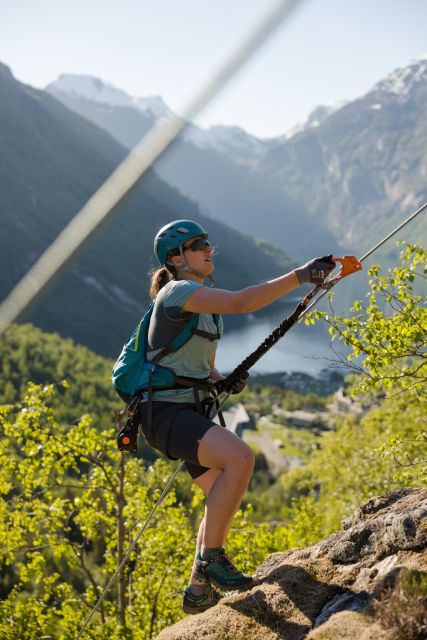
Aid climbing is the standout skill of the first part of the tour, and it’s where the “epic view” earns its adrenaline. You’ll use a jumar on the rope system to assist your upward progress.
A jumar is basically a gripping device that helps you move along a fixed line more efficiently. With it, you’re not only relying on footwork, you’re using a controlled rhythm between hands and rope, which makes steep terrain feel less like a battle and more like a sequence you can learn.
You’ll also encounter rope-clamp assisted sections. Think of the clamps as anchor points that help you climb up steep parts without inventing balance on the fly. When you move on ropes, you learn quickly that the goal is not speed, it’s staying calm and consistent.
Midway up, the scenery becomes the main event. That’s the point where a lot of people driving up to the canyon viewpoint tend to cluster during summer, so the view can be crowded in other situations. Here, the route pacing and guidance are designed so you can enjoy the viewpoint without constantly scanning for photo-bys.
One practical tip: keep your breathing steady. On rope routes, people often tighten up without realizing it, and tight muscles make the climb harder. If you match your pace to the guide’s cues, the effort feels more like work you can finish, not danger you have to survive.
Also, gloves help here more than you might expect. You’re working around rope, and better grip reduces hand fatigue, especially on that first jumar learning phase.
Flydalsjuvet Viewpoint and the Photo-Edge Moment
When you finally reach the Flydalsjuvet viewpoint, you get the kind of Geiranger panorama that makes your brain go quiet for a second. On clear days, this is the moment you understand why thousands of cars and buses show up in high season.
The tour’s biggest advantage at the top is time and space. You’re routed so you’re not immediately thrown into a crowd, which means you can take in the view properly before you start shooting photos or thinking about the descent.
Your guide then points you to a secret path for a very specific photo location. The point is not to keep you in suspense, it’s to get you to a spot where you can photograph yourself from a dramatic edge perspective that most people miss.
The photo session is part of the experience, and it’s paced so you’re not rushed. If you’re traveling with someone, you’ll likely appreciate that the guide helps you find the right angles quickly, instead of you standing around trying to figure out where to stand safely.
After the photo moment, you rest before heading back down. That matters because rappelling is next, and you don’t want to go into it feeling drained and shaky in your hands.
You’ll then be led back down past the Queen’s Chair. This segment acts like a transition, moving you from the high-impact viewpoint time to the controlled setup of rappelling practice.
Introduction Wall First, Then Two 50-Meter Rappels
Rappelling in Geiranger is not just a single drop. You’ll start with an introduction wall that’s meant to teach equipment handling before you go to the big vertical sections.
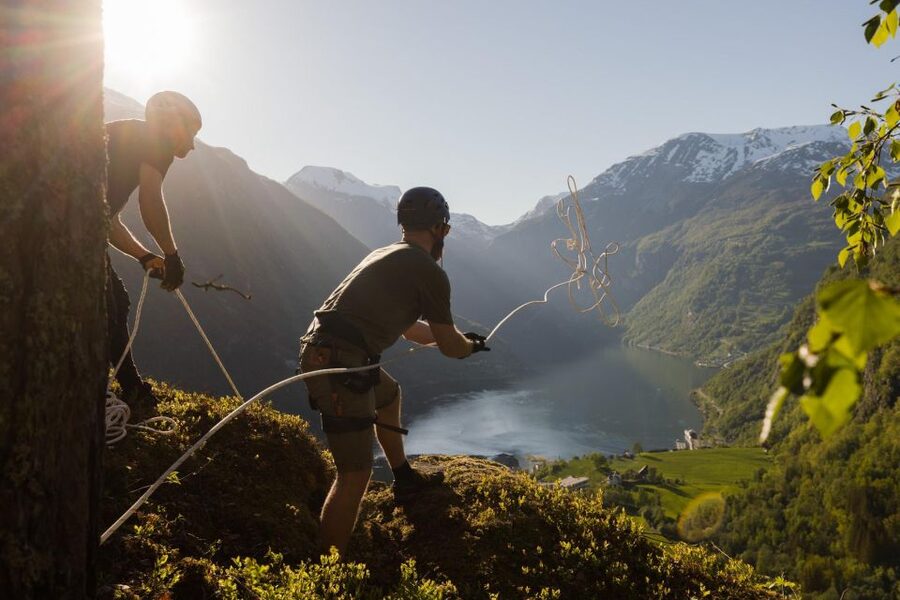
This is where the tour’s safety approach feels thoughtful. Everyone has to master the equipment before moving further down to the main wall. That means you’re not just watching someone else do it, you’re learning how your gear works so you can focus on your own descent mechanics.
The view stays spectacular even during this part. You’ll feel exposed near the canyon walls, but “exposed” is different from unsafe. The tour emphasizes controlled setup and supervision, and your job is to follow the guide’s instructions and keep your motions deliberate.
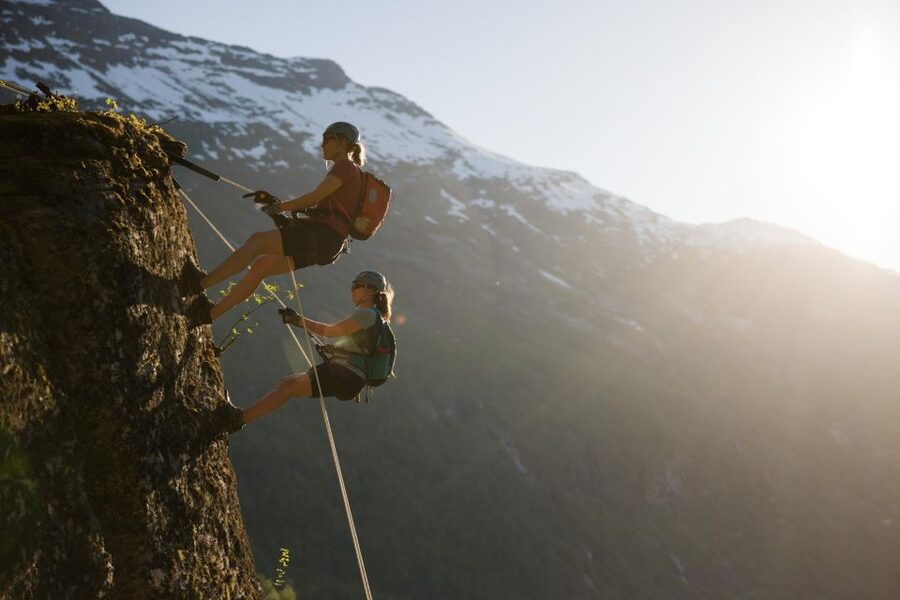
Then comes the main event: two 50-meter rappels. That’s real vertical movement, and it’s enough that you should take your time on the first meters. Your arms and grip work a bit, but the gear and technique do the heavy lifting, and the guide is there to keep you on track.
It’s completely safe, but it’s exposed, meaning you’ll be looking at big drops and airy angles as you descend. If you’ve done rock climbing or via ferrata, you’ll likely feel excited. If you haven’t, you might feel nervous at first, which is normal, and then more manageable once you get your rhythm.
As you continue down, the route brings you back toward the forest area, and you’ll end up about 100 altitude meters lower than where you started the rappelling segment. That transition helps, because the deeper you go the more your mind shifts from the height to the calm routine of landing feet, repositioning, and preparing for the next descent.
The last part is hiking back along the road to the guide office. So you’re not stuck in technical terrain the entire time, which makes the total experience feel like one continuous adventure with a clean ending.
Other ways to spend a day around Geiranger
- Geiranger: Guided Geirangerfjord Boat Tour
★ 4.7 · 728 reviews - Geiranger: City Sightseeing Hop-On Hop-Off Bus Tour
★ 3.7 · 546 reviews - Geiranger Fjord Tour from Geiranger (with stop in Hellesylt)
★ 4.4 · 349 reviews - Geiranger: Zipline Park Experience
★ 4.7 · 328 reviews
The 3-Hour Rhythm: How the Day Moves and What to Expect
The tour is listed as 3 hours, and most people find that time full. Some groups can take a bit longer depending on pace, comfort level, and how much time you spend resting and taking photos.
You’ll cover a steep hike up, a viewpoint experience, then a controlled rappel sequence. The order is intentional: start with rope-assisted movement when your energy is fresh, rest and reset at the top, then descend when the team has already trained your gear handling.
The guide helps set a steady tempo for small groups, max 6 people. This is big for comfort. In a tiny group, you can ask questions, and the guide can correct small technique issues before they become frustrating.
You’ll also travel through different textures of terrain: forest footing during the climb, rocky and rope-fixed sections near the viewpoint, then vertical walls for rappelling, and finally a road return to town. That variety keeps the experience from feeling one-note.
One more practical point: come ready for effort. You’ll likely want sturdy hiking boots, because the climb and descent approach are not flip-flop friendly, and you need secure footing on steep and sometimes uneven ground.
Food and water are something to plan for. The tour does not provide food or water at the start, but you can fill bottles midway on the route if you bring something you can refill.
Finally, timing matters for how you experience Geiranger. Your tour begins at the guide office near the Dynamite Waterfall, so you’ll be moving in and out of the waterfall stair and viewpoints area during the day, when the scenery is at its best.
Gear, Fit, and the Safety Checklist You Should Follow
This is adventure travel with ropes and vertical terrain, so “safe” depends on doing your part. The good news is that the system is completely safe with supervision, and the guide teaches the steps from the start.
But you still have clear physical limits and suitability rules. The tour is not suitable for children under 12, people with heart problems, and people over 243 lbs (110 kg).
That doesn’t mean you need to be a gym athlete. It means you need the ability to handle steep movement and to work your body in a controlled way around the rope system.
Arm strength is a real factor because aid climbing and rope-clamp sections require you to use your upper body to progress. If you have strong legs but weak arms, the tour might feel tougher than you expected.
Weight limits matter for gear sizing and the physics of the rappelling system, so take them seriously. If you’re near the maximum, confirm with the provider before booking.
What should you wear? Wear sturdy hiking boots with good grip. Bring gloves if you have them, because gloves are required, and if you don’t have them, they’re available to buy for about $5.
Also, dress for a cliffside Norwegian setting. Even if it’s warm in Geiranger, you can feel cooler and windier near exposed rock and during vertical rappels, so layers can help without restricting movement.
Your best safety habit is simple: listen early and follow instructions precisely. When you practice equipment on the introduction wall, treat that as your warm-up, not a formality.
Price and Value: Is $146 Worth Two 50-Meter Rappels?
The price is listed at $146 per person for a 3-hour experience. On paper, that can feel steep, but the value is in what you get, not in the label “adventure tour.”
You pay for a guide ratio that supports real learning, with a group size capped at 6 and English instruction throughout. You also get all equipment, which matters because you’re using specialized gear for rope movement and rappelling.
Then there’s the skill progression. You’re not just watching someone rappel. You’ll learn how to move up with jumar aid climbing, practice gear on an introduction wall, and then complete two substantial 50-meter descents.
That mix of climbing, viewpoints, and rappelling is exactly why this feels different from a basic hike. You end the day having done something you can’t fake with photos on the side of the road.
Another value point is the viewpoint experience itself. Enjoying Flydalsjuvet with space to look and take photos without constant crowd stress is a real upgrade, especially in peak summer.
If you want a Geiranger experience that’s active, memorable, and not just scenic, this price makes sense.
Should You Book This Geiranger Rappelling and View Tour?
Book it if you want a half-day adventure that combines rope-assisted climbing, a guided viewpoint photo moment, and true rappelling down to the forest. I’d especially recommend it if you like instruction, want to learn real techniques, and feel comfortable with heights once someone helps you get your footing.
Pass or choose something gentler if you’re not comfortable with steep terrain or if upper-body effort is a challenge. Also, if heart conditions are an issue, the tour is not suitable, so don’t force it.
If your group includes teens or adults and you’re looking for a shared challenge, this tour is built for that. The small group size and hands-on coaching help you feel safe while still pushing your comfort level in a controlled way.
FAQ
How long is the Geiranger rappelling tour?
The tour duration is 3 hours, though starting times depend on availability.
Where do we meet for the tour?
You meet at the Explore Geiranger guide office at Geirangervegen 139, Geiranger. It takes about 15 minutes to walk from the harbor to the office, and the tour does not provide transport from the harbor.
What should I expect during the hike and climb?
Most of the hike is rope-secured, and you use rope clamps to help with steep sections up to the canyon viewpoint. The climb includes aid climbing using a jumar, and you need some arm strength to complete the route.
Do I need to know how to rappel before I go?
No. The tour includes an equipment practice on a smaller introduction wall first. You need to master the equipment before moving to the bigger vertical rappels.
Is the rappelling safe, and is it exposed?
The rappelling is completely safe with the guide and the system. It is also exposed during the descent, so you should feel comfortable with heights.
What equipment should I bring or buy?
You get all equipment, but gloves are required and are available to buy for about $5 if you do not have them. You should wear sturdy hiking boots. No food or water is provided at the start, but you can fill bottles midway.
Freshly reviewed in Geiranger
- RIB Geiranger – Fjordsafari★ 4.8 · 807 reviews
- Geiranger: Kayak Tour with Waterfall Views★ 5.0 · 19 reviews
- Geiranger: Zipline Park Experience★ 4.7 · 328 reviews
- Geiranger: Guided Geirangerfjord Boat Tour★ 4.7 · 728 reviews
- Geiranger: Fjord and Waterfalls Sightseeing Boat Trip★ 4.4 · 879 reviews
- Geiranger Fjord Boat Tour with Waterfall Tasting★ 4.4 · 98 reviews
- Geiranger: Dalsnibba, Flydalsjuvet, Eagle Bend & Fjords Tour★ 4.6 · 2,329 reviews
- Geiranger: Guided Kayak Tour in Geiranger Fjord★ 4.7 · 192 reviews
Geirangerfjord, compared.
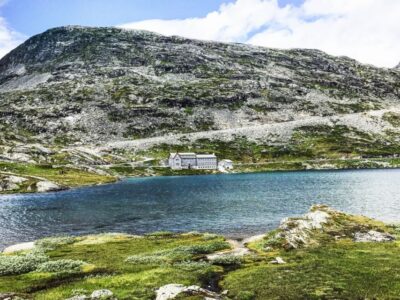
Dalsnibba, Flydalsjuvet, Eagle Bend & Fjords Tour
Read our review →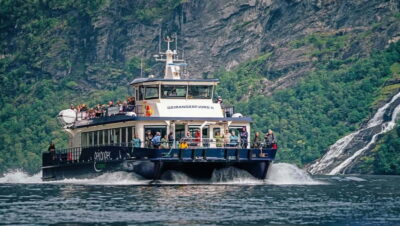
Geiranger Shore Excursion: Mt. Dalsnibba and Eagle Road
Read our review →
Geiranger Fjord Tour from Geiranger (with stop in Hellesylt)
Read our review →Browse the lists this tour appears in