
Reviewed · WHALE WATCHING
From Alta: Small group Whale watching
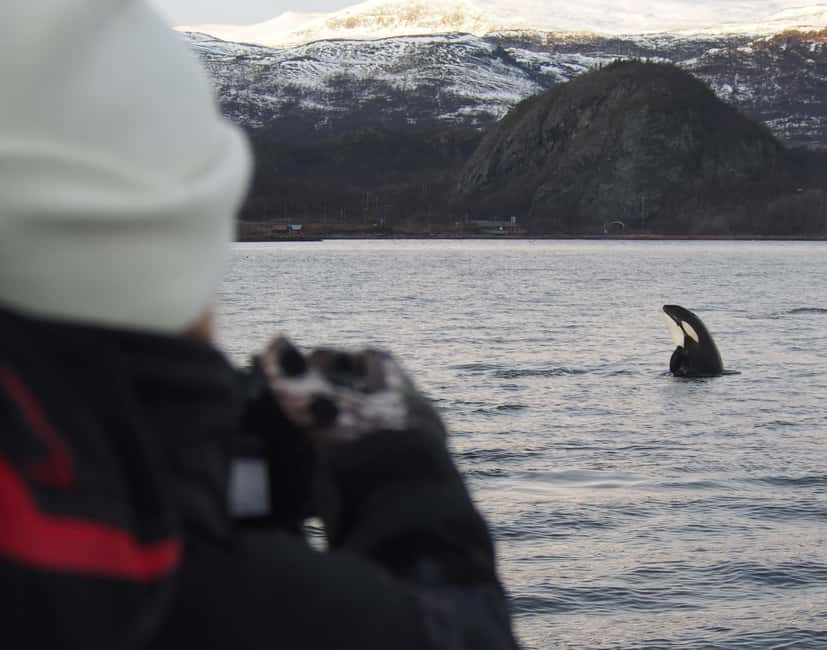
This Altafjord winter whale watching trip is built around the big Arctic food show, when whales move in for a herring feast during the polar night. I love the focus on small-group guiding and real local know-how, not just a generic sightseeing run. I also like that you can stay warm during the long search, with a cabin where you can go inside when whales go under.
One thing to consider is that this is weather-dependent. If conditions are rough, the operator may cancel, and you might not get the exact route you hoped for. Also, there is no WiFi on board, so plan your camera and battery for the day.
Key points before you go
- Orca and humpback odds in winter: the herring feast brings in whales that feed close to the fjords
- Small group experience, even if boat size varies: you still get an on-board guide with local focus
- Warm cabin breaks during whale activity: hot coffee and cookies help you keep it comfortable
- More than whales: you might also spot Arctic dolphins, sea eagles, and other seabirds
- Convenient Alta pickup options: hotels, Alta Harbour, and the airport all have defined meeting points
Why Altafjord whale watching hits different in the polar night
If you want wildlife that feels truly wild, the timing matters. In winter in Northern Norway, the herring draw whales into the fjords, including orcas and humpback whales. This is the kind of natural schedule that turns a boat outing into a hunt with a clear purpose, not random luck.
I especially like how this trip frames the experience. The guide gives you the why before you go: why whales migrate into the Altafjord, and what you might be looking for while you cruise. That little bit of context changes how you watch. Instead of scanning in panic, you start noticing patterns.
And even when whales are quieter than you’d like, the region has other Arctic stars. You might see Arctic dolphins and the sea eagle with a wingspan up to 2.5 metres, plus seabirds along the way. In a winter fjord, seeing one good animal is exciting. Seeing a few different kinds feels like the whole ecosystem is putting on a show for you.
From Alta pickup to the office briefing and warm-clothes handoff
Your day starts with pickup around Alta. You can meet the minibus at Thon Hotel Alta, Alta Havn KF (Alta Harbour), Scandic Alta, or Alta Airport. If you’re arriving by cruise ship, you’ll want to use Alta Havn (Alta Harbour) as your pickup point, with the guide waiting at the parking area.
Before you board, you head to the office where the guide lays out the plan. You’ll also get local background on the area and why the whales move into the fjord. This is the part that helps you relax, because you know what the team is watching for and how they think about spotting.
Another practical win is the gear support. You can borrow warm outdoor clothes for the trip. You can also leave personal belongings at the office, so you are not carrying bags onto a cold pier and then trying to manage everything on a moving boat.
The 3-hour boat search: small-group pace, flexible routes, real time guidance
Once you’re suited up and ready, you’ll transfer to the harbour area in the Altafjord and set off on the main boat portion. The boat time is about three hours, and the exact start harbour and route can shift based on where whales are active.
That flexibility matters. If whales are feeding in a specific hotspot, the operator aims to adapt. You are not locked into one straight path the whole time. The guide helps steer the day by guiding you to the right area and sharing what they know about the whales and other wildlife you might find.
This is also where the small-group approach pays off. Even though the boat size can vary depending on the weather and the group, the plan is to keep the guiding experience small-group oriented, and the guide stays with you for the entire trip. In a place where sea conditions and wildlife movement both change quickly, having one focused guide with you makes a difference.
When whales are underwater or moving through the area, you are not stuck out in the cold. You can stay inside in the warm cabin during those periods. The tour includes hot coffee and cookies for warmth and morale, which sounds small until you’re actually waiting for a blow or a surface moment.
What you might spot besides whales: dolphins, sea eagles, and seabirds
Orcas and humpbacks are the big draw, but the best part of this tour is that you are watching for more than one headline animal. The region can include Arctic dolphins, and there’s a strong chance of spotting other birds and seabirds as you scan the water.
The sea eagle is one of the featured species on this route, and its wingspan can reach up to 2.5 metres. That’s not a detail meant for trivia night. A bird that large is something you can actually track with your eyes as it moves across the fjord and hunts.
And the tour isn’t just about the moment you get a photo. It’s about learning how to watch. The guide explains what types of whales you might see, and while you search, you’re also picking up how seabirds react to feeding activity. That is the kind of skill you carry home, even if your final whale sighting isn’t as close as you hoped.
In terms of what people have actually experienced, there are bookings where orcas appeared in big numbers and humpbacks were also present. That does not mean it will match your day exactly, but it tells you the odds can be excellent when the fjords are alive with feeding.
The guide factor: why local expertise changes your odds
This kind of tour lives or dies by the guide’s ability to read the water and interpret whale behavior. On this trip, you get a professional guide who shares local knowledge during pickup, the pre-boat briefing, and throughout the boat portion. The tour runs with English and Norwegian, so you’re not left piecing things together on your own.
One name that has come up in feedback is Silvia, praised for having a lot of knowledge and for making sure the group got the best possible experience. That lines up with what you want from a guide in winter wildlife conditions: not just enthusiasm, but real focus on where to go next and how to stay comfortable while waiting.
A good guide also helps you avoid a common mistake. People often waste time scanning in the wrong direction or getting tunnel vision when a whale blows once. With a guide pointing out what matters and when, you spend your attention where it counts.
Staying comfortable in subzero conditions without ruining your photos
Winter whale watching can be brutal if you dress for city life. This tour makes comfort part of the plan. You borrow warm outdoor clothing at the office, and you can leave belongings behind so you’re not juggling gear in the cold.
On the boat, you also have a warm cabin option. There are hot drinks and snacks, and the tour explicitly allows you to go inside when whales are going under and the best activity might not be visible from the open air at every second. That alone can turn a tough day into a manageable one.
In at least one recent booking, waterproof trousers were provided, which is exactly the kind of detail that matters on a chilly, wet pier day. If you have your own winter gear, you can still use it, but it’s reassuring that the operator supports you with what you need.
One more practical reminder: the tour includes snacks and drinks, but not lunch. If you’re doing this mid-day, eat earlier so you don’t feel hungry after a long boat search. Also, WiFi is not included, so rely on offline maps, and keep your phone power for photos and video if you’re planning to capture the moment.
Price and value: what $251 includes, and what it does not
At $251 per person, this tour sits in the category of paid wildlife experiences where you’re paying for three things: access, expertise, and comfort. Here, your money goes into a professional guide, boat time on the Altafjord, and a full round-trip pickup from multiple locations in Alta.
It also includes minibus transfer between pickup and the pier, plus snacks and drinks for the day. Warm outdoor clothes are available at the office. And you get a structured experience across about 4.5 hours total, with a clear emphasis on spotting whales and staying comfortable while you wait.
What is not included is lunch, and WiFi on board is not provided. If you’re sensitive about food, bring a plan for a meal before or after, so you don’t spend the middle of the tour thinking about your next bite instead of the wildlife.
Also keep in mind that sightings depend on real conditions. You’re buying time on the water with local guidance, not a guarantee of a specific number of whales. In winter, when orcas and humpbacks are present, the odds can be excellent, but the fjord is still the fjord.
Who this tour is best for, and who should skip it
This is a winter wildlife boat trip with cold conditions and time on the water. It is not suitable for children under 12, and it is not recommended for pregnant women. It is also not suitable for people with mobility impairments or wheelchair users, so if accessibility is a key concern, this one may not work for you.
Alcohol and drugs are not allowed, which makes sense for safety and keeping everyone alert on the water.
There’s also a minimum number requirement for the tour to operate: the operator needs at least 2 participants. That doesn’t affect you much if you book ahead, but it is good to know if you’re traveling solo or on unusual dates.
If you love wildlife and you can handle winter weather with the help of borrowed gear and warm cabin time, this is a great match. If you want a fully predictable schedule with minimal waiting, consider that wildlife spotting means patience is part of the job.
Should you book Altafjord small-group whale watching?
I’d book it if you want a true winter Arctic experience in a place where the animals are expected to be moving through the fjords for feeding. The small-group guiding style, the warm cabin option, and the pre-boat briefing help you get more out of the day, even if wildlife activity varies.
Skip it if any of the restrictions apply to you, or if you know you struggle with cold, waiting outdoors, or time on a boat. Also, because this is weather-dependent, it makes sense to be flexible with your plans around it.
If you do book, show up for the pickup point you choose and come prepared to spend real time watching the water. The best results usually come from staying patient, staying warm, and letting the guide do what guides are paid to do.
FAQ
How long is the experience from pickup to drop-off?
The total trip is about 270 minutes, including transportation from your pickup place to the Altafjord and back.
What species can I expect to see on this whale watching tour?
The focus is on orcas and humpback whales in winter, with chances to spot other Arctic wildlife such as Arctic dolphins, sea eagles, and seabirds.
Where does pickup happen in Alta?
Pickup is offered at Thon Hotel Alta, Alta Havn KF (Alta Harbour), Scandic Alta, and Alta Airport.
Are snacks and drinks included?
Yes. Snacks and drinks are included, and you can also have hot coffee and cookies while inside the warm cabin during whale activity.
Is lunch included?
No. Lunch is not included.
Is WiFi available on board?
No. WiFi on board is not included.
More Whale Watching in Burfjorden
- Tromsø Whale Safari with MS Gabriele
★ 4.3 · 1,937 reviews - From Tromso: Whale Watching in Magic Skjervoy
★ 4.7 · 1,207 reviews - Silent Whale Watching by Hybrid-Electric Boat from Tromsø
★ 4.5 · 1,017 reviews - Bleik: Whale Watching by Speedboat with Puffins and Muffins
★ 4.7 · 326 reviews
Whale Watching, compared.
Silent Whale Watching by Hybrid-Electric Boat from Tromsø
Read our review →
Bleik: Whale Watching by Speedboat with Puffins and Muffins
Read our review →

Andenes: Responsible Whale Watching with Classic Catamaran
Read our review →
Browse the lists this tour appears in