
Reviewed · CANOES & KAYAKS
Færvik: Raet National Park Sea Kayaking Trip
Raet National Park sea kayaking is interesting because you get to see a protected marine world almost entirely underwater, from the waterline up. I love how the Raet marine national park angle turns a normal paddle into a living nature lesson. I also like that the trip builds skill fast, with paddle coaching and practice before you start moving through the archipelago. One thing to consider: even though it is beginner-friendly, you still paddle for a stretch in open water and you need to be physically comfortable with that.
You start at Hove on Tromøya and spend about three hours total, including a safety briefing and time to get your paddle rhythm right. You get a clear sense of what you are doing and why, from maritime routes that date back to the 1500s to the glacier-shaped features that formed more than 12,000 years ago. If you are hoping for a totally effortless experience, be realistic about the physical part. This is a sea kayak trip, not a drift-and-watch cruise.
Key Points You’ll Care About Before You Go
- 98% underwater conservation zone: you experience the park from the element it protects most
- Beginner coaching first: paddle technique practice before the longer route starts
- Skerries scenery with real context: island history and sea-route explanations as you go
- Sandy bay payoff: Gjessholmen is built into the outing for a relaxing finish
- Merdø option for lunch or museum: you can add a cultural stop depending on the plan
Raet National Park From Your Kayak: What You’re Really Seeing
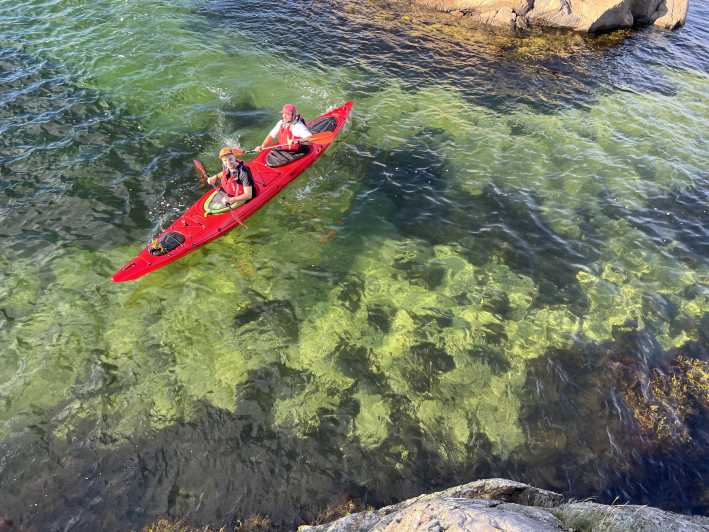
This trip is built around a marine national park that is described as 98% below water. That matters because it changes what “sightseeing” means. Instead of looking down from a bridge or shoreline, you are skimming the water where the wildlife lives and where the seafloor environment shapes the whole place.
You will also hear what this area meant for people long before modern tourism. The guide points out how you are traveling along sea routes connected to the 1500s era, which adds weight to the archipelago scenery. It is not just pretty islands. It is a working seaway, and your kayak quietly puts you in the same corridor that sailors used.
Then there is the geology story. The views were left by a glacier more than 12,000 years ago. Even if you are not a geology person, the explanation helps you read the coastline. You start to notice how the shape of the water and shore seems planned, even when you are paddling through what feels like wild nature.
More kayaking in Norway:
- Tromsø: Winter Sea Kayaking Tour with Wildlife Sightings
★ 4.9 · 591 reviews - Eggum: Lofoten Islands Midnight Sun Kayak Tour
★ 4.9 · 322 reviews
Starting at Hove on Tromøya: Safety, Gear, and Fast Confidence
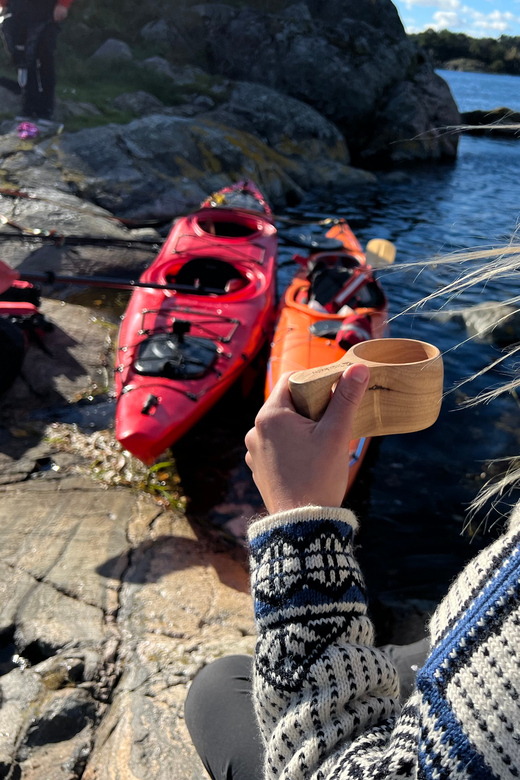
The trip begins at the beach house at Hove on Tromøya, at Hoveveien 108. This is a good sign for first-timers, because you start in a place designed for taking people on the water. You get equipped with protective clothing, and you get a safety talk before entering the water.
You also get a real training sequence rather than a quick “good luck.” The guide demonstrates paddle techniques and then gives you time to practice. That practice is not wasted time. It is the difference between feeling like you are just fighting your kayak and feeling like you can steer, balance, and paddle efficiently.
From my perspective, this is where the trip earns its value. The activity is short, around three hours, so they cannot afford to waste energy on chaos. Instead, they focus on basic control and comfort early, so you can enjoy the route rather than spend the whole time trying to figure out how to hold your paddle.
If you are planning to wear your own clothes, plan for cold and wet. Even when conditions are calm, sea spray and wind are part of the experience. You will be far more comfortable if you follow the provided clothing guidance and bring a change of clothes.
Hoveodden to the First Passes: Getting Your Bearings in Sheltered Water
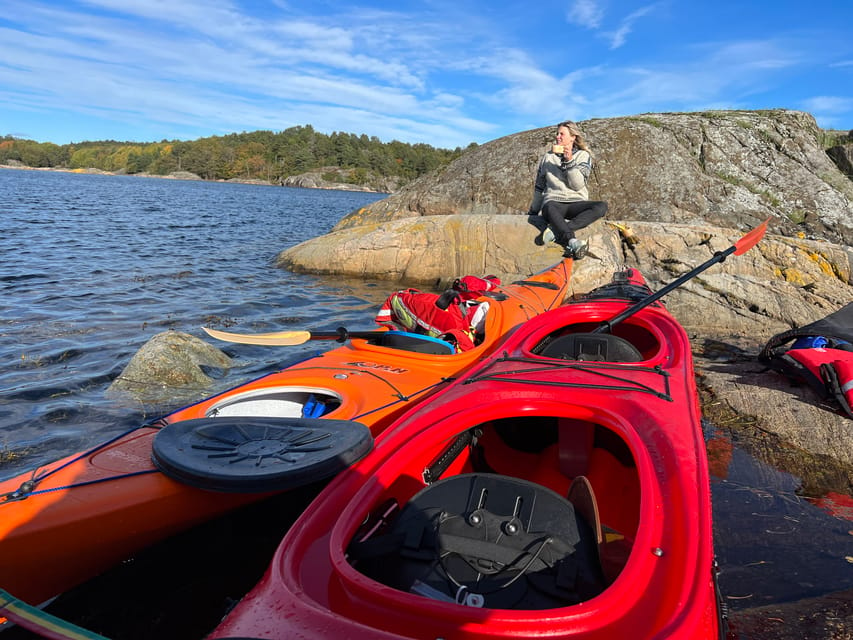
After the safety talk, the first paddling segment at Hoveodden is about getting your bearings. Expect around 30 minutes of kayaking at the start, with the guide helping as you get used to the rhythm. For beginners, this is ideal. You learn without pressure.
Once you begin moving along the route, the pace shifts to scenic exploration. One of the early segments includes passing St Helena island and Badeholmen. Even if these are not long stops, they add texture. The route is designed so you see multiple points of interest while staying inside sheltered archipelago waters.
That matters because sheltered water gives you a chance to enjoy the view while still practicing real sea kayaking. You are not just learning in a classroom-like zone. You are learning in the environment you came for.
Gjessøya and the Quick Looks That Still Mean Something
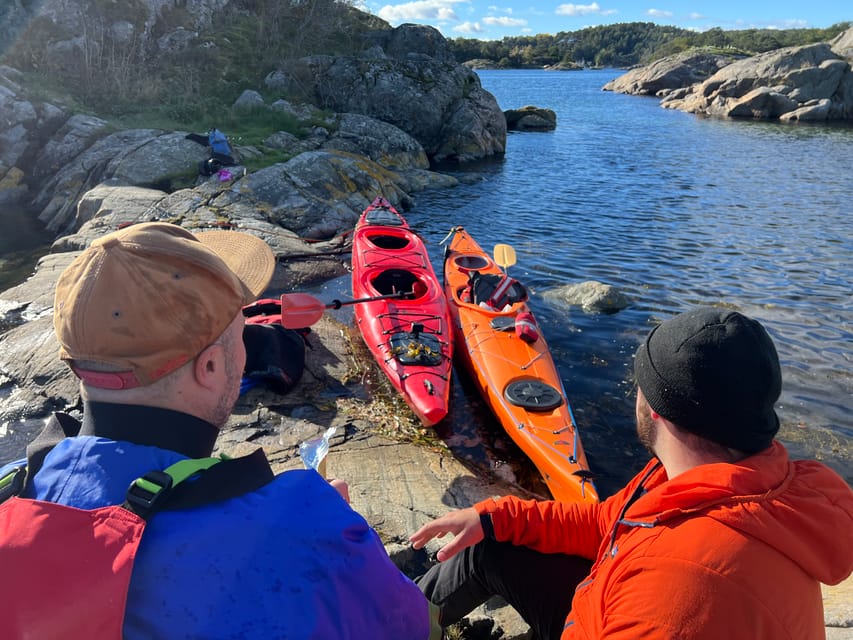
Next comes Gjessøya, where you pass by for about 10 minutes. This kind of short, guided glimpse is actually smart. In a three-hour outing, you do not want every stop to be a long land break. Instead, you get several “yes, I’m actually here” moments, spaced so you never lose momentum.
Gjessøya also helps connect the scenery to stories. The guide explains island history and points out points of interest along the way. That interpretation turns the trip into a guided route rather than a timed paddle session.
The potential drawback is also part of the tradeoff. If you love lingering in one place to swim, snack, or take a long photo session, short passes can feel brief. For most people, though, the variety works better than a single long stop.
Merdø: The Longer Paddling Segment and the Cultural Add-On
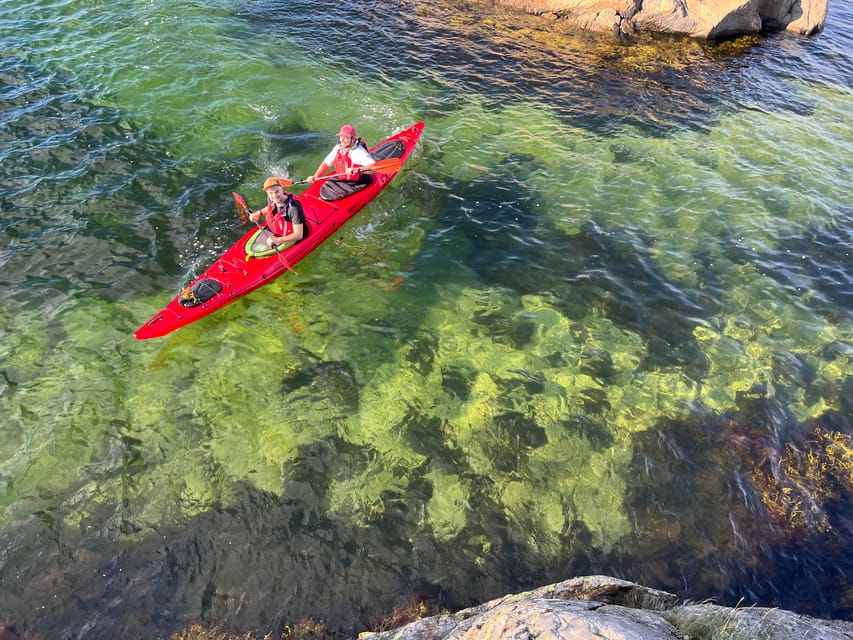
A key part of the trip centers on Merdø, where you can spend around 30 minutes kayaking. This is one of the moments where the outing feels more than scenic. You are given the chance to head toward an island with historic connections, and you can also choose to add a practical break.
Depending on the trip plan, you can paddle to Merdø for lunch or for a visit of the museum. That is a big deal if you like mixing nature with local culture. It means your sea kayaking is not just about being outdoors for a few hours. It can also be about understanding why these places matter.
The downside to keep in mind is timing. Since the overall tour is fixed at about three hours, any museum or lunch element needs to fit inside the route schedule. If you are the type who wants a slower, longer visit on land, you might feel slightly rushed. But if you like “active day, smart stops, back to comfort,” it fits well.
The Sandy Payoff at Gjessholmen: Why This Bay Is the Point
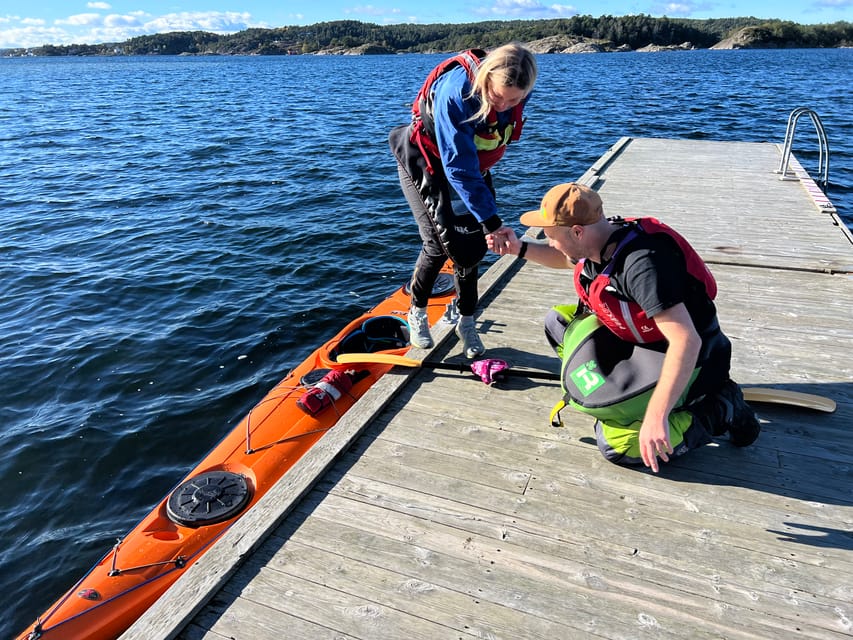
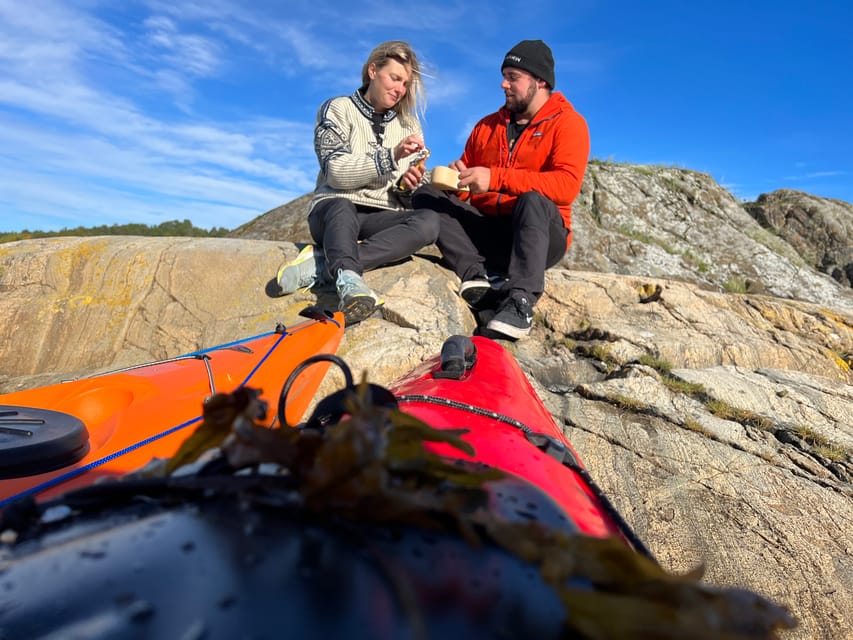
One of the strongest sensory rewards is entering the pretty sandy bay at Gjessholmen. After island hopping and route watching, that sandy shoreline gives your brain a visual reset. Sandy bays tend to feel easier to enjoy because they look inviting and they usually read as calmer water on approach.
This part of the trip is also where you get a clearer sense of the Skerries style: small islands, sheltered channels, and clean water that reflects the sky in a way that makes distance feel short.
You might not get a long land break here, but the experience of reaching the bay is the payoff. For beginners, it is also motivating. You learn, you paddle, you reach something beautiful and different, and the trip ends while you still feel energized.
Torjusholmen and Lille Brattholmen: Finishing Strong Without Feeling Rushed
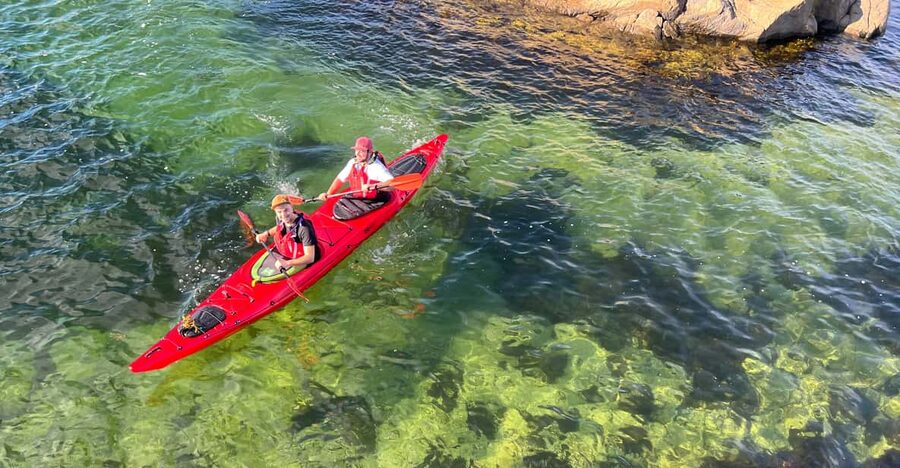
As you continue, the route includes additional kayaking segments such as Lille Brattholmen and Torjusholmen. One segment is listed around 30 minutes and another around 40 minutes, which means the last stretch is not just a quick return. It is still part of the real paddling experience.
This matters because sea kayaking skills come from repetition. The guide’s instruction earlier helps you paddle more cleanly later, and you get a sense of control over direction and effort before you finish.
If you are someone who gets cold easily, this later phase is the moment to manage your body well. Keep moving, keep your rhythm, and do not let wind steal your energy after you start feeling like you are “done.” The trip ends back at the original meeting point, so having that steady finish helps you come out happy instead of wiped.
Maritime Life and the 1500s Sea Routes: How the Stories Improve the Views
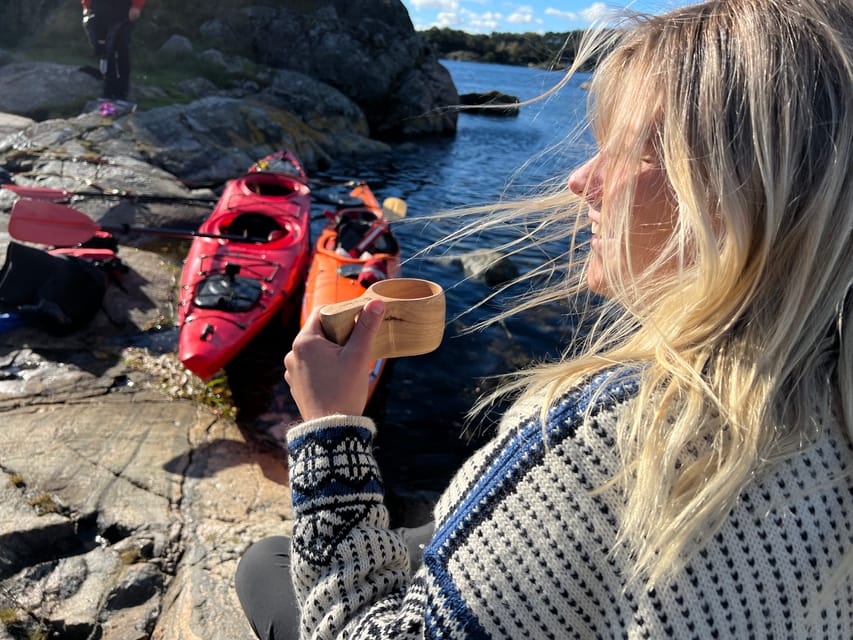
The trip is described as having abundant maritime life. Even without naming species, the point is that this is not empty water scenery. The guide’s local knowledge helps you notice what you might otherwise miss.
The history angle also pays off in a practical way. When you understand that you are traveling along sea routes from the 1500s, you start judging distance and currents differently in your mind. The coastline stops being random shapes and becomes a set of travel corridors that people relied on.
I like this style of guiding because it respects your attention. You are not handed a lecture. You get short explanations while you are actively moving through the environment, so the stories stick.
And the rain factor matters too. One experience shared with Pat, the guide, highlighted how the route stayed guided and personalized even when weather was not perfect. That tells you the trip is built for real conditions, not only for postcard days.
Weather, Open Water Paddling, and Staying Comfortable for 3 Hours
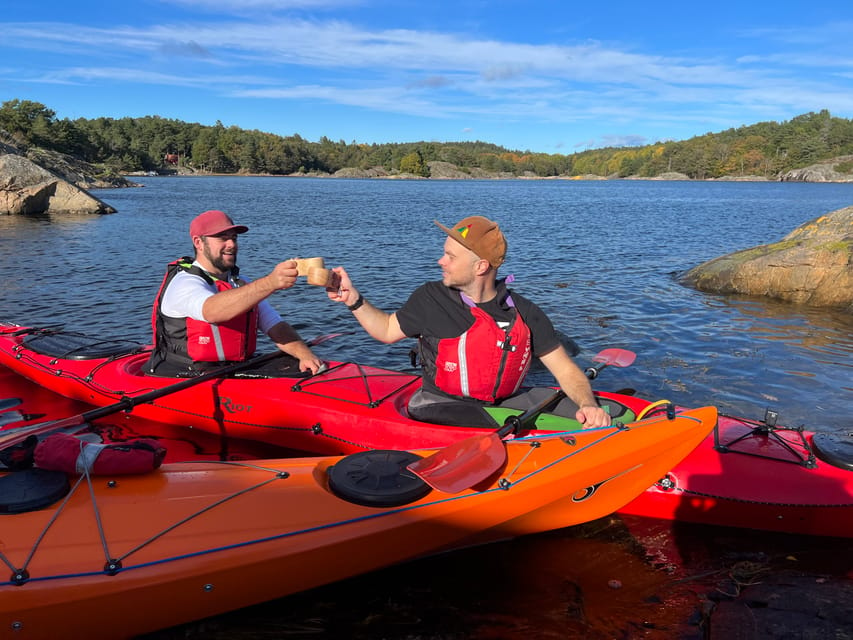
Even though much of the kayaking happens in sheltered archipelago waters, the trip notes that you will paddle for 2 to 3 hours in open water. That is the part you should plan around.
So yes, it is suitable for beginners, but not for everyone who wants a gentle stroll. You need to be able to swim, and you should be in good physical health. Sea kayaking can be strenuous, and you are relying on your own endurance plus good technique.
Practical comfort tips:
- Bring a warm layer plan, not just a summer outfit
- Pack a change of clothes because you will get wet
- Use your provided protective clothing setup as intended, then adjust layers underneath for warmth
Also remember the “not allowed” items: no smoking, no drones, and no alcohol or drugs. If you are prone to chewing gum, skip it too, since it is listed as not allowed. These rules are partly about safety and partly about keeping gear and bodies in good condition.
What to Bring (and How to Pack for Wool and Water)
The trip expects you to bring items like jogging shoes, a swimsuit, wool underclothes, and a towel. It also suggests comfortable shoes, warm clothing, and a change of clothes.
Here is how I’d think about it: you want to layer for cold, dry up quickly, and avoid anything that makes you miserable if you get wet.
Your “musts”:
- Comfortable shoes (you will want them on and off easily)
- Wool underclothes or warm layers
- Swimsuit under protective clothing
- Towel and a full change set for after
Your “nice to have” approach:
- Bring warm layers you can actually put on after getting out
- Consider quick-dry basics if you have them, since you are doing an active water sport
If you are someone who runs cold, treat this as a “dress warm and move” day.
Price and Value: Is $125 Worth It for a 3-Hour Sea Kayak?
At $125 per person for about three hours, this is priced like an actively guided outdoor tour where you are paying for more than the kayak itself. And that is exactly what you get.
What is included:
- All water equipment
- Training on how to paddle
- Pictures taken by your guide
- Local history
So you are not paying extra for rentals, and you are not paying for photos separately. Training is a big part of the value too. If you have never done sea kayaking, those first technique lessons are what can prevent a frustrating experience.
Add in that the guide is available in Norwegian and English, and you have a meaningful local interpretation component, not just a silent escort.
Is it expensive compared to a basic outdoor rental? Yes. Is it expensive compared to guided coaching plus gear plus guided cultural context for a short, high-impact activity? It feels fair.
Who Should Book This Trip, and Who Should Skip It
This one fits best if you:
- Want a beginner-friendly introduction to sea kayaking
- Can swim and are comfortable being in open water
- Prefer guided nature experiences with local stories
- Like short trips with clear structure, not all-day commitments
It is not suitable for:
- Children under 12
- Pregnant women
- Non-swimmers
- People over 243 lbs (110 kg)
If you meet the physical and swimming requirements, you will likely appreciate how the trip builds skills early and then turns that into a real route through the Skerries.
Should You Book This Raet Sea Kayaking Trip?
Book it if you want a guided sea kayaking outing that feels purposeful. The Raet marine national park framing gives you a real reason to be on the water, and the early training helps you actually enjoy the paddling instead of just surviving it.
Skip it if you are looking for something totally gentle or if open-water paddling for 2 to 3 hours sounds too much. This trip is structured for beginners, but it still demands basic stamina and comfort in the water.
If you are planning your Norway time in Agder and you want an experience that mixes nature, marine life, and local island stories in a half-day slice, this is a strong choice.
FAQ
Where does the tour start?
The tour starts at the beach house at Hove on Tromøya, at Hoveveien 108.
How long is the kayaking trip?
The total duration is about 3 hours.
Is this tour suitable for beginners?
Yes. The tour is suitable for beginners, with training on how to paddle and a practice time before you start the main route.
Do I need to know how to swim?
Yes. The tour notes that you should be able to swim.
What should I bring?
You should bring comfortable shoes, warm clothing, a change of clothes, a towel, and you are also advised to bring a swimsuit and wool underclothes.
What equipment is provided?
All water equipment is included.
What languages will the instructor speak?
The instructor speaks Norwegian and English.
Is there an age or weight limit?
Yes. It is not suitable for children under 12, and it is also not suitable for people over 243 lbs (110 kg).
Can I cancel for a refund?
Yes. You can cancel up to 24 hours in advance for a full refund.
More National Parks in Norway
- From Tromsø: Ice Domes Snow Park and Wilderness Experience
★ 4.6 · 1,255 reviews - From Bergen: Folgefonna National Park & Glacier Lake Tour
★ 4.9 · 589 reviews - Musk ox Safari in Dovrefjell National Park, Oppdal Safari
★ 5.0 · 524 reviews - Bergen Day Tour to National Park Folgefonna and Glacier Lake
★ 5.0 · 408 reviews
Freshly reviewed in Norway
- Tromsø: Fjords Tour★ 4.9 · 541 reviews
- Tromsø: Small Group Sea-to-Table Fishing Experience★ 4.7 · 19 reviews
Canoes & Kayaks, compared.
Winter Sea Kayaking Tour with Wildlife Sightings
Read our review →
Eggum Lofoten: Kayaking Tour in Lofoten with Snacks
Read our review →
Browse the lists this tour appears in