
Reviewed · CANOES & KAYAKS
Akerselva River Kayak/Packraft Tour: Urban Adventure in Oslo
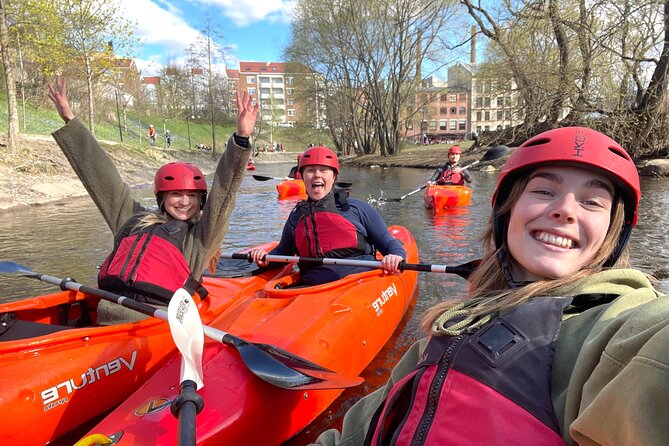
Oslo has a lot of viewpoints, but this one feels more human, because you’re moving through the city at water level. I love the all-in gear and instruction setup, and I love that you get an insider path through Akerselva, the tunnel, and out toward the Opera House. The main thing to consider is water on you, especially at the start and around the paddle drips, so plan on a change of clothes.
The whole route is designed to be doable for most people. In practice, the current helps you along, you learn quickly, and the guides keep it relaxed, even for first-timers. Still, you should be ready for short, busy moments like shallow sections and a couple of fun obstacles, plus weather affecting what you experience.
Key highlights to look for
- Akerselva to the Oslofjord from inside central Oslo: you see the city from a rare angle.
- Guide-led route with gear provided: watercraft, paddle, life jacket, and helmet are all taken care of.
- Tunnel time and iconic waterfront changes: you go from river city to Bjørvika energy.
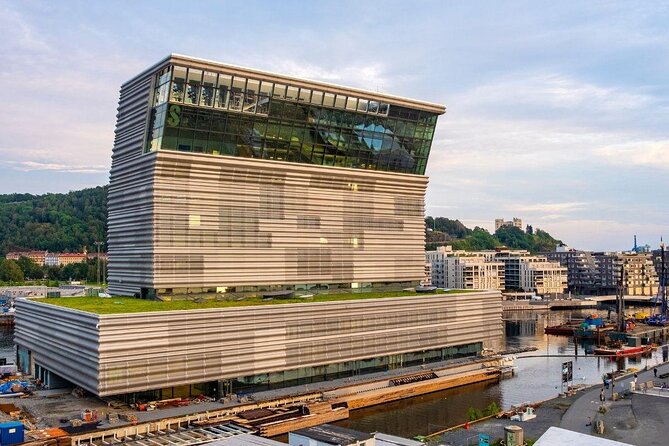
- Munch Museum and the Opera House from the water: two major Oslo sights, viewed properly.
- Small-group feel up to 20 people: more attention than you’d get on a big boat tour.
Why this Akerselva kayak and packraft tour is a smart Oslo choice
If you want Oslo in a single morning window that feels active but not exhausting, this is a standout. You’re not stuck behind glass or standing far back on a promenade. You glide through a river corridor that cuts right through the city, then you reach the waterfront where the city opens up toward the Oslofjord.
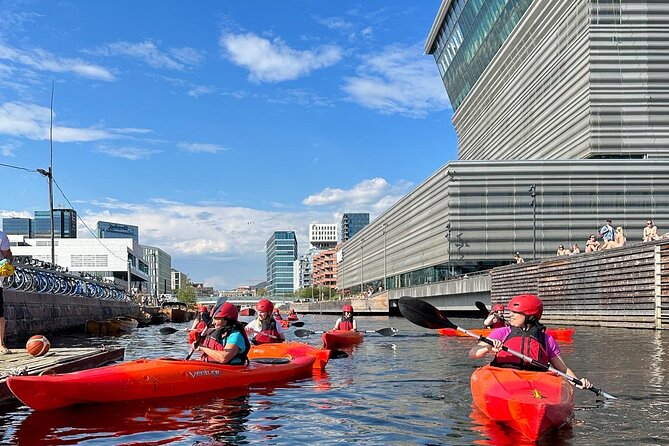
The payoff is simple: you get skyline and landmark angles most visitors never see. From the water, the Munch Museum frontage, the Bjørvika waterfront feel, and especially the Oslo Opera House look different, because your viewing height and motion are part of the story.
The other big win is how guided it is. You’ll get an orientation before you go, and the tour is built around a short stretch of “learn the basics, then enjoy the ride.” Guides like Olivia, Felix, Christian, Mateo, and Pascal come up again and again for being patient and for giving solid, reassuring coaching.
More Kayaking in Oslo
- Oslo Sea Kayak Tour “Fjord City”
★ 4.7 · 69 reviews - Akerselva River: Urban Paddling Adventure Kayak Tour
★ 4.6 · 68 reviews - 3- Hour Kayak Tour on the Oslofjord
★ 5.0 · 60 reviews
What you really get for the price (and where the value comes from)
This costs $107.16 per person for about 1 hour 30 minutes. That price can look like a splurge if you’re comparing it to a quick walking ticket or a public transit hop. But here, a lot of value is baked in.
You’re paying for:
- Kayaking and pack-rafting gear (watercraft, paddle, life jacket, helmet)
- Paddling instruction and professional guiding
- Transportation of your belongings to the end point
Doing this yourself would usually mean renting equipment, figuring out a route, then spending time getting in and out of the water safely. Here, you get the “how” and the “where” handled. You just show up, listen, and paddle.
Also, you’re getting a focused time window. If you only have a small slice of your day for an active Oslo experience, 90 minutes is long enough to feel like an outing, but short enough to fit into a sightseeing schedule.
Finally, the fact that it’s often booked around 19 days in advance is a quiet hint: this is a popular slot. If you’re traveling in peak times, booking ahead is your easiest way to avoid disappointment.
Where the tour starts and how the route flows through Oslo
You meet at Nedre Foss Gård (Nordre gate 2, 0551 Oslo). Then you paddle the route that works its way from central Oslo down Akerselva, through neighborhoods and under infrastructure, and eventually ends near the water mouth by Oslo Opera House (Kirsten Flagstads plass 1, 0150 Oslo).
The pacing is built like this:
- short segments, with frequent visual rewards
- guided transitions that keep you oriented
- a finish near a landmark area that’s easy to connect to afterward
One practical detail you’ll appreciate: the tour ends at the mouth of Akerselva, in central Oslo, and it’s only about a 10-minute walk from Oslo Central Station. So you’re not stranded far from the rail network.
Start on Akerselva: learning fast on a river that moves
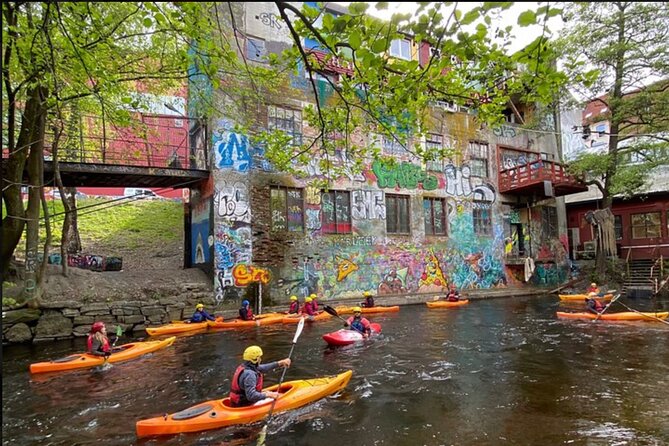
The first stretch is on Akerselva River in central Oslo. This is where the tour does you a favor: it’s close to the city core, and you get coached early.
Expect:
- basic paddling technique instruction
- a current that helps you move along most of the time
- a start that can feel shallow, so take your time and follow the guide’s cues
A common theme from people who did this as beginners is that you do not need to be athletic. The guidance is meant to keep you steady and confident. You also get safety gear right away, including a helmet and life jacket, which lets you relax and focus on the experience.
You may get a tiny bit wet, mostly from paddle drips or splash, and that’s normal. If you want to stay comfortable, bring a plan for clothing changes, which I’ll cover later.
Different weather, different plan? Oslo also runs these:
- Oslo: Oslo Fjord Sightseeing Cruise by Sailing Ship
★ 4.5 · 5,790 reviews - Oslo: Scenic Fjord Cruise with Audio Guide Commentary
★ 4.5 · 5,375 reviews - Oslo Nature Walks: Island Hopping Tour
★ 4.8 · 2,713 reviews - Oslo: 24 or 48-Hour Hop-On Hop-Off Sightseeing Bus GrayLine
★ 4.0 · 2,088 reviews
Paddling through central Oslo and Grunerlokka: city texture up close
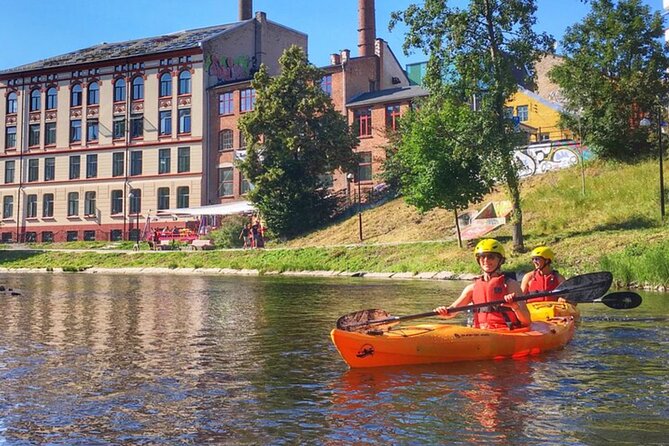
After the first learning stretch, you move through central Oslo and onward toward Grunerlokka, known as a cultural center. This section is the “I didn’t expect Oslo to feel this close to water” part of the trip.
From the kayak, you see how the city and river share space:
- bridges and walkways slide by at your pace
- buildings and urban details look taller and closer than from street level
- you get a sense of neighborhood character without leaving your seat
This is also where the guide’s storytelling matters. You’ll get context on the city’s past and present, which helps the scenery click into place. When you understand what you’re seeing, the river stop being just pretty becomes a real historical connection.
Possible drawback here: you’re on the water, not on a bus. If you’re expecting a slow, fully relaxed float for the entire time, you might still enjoy it, but you’ll feel the motion and the occasional steering input, even if it’s not strenuous.
The tunnel moment and Barcode Oslo area: the fun urban twist
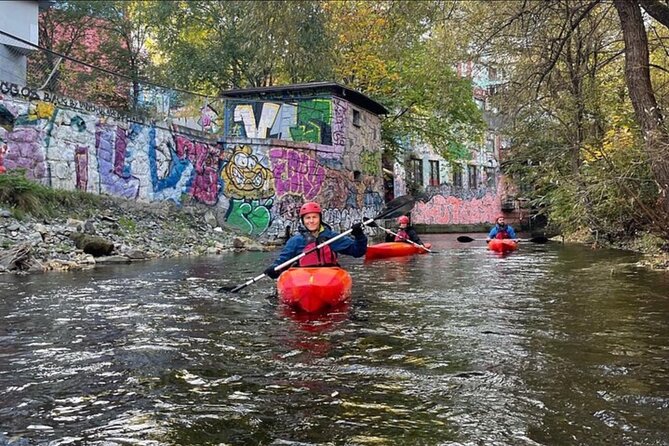
A highlight of this tour is moving through the river corridor until you reach the tunnel, then emerging into the Bjørvika waterfront district. This is a seriously cool segment because your environment changes fast. Inside, it feels like an adventure game. Outside, you get the wide-open Oslo feel.
Some guides add atmosphere with music during the tunnel stretch, including themed playlists like the Lord of the Rings theme. That kind of extra touch turns a short passage into a memory.
Then you’re in the Bjørvika area tied to the Barcode Oslo skyline. Even if you’ve walked through downtown before, you’ll feel the difference from being on the water, where the architecture lines up differently and the skyline appears in layers.
One small logistical note based on real-world navigation hiccups: if your GPS reroutes you near entry paths into parks, you can hit confusing pathways. When that happens, trust the local cues and the route you’ve been given. The meeting point and guides keep things grounded.
Munch Museum from the water: why this stop hits harder than you expect
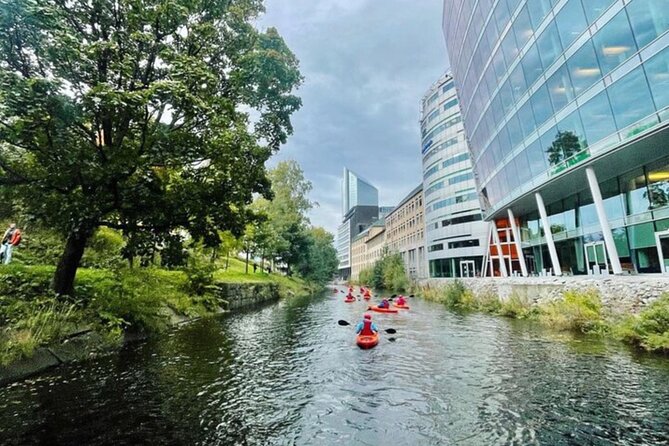
You paddle down the Akerselva canal as you pass the new Munch Museum area. If you’re a museum person, great. If you’re not, this stop still works because the building is a visual anchor, and seeing it from the river is a different experience than seeing it from a ticket line or a street view.
From the water:
- the museum sits in a wider frame
- you get an angle that includes how the river meets the city
- the stop feels like a smooth transition rather than a pause-and-stare moment
It also keeps the tour story moving. Each short segment adds another “chapter,” and this is one of the more recognizable chapters for first-time Oslo visitors.
When you reach the Oslofjord and see central Oslo change shape
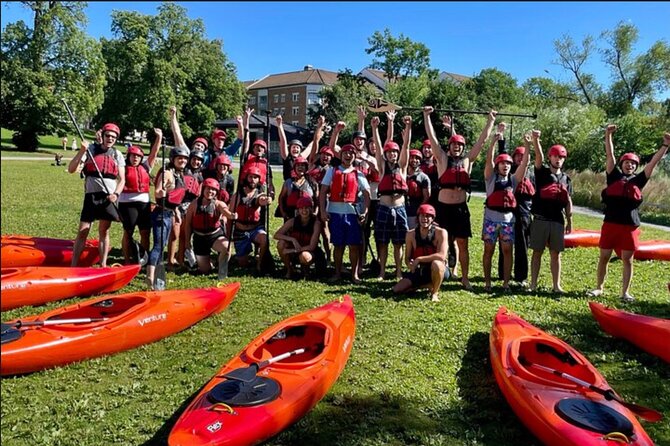
At a certain point the tour shifts from river-city to water-open views. You paddle onto the Oslofjord, where central Oslo looks more open and less enclosed by the river banks.
This portion matters because fjord water changes the vibe:
- the horizon line feels wider
- landmarks look less like river reflections and more like skyline scenes
- you feel like you left the city behind, even though you’re still right in it
Important practical note: the experience depends on weather. Since this tour requires good weather, your exact fjord portion can vary when conditions are rough. The operator will handle decisions based on safety and time.
Ending at the Oslo Opera House: the best seat in the city
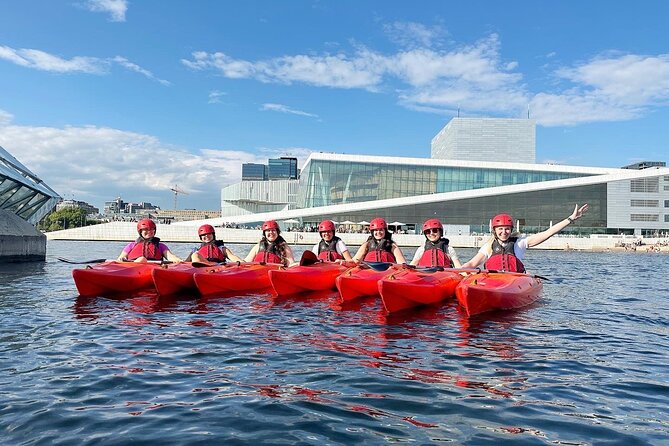
The tour finishes with a dramatic payoff: you paddle over to the Oslo Opera House, then you head back toward the mouth of Akerselva where the van and trailer are parked.
People often talk about the Opera House as an architectural icon. From a kayak, it becomes something else. Your seat height and motion give you a close view of the building’s edges and slopes. It’s the kind of landmark moment that feels earned, not just photographed.
The rest of your time is easy to plan afterward because the end point is still central. You can grab a meal or keep sightseeing without needing another long transport puzzle.
How hard is it, really? Current help, shallow starts, and safe coaching
Here’s what you should expect if you’re worried about skill level.
Most people do not need special kayaking ability. The current helps you move along for much of the route, and you’ll paddle enough to keep your kayak straight, not to battle waves.
That said, you’re not just drifting like a lazy river ride. The early part can be more demanding because it’s shallow, so footings and guidance matter. You may also pass under structures and around small challenges like shallow spots and small water features.
Safety is handled in several practical ways:
- you get a helmet and life jacket
- you receive instruction before you get on the water
- staffing is set up so there are people positioned to support (including guides placed toward the front and back)
One strong signal of quality is that guides focus on confidence. People mention guides being patient, giving clear instructions, and helping quickly if something goes slightly wrong, including cases where someone got stuck on a rock immediately after starting. That is exactly when good coaching matters.
What to wear and pack so you stay comfortable on the water
This is the part that makes or breaks your comfort. The tour does not include rainproof clothes, and you will be on moving water in Norway, where conditions can change fast.
I strongly recommend:
- wear clothes you can get wet
- bring dry pants or a change of clothes
- consider rainproof layers if the forecast looks unsettled
- bring sunglasses if you like them, since sunscreen is not included either
Phone plan:
- the tour does not include a waterproof phone case
- you don’t strictly need one, but it’s smart if you bring your phone
- if you do bring a phone without protection, you’re taking a risk, and I’d rather you avoid the stress
Water on you tends to be “manageable,” not catastrophic, but even small drips become annoying when you’re sightseeing afterward. A quick change makes the rest of your Oslo day more enjoyable.
What makes each stop worth your attention (not just the route on a map)
This tour works because it mixes three types of interest, and you rotate through them naturally:
1) Urban river scenery
You see central Oslo and neighborhoods like Grunerlokka without needing a long commute.
2) Landmarks with a story
Munch Museum and the Opera House are visually strong, and the guide context makes them feel more meaningful.
3) Water adventure beats
Tunnel time, the shift toward the Oslofjord, and the finish at a landmark from the kayak seat add energy.
It’s also a good “first active thing” in Oslo. Instead of choosing between a long hike or a full-day tour, you get a focused paddle that still feels special.
Value check: why this can beat a bus-and-viewpoint day
For $107.16, you’re buying two things most sightseeing days don’t include: gear and guided flow.
When you compare this to:
- renting equipment plus transport plus route figuring
- taking a generic sightseeing boat that doesn’t teach you anything
- walking a long route to hit landmarks from the street
…the kayak tour often feels like better use of time. You cover a meaningful chunk of central Oslo water corridor, you learn something about the city while you’re doing it, and you end at a place you probably already planned to visit.
Also, because it’s about 1.5 hours, you can still enjoy your other Oslo plans the same day.
Who should book this kayak and packraft tour?
You’ll likely love it if:
- you want an active Oslo experience without heavy physical strain
- you enjoy cities from unusual angles
- you like small-group guiding and clear instruction
- you want a straightforward way to see central sights from the water
It might be less ideal if:
- you’re extremely weather-dependent and hate the idea of changing plans
- you expect a long fjord paddle no matter what (the tour is weather and time sensitive)
Should you book the Akerselva River kayak and packraft tour?
Yes, if you want the kind of Oslo morning that feels different from the typical checklist. This is a great pick for first-timers because the current helps, the instruction is practical, and the staff focuses on comfort and safety. You’ll get real Oslo moments, not just moving scenery, especially at the Munch Museum area and at the Opera House finish.
Book it if your schedule can handle water time and you’re willing to pack a change of clothes. If you’re only choosing one active thing and you want maximum city impact for minimal time, this delivers.
FAQ
Do I need prior kayaking experience?
No. This tour is set up so most people can participate, and the guide provides instruction before you start. The current helps you move along for much of the route.
What’s included in the tour price?
You get kayaking and pack-rafting equipment (watercraft, paddle, life jacket, helmet), paddling instructions from professional guides, and private transportation that moves your belongings to the tour end point.
How long is the experience?
It runs for about 1 hour 30 minutes (approximately).
Where do I meet, and where does the tour end?
You meet at Nedre Foss Gård, Nordre gate 2, 0551 Oslo. The tour ends at Oslo Opera House, Kirsten Flagstads plass 1, 0150 Oslo, near the mouth of Akerselva River, about a 10-minute walk from Oslo Central Station.
What should I wear or bring?
Bring clothes you can get wet and ideally pack dry pants or a change of clothes. The tour does not include rainproof clothes or bottled water, and sunscreen is not included. A waterproof phone case is not required, but it’s a good idea if you bring your phone.
What happens if the weather is bad?
The experience requires good weather. If it’s canceled due to poor weather, you’ll be offered a different date or a full refund.
Freshly reviewed in Oslo
- Oslo Munch Museum Admission Ticket★ 4.0 · 29 reviews
- Oslo Sea Kayak Tour: Explore The Incredible Oslofjord★ 4.5 · 31 reviews
- 3 Hours Walking Tour for Great Food in Oslo★ 5.0 · 32 reviews
- Private Bike Tour (3 hours)★ 5.0 · 33 reviews
- Oslo city center Tour★ 5.0 · 34 reviews
- Oslo: City Tour & Traditional Norwegian Lunch or Dinner★ 4.6 · 34 reviews
- Oslo’s Secret Forest Gastronomy: Private Chef & Local Feast★ 5.0 · 35 reviews
- Oslo: Private City Center Highlights Guided Walking Tour★ 4.9 · 35 reviews
Canoes & Kayaks, compared.
Winter Sea Kayaking Tour with Wildlife Sightings
Read our review →

Eggum Lofoten: Kayaking Tour in Lofoten with Snacks
Read our review →
Browse the lists this tour appears in